Sliced Dutch breakfast cake is a convenient choice for a quick work-from-home lunch, but don’t choose it based only on claims such as ‘wholemeal’ or ‘no added sugar’. Compare the fibre, sugar and portion size on the label. If you’re considering a product with sweeteners or have allergies, check the ingredients and warnings too.
Who are these choices relevant to?
Home workers comparing nutritional values
If you want something quick to grab at lunchtime, compare the fibre and sugar per portion rather than relying on the word ‘wholemeal’. The Netherlands Nutrition Centre gives the values for an average 30 g slice of Dutch breakfast cake as 1.1 g of fibre and 11.2 g of sugar; the values for a particular product may differ.
Fussy eaters looking for convenience
A pre-sliced pack saves you having to prepare anything during a work break. Whether you like the taste and texture is a matter of personal preference; the word ‘wholemeal’ won’t tell you that.
Home workers who like to keep a pack in stock
Check the pack size, portion sizes and storage instructions if you don’t want to open a new pack every lunchtime. Don’t assume that packs of the same weight have the same nutritional values.
What should you look for when choosing?
First decide what matters most for your lunch: nutritional values, a portion you can grab straight away, or a pack that suits how you’ll use it. Then compare the relevant details on the label of the product you’re considering.
| What to consider |
What to check before buying |
Who is this important to? |
| Fibre and sugar |
Compare both values per 100 g and per slice. For products with sweeteners, check the ingredients list too. |
I want to know what’s in my lunch portion, because ‘wholemeal’ doesn’t tell me how much sugar it contains. Around 42% of consumers prioritise this nutritional comparison. |
| Convenience and portion size |
Check whether the cake is pre-sliced and how much a slice or individual portion weighs. |
Between work meetings, I want to be able to grab something without having to slice it first, while still knowing how much I’m having. Convenience is the top priority for around 33% of consumers. |
| Pack size and keeping it in stock |
Check the pack weight and storage instructions. See whether your chosen product is available when you plan to buy it. |
If I’m buying Dutch breakfast cake for several days of working from home, I want a pack that suits how often I eat it. Around 25% of consumers are expected to give this packaging choice the greatest weight. |
Common mistakes
-
Assuming ‘wholemeal’ means ‘low in sugar’
For the wholemeal Dutch breakfast cake it assessed, Albert Heijn lists 34 g of sugar per 100 g; PLUS lists 34.1 g per 100 g for the product it assessed.
Check the nutritional information as well as the ingredients, and compare sugar and fibre on the same basis.
-
Skipping the ingredients list when a product says ‘no added sugar’
The Peijnenburg product assessed contains xylitol and carries a warning that it may contain nuts and milk.
If you have an allergy or want to avoid sweeteners, check the full ingredients list and allergen information on the pack.
-
Assuming a few slices make a complete lunch
The Netherlands Nutrition Centre gives the values for an average 30 g slice of Dutch breakfast cake as 0.9 g of protein and 1.1 g of fibre. Values vary between products and portion sizes.
Think about what else you’d like to have with your lunch rather than simply increasing the number of slices.
-
Assuming a product range listing means it’s always available
Lidl says that the wholemeal Dutch breakfast cake it assessed is only available in store. Product information can also change.
Before buying, check where your chosen product is available and read the information on the pack you actually buy.
Brands to consider
Peijnenburg
Peijnenburg offers a pre-sliced wholemeal product labelled ‘no added sugar’ in a 345 g pack.
- For this product, Peijnenburg lists 17 g of fibre and 4.9 g of sugar per 100 g.
- This product contains xylitol and, according to its warning, may contain nuts and milk. Don’t assume the same applies to other products from the brand.
Albert Heijn
The own-brand product assessed is pre-sliced wholemeal Dutch breakfast cake in a 485 g pack.
- For this product, Albert Heijn lists 41% wholemeal rye flour and 5.7 g of fibre per 100 g.
- The label also lists 34 g of sugar per 100 g. So the wholemeal description alone isn’t enough to compare sugar content.
Jumbo
The wholemeal Dutch breakfast cake from Jumbo that was assessed comes in a 280 g pack.
- For this product, Jumbo lists 35.9% wholemeal rye flour and 8.2 g of fibre per 100 g.
- The same nutritional information lists 35.5 g of sugar per 100 g. Remember to compare this with the size of the portion you eat.
PLUS
The PLUS product assessed is pre-sliced wholemeal Dutch breakfast cake in a 485 g pack.
- For this product, PLUS lists 41% wholemeal rye flour and 5.7 g of fibre per 100 g.
- The listed sugar content is 34.1 g per 100 g. Check the pack if its ingredients are an important factor in your choice.
Koek & Bakker (ALDI)
ALDI lists separate pre-sliced products under Koek & Bakker labelled ‘wholemeal’ and ‘zero’.
- The listed wholemeal product comes in a 485 g pack.
- Don’t treat these products as the same: compare the ingredients, nutritional information and allergens on the pack you choose.
Dutch breakfast cake at Joybuy
These products suit two ways of keeping a work break simple: pre-sliced Dutch breakfast cake from a pack, or an individually wrapped option you can take with you. Compare the portion size and the label for the product in question before you choose.
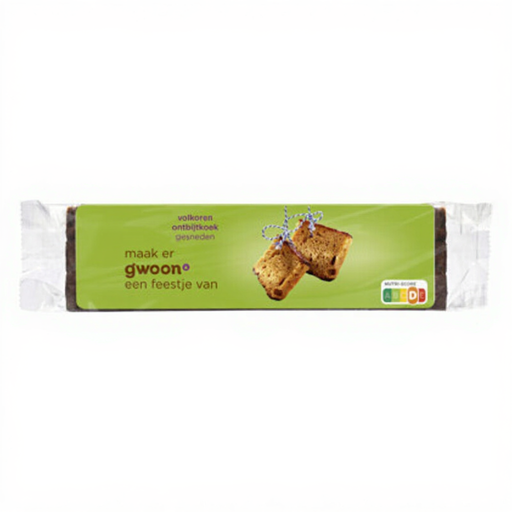 Image unavailable
g'woon Wholemeal Breakfast Cake Sliced, 485 g
This pre-sliced Dutch breakfast cake is a handy choice if you don’t want to cut off a portion during a work break.
The pack weighs 485 g. Compare the sugar and fibre per 100 g and per slice on the label. If you have allergies, check the ingredients and allergen information on the pack too.
View at Joybuy
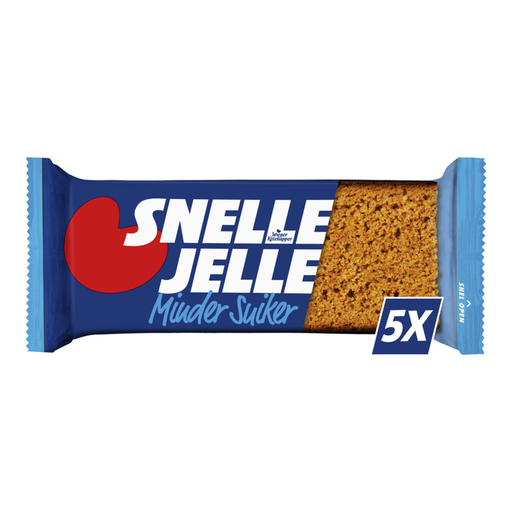 Image unavailable
Snelle Jelle Breakfast Cake Less Sugar-Free, 250 g
This Dutch breakfast cake is an option if you want to take an individual portion to your workspace.
The listed pack weight is 250 g. Don’t assume ‘Less Sugar-Free’ tells you how much sugar a portion contains or which sweeteners have been used; check the nutritional information and ingredients. If you have allergies, check the warnings on the pack too.
View at Joybuy
Frequently asked questions
Is wholemeal Dutch breakfast cake always low in sugar?
No. For the wholemeal products discussed here, Albert Heijn and PLUS list 34 g and 34.1 g of sugar per 100 g respectively. Compare the nutritional information for the specific product, even if ‘wholemeal’ appears on the front of the pack.
What should I look for in Dutch breakfast cake labelled ‘no added sugar’?
Check the ingredients and allergen information as well as the claim. The Peijnenburg product discussed contains xylitol and carries a warning that it may contain nuts and milk.
Can Dutch breakfast cake on its own make a complete work-from-home lunch?
A few slices won’t automatically make up the lunch you want. For an average 30 g slice, the Netherlands Nutrition Centre lists 0.9 g of protein and 1.1 g of fibre. Consider how much you’re having and what else you’ll eat with it.
Can I assume Dutch breakfast cake has a consistent iodine content?
No. The Netherlands Nutrition Centre’s information about iodised baker’s salt relates to bread and doesn’t tell you how much iodine a specific Dutch breakfast cake contains. Check the product information if this matters to your choice.
How should I store an opened pack of Dutch breakfast cake?
Follow the storage instructions on the pack for your product. The Albert Heijn and Jumbo product information discussed here recommends storing it in a cool, dark and dry place.


