
Organisers hosting a coffee get-together
If you want to make Dutch breakfast cake a centrepiece on the table, consider an uncut variety with ginger or pearl sugar. Decide in advance who will slice it and how you’ll serve it.


If you want to serve Dutch breakfast cake as a treat and can slice it on the spot, an uncut flavour such as ginger or pearl sugar could be a good choice. Opt for pre-sliced cake or individually wrapped portions if handing it out quickly matters more. If guests have dietary requirements, check the ingredients and nutritional information for the specific product you choose: wholemeal and no added sugars each tell you something different about its make-up.
If you want to make Dutch breakfast cake a centrepiece on the table, consider an uncut variety with ginger or pearl sugar. Decide in advance who will slice it and how you’ll serve it.
For guests keeping an eye on sugars, fibre or allergens, the exact product matters more than a claim on the front of the pack. Compare the ingredients and nutritional information for the products you’re planning to serve.
Pre-sliced cake or individually wrapped portions mean less cutting when it’s time to serve. If you’re buying for a group, check how many slices or portions are in the pack.
For a retirement celebration, how you plan to serve the cake will often guide your first choice. Then compare the flavour and the label on the products that fit the occasion.
| What to consider | What to check | Who it matters to |
|---|---|---|
| Flavour and presentation | Check the flavouring and whether the cake is pre-sliced or uncut. | If I want something festive for the coffee table, I’d rather choose a flavoured cake that I can slice myself. Presentation comes first for an estimated 50% of consumers. |
| Nutritional information and ingredients | Compare sugars and fibre per 100 g, and check the ingredients and allergens for the product you’ve chosen. | When guests have different dietary requirements, I want to know exactly what I’m serving rather than relying on a claim such as “wholemeal”. These label details matter most to an estimated 30% of consumers. |
| Serving | Check whether the cake is pre-sliced or individually wrapped, and how many portions are in the pack. | If I need to hand out cake to a group quickly, I don’t want to have to slice it on the spot. Convenience is the top priority for around 20% of consumers. |
The wholemeal label doesn’t tell you how much sugar a Dutch breakfast cake contains. The Netherlands Nutrition Centre lists 11.1 g of sugars and 1.3 g of fibre in a 30 g slice of wholemeal Dutch breakfast cake; values vary between products.
Compare the nutritional values per 100 g or for equivalent portions, and check the full ingredients list.
No added sugars doesn’t mean sugar-free. Jumbo says that one pre-sliced variety contains sweeteners and naturally occurring sugars; the pack also warns that excessive consumption may have a laxative effect.
Check the packaging of the variety you’re serving. If guests have different preferences, consider offering another type of Dutch breakfast cake too.
Ingredients vary between Dutch breakfast cake varieties. A flavouring or a different recipe means you can’t rely on the label of a similar product for the cake you’ve bought.
Before buying, read the current allergen information for that exact variety and keep the packaging to hand when you serve it.
Peijnenburg offers pre-sliced Dutch breakfast cake, as well as varieties with no added sugars. The format can help you choose between presenting the cake and handing it out.
The range includes pre-sliced wholemeal Dutch breakfast cake, ginger cake, pearl sugar cake and uncut organic Dutch breakfast cake.
Jumbo offers pre-sliced Dutch breakfast cake, a convenient format when you need to hand it out quickly.
If you want slices ready to serve, you could consider PLUS’s pre-sliced wholemeal Dutch breakfast cake.
ALDI stocks both pre-sliced wholemeal Dutch breakfast cake and an uncut luxury ginger variety from Koek & Bakker.
Lidl offers a zero variety and luxury Dutch breakfast cake in flavours including apple and cinnamon, nuts, and dark chocolate with nuts.
These individually wrapped portions of Dutch breakfast cake are a good fit for a coffee table where handing them out quickly matters more than presenting an uncut cake.
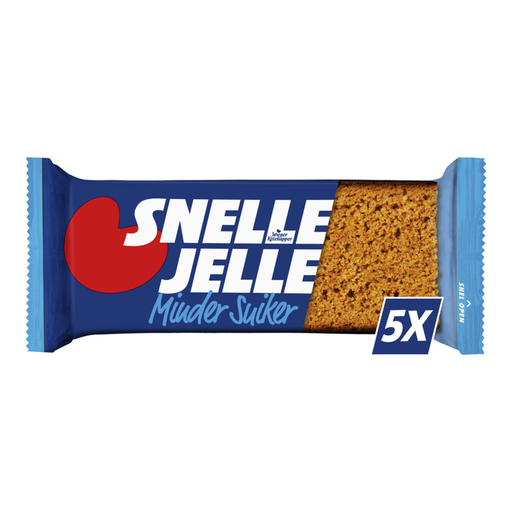 Image unavailable
The individually wrapped portions are ideal if you want to hand out Dutch breakfast cake without having to slice it.
The product name specifies a 250 g pack. If you have dietary requirements to consider, compare the sugars per 100 g and per portion on the current packaging; don’t assume the product is sugar-free based on its name.
Before serving, check the allergen information, particularly for rye and gluten, and for any statements about nuts or milk.
No. The wholemeal label doesn’t tell you how much sugar the cake contains. The Netherlands Nutrition Centre lists 11.1 g of sugars per 30 g slice of wholemeal Dutch breakfast cake; compare the values for the specific variety before you buy.
It doesn’t mean the cake is sugar-free. Jumbo says one pre-sliced variety contains naturally occurring sugars and sweeteners, and warns that excessive consumption may have a laxative effect. Check the label again if you choose a different variety.
Pre-sliced Dutch breakfast cake is practical if you want to serve it without any cutting. With an uncut cake, you can choose the slice size and present it whole, but you’ll need to allow time for slicing and have a knife ready.
Follow the storage instructions on the packaging for the variety you’ve chosen. Albert Heijn recommends keeping its organic plain variety in a sealed tin once opened; instructions may differ between products.