
Office buyers stocking a shared tin
If colleagues help themselves, sliced Dutch breakfast cake saves you having to cut it up. Check the storage instructions too: Jumbo says its Original Sliced cake should be kept in a sealed tin once opened.


Sliced Dutch breakfast cake is practical if colleagues help themselves to a slice from a shared tin; individually wrapped portions are better for handing out or taking with you. For a planned treat, you could choose a premium unsliced version. Whichever you choose, compare the sugars and fibre per 100 g and per portion, as well as the ingredients and allergens on the label.
If colleagues help themselves, sliced Dutch breakfast cake saves you having to cut it up. Check the storage instructions too: Jumbo says its Original Sliced cake should be kept in a sealed tin once opened.
If you’re keeping an eye on sugars and fibre, compare the figures per 100 g and per portion. For zero-sugar versions, check which sweeteners are used and read the warnings on the packaging.
For a meeting or treat, a generously filled cake or one with a distinctive flavour could suit the occasion. If you choose an unsliced cake, remember that it will need cutting and serving.
Decide whether the cake is mainly for everyday self-service or a planned treat. Then check the nutritional information and allergens for each option.
| What to consider | What to check | Who is it important for? |
|---|---|---|
| Portions and storage | Is the cake sliced or individually wrapped? Once opened, follow the storage instructions on the packaging. | If colleagues help themselves, I want them to be able to grab a slice without having to cut it first. Convenience is the top priority for around 31% of consumers. |
| Sugars, fibre and sweeteners | Compare sugars and fibre per 100 g and per portion. For zero-sugar versions, also check the ingredients and warnings. | I want to compare nutritional values without overlooking a warning about sweeteners. Around 31% of consumers prioritise this consideration. |
| Flavour and the occasion | Check the listed flavourings and whether an unsliced cake needs to be prepared before serving. | For a meeting, I’m more likely to look for something distinctive than a cake for a quick snack. The occasion is the main consideration for around 23% of consumers. |
| Allergens and dietary requirements | Read the up-to-date ingredients and allergens list, including any ‘may contain’ statements. | If not everyone can eat the same ingredients, I need to know which cake I can offer. Checking this is the top priority for around 15% of consumers. |
Jumbo lists 35.5 g of sugars and 8.2 g of fibre per 100 g for its Wholemeal Dutch Breakfast Cake. So the word ‘wholemeal’ is no substitute for comparing the nutritional values.
Check both sugars and fibre per 100 g, and look at the portion size of the option you’re considering.
The AH Zero and Jumbo Zero product pages list sweeteners and warn that excessive consumption may have a laxative effect.
Keep the ingredients information available when colleagues are choosing from a shared tin.
Regular versions may contain rye and cereals containing gluten. Even with a gluten-free version, the information on the specific packaging is what matters.
Check the ingredients, allergens and any ‘may contain’ statements on every new pack.
On its own, the word ‘premium’ doesn’t tell you whether a Dutch breakfast cake is generously filled, organic, pre-sliced or individually wrapped.
Decide which specific feature matters for your coffee break or shared tin, then check for it on the packaging.
Peijnenburg offers several types of Dutch breakfast cake, including sliced, individually wrapped and gluten-free options.
AH offers plain, zero-sugar and organic Dutch breakfast cake as separate options.
Jumbo offers plain, wholemeal and zero-sugar Dutch breakfast cake; compare the details for the option you choose.
At ALDI, the Koek & Bakker range includes sliced wholemeal and luxury Dutch breakfast cake options.
PLUS offers regular sliced Dutch breakfast cake and a Korenlanders Bakkers option.
These products include sliced Dutch breakfast cake for self-service and a Snelle Jelle option for anyone who wants to take portions with them. Check the packaging if portion sizes, nutritional values or allergens are key considerations.
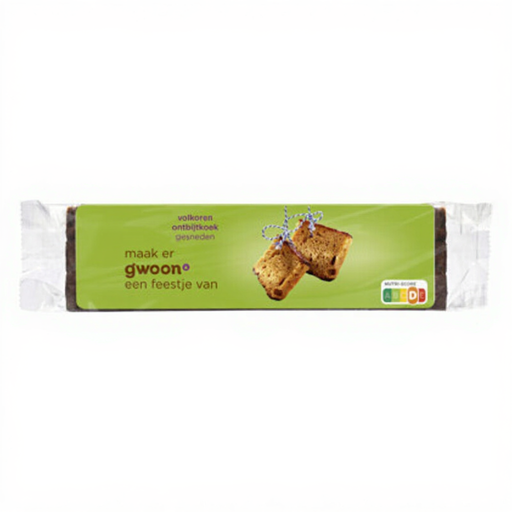 Image unavailable
For colleagues helping themselves from a shared tin: this wholemeal Dutch breakfast cake is sliced, and the pack contains 485 g.
Before offering it to colleagues with dietary requirements, check the up-to-date ingredients and allergens list on the packaging.
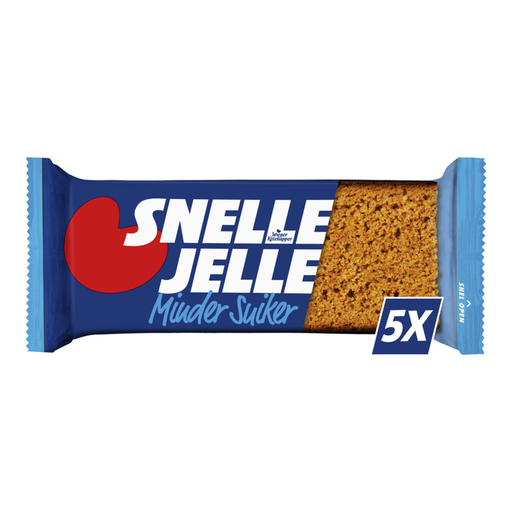 Image unavailable
If you want to hand out Dutch breakfast cake as individual portions or take it with you, check the packaging to see how this option is portioned and wrapped.
The pack contains 250 g. Compare sugars and fibre per 100 g and per portion using the current label; don’t assume the nutritional values from the product name.
Follow the instructions for the option you choose. Jumbo says its Original Sliced cake should be kept in a sealed tin in a cool, dry place once opened.
Not necessarily: as well as sugars and fibre, compare the ingredients and warnings. According to Albert Heijn, AH Zero contains xylitol, while Jumbo says Jumbo Zero contains maltitols. Both product pages warn that excessive consumption may have a laxative effect.
Don’t offer regular Dutch breakfast cake to someone who avoids gluten without checking the label. The regular options reviewed list rye or cereals containing gluten; always check the current packaging, even for a gluten-free option.
Don’t assume this is the case for a particular Dutch breakfast cake. If the type of salt used matters to you, check the ingredients list on the packaging.
No: the organic label alone tells you nothing about the amount of sugars. Albert Heijn lists 41 g of sugars per 100 g for AH Biologisch Ontbijtkoek Naturel; compare the nutritional information for the options you’re considering.