
Households eating breakfast together
If several people share the same cake on weekdays, a large pack of pre-sliced cake lets you serve slices without having to cut it first. PLUS and ALDI offer examples of large packs.


For a weekday breakfast shared by several people, a 485–550 g pack of sliced Dutch breakfast cake is a practical starting point. If people mainly take slices with them, compare individually wrapped portions instead. When choosing wholemeal or no added sugar, also check the ingredients, nutrition information and allergens on the pack.
If several people share the same cake on weekdays, a large pack of pre-sliced cake lets you serve slices without having to cut it first. PLUS and ALDI offer examples of large packs.
If you don’t all leave at the same time, individually wrapped slices give you ready-portioned snacks to take on the go. For example, Peijnenburg lists a pack of ten slices, each weighing 28 g.
If you’re keeping an eye on sugar, fibre, salt or allergens, the nutrition information for the specific variety is more useful than the name on the front of the pack alone. Compare the figures per 100 g and per portion.
First, decide whether you’ll mainly share the cake at the table or take it with you. Then compare the pack size and label of the varieties that suit how you’ll use it.
| What to consider | What to check when buying | Who it matters to |
|---|---|---|
| Pack size | Compare the net weight and number of slices with how much your household gets through on weekdays. | If several people share one cake, I want a pack that suits our breakfast routine. Having enough in the pack is the top priority for around 40% of consumers. |
| Portioning and storage | Check whether the cake is sliced, whether the slices are individually wrapped and how to store the pack once opened. | On a busy morning, I want to be able to serve or take slices straight away. Easy portioning is the top priority for around 30% of consumers. |
| Label | Check sugar, fibre and salt per 100 g and per portion; also look at the ingredients and allergens. | If I’m choosing between plain and wholemeal, I want to know what’s in that specific variety. For around 30% of consumers, the nutritional profile or allergen information is the deciding factor. |
Individually wrapped slices are most useful if someone is taking breakfast with them or wants pre-portioned servings. You may not need this format for sharing at the table.
Choose a pack format based on where and when you’ll eat the slices.
These claims don’t mean the same thing. Even in a no-added-sugar variety, the sugar content shown on the label is still relevant.
Check the ‘of which sugars’ figure per 100 g and, if given, per portion.
The Dutch breakfast cakes reviewed contain different ingredients and list different allergens. For example, Bolletje lists wheat, rye and lupin in its plain variety.
Check the current packaging for every variety, especially if a particular ingredient or allergen affects your choice.
According to the Netherlands Nutrition Centre, bakers aren’t required to use baker’s salt. So the product category alone won’t tell you whether a particular cake was made with iodised baker’s salt.
Check the ingredients list if this distinction matters to your purchase.
Peijnenburg offers Dutch breakfast cake in several formats, including large pre-sliced cakes and individually wrapped slices.
Albert Heijn stocks both its own-brand Dutch breakfast cake and Peijnenburg varieties.
Jumbo lists Peijnenburg varieties in large pre-sliced packs as well as individually wrapped portions.
PLUS stocks its own-brand Dutch breakfast cake, including sliced and unsliced varieties, alongside branded products.
ALDI stocks large own-brand Dutch breakfast cakes, including unsliced plain and sliced wholemeal varieties.
If you’re looking for a large pack, check out Lidl’s Tastino Dutch breakfast cake range.
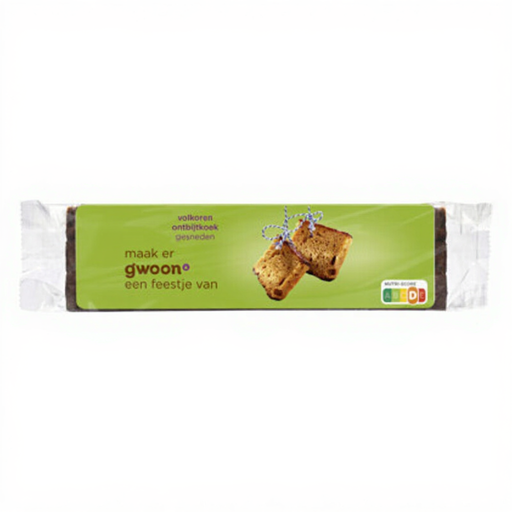
This 485 g sliced wholemeal Dutch breakfast cake is a good fit for sharing at the breakfast table. If you’re choosing based on nutrition information or allergens, check the current label too.
 No image available
The pre-sliced format is handy if you want to serve slices at the table without cutting the cake yourself.
Check the current ingredients and allergen information: the product information mentions rye, but the allergen information does not match.
A pack of around 485–550 g is a practical starting point for a shared weekday breakfast. PLUS and ALDI list cakes in this size range, both sliced and unsliced. Choose sliced if you want to serve it without cutting, and match the pack size to the number of people eating.
No, these claims don’t mean the same thing. For your chosen variety, check the ‘of which sugars’ figure in the nutrition table, per 100 g and, if available, per portion.
No, you can’t tell from the product category alone. According to the Netherlands Nutrition Centre, bakers aren’t required to use baker’s salt; check the ingredients list for the specific cake.
Don’t assume regular Dutch breakfast cake is gluten-free: the varieties reviewed contain rye or other gluten-containing grains. Check the label for the specific variety every time you buy, rather than relying on the product name alone.
Follow the storage instructions on your chosen pack and seal the cake well after opening. PLUS recommends storing its baker’s Dutch breakfast cake in a cool, dry place. For its 550 g sliced plain cake, Peijnenburg recommends through PLUS a dry, dark place, such as a sealed tin or container.