Choose individually wrapped Dutch breakfast cake if attendees can grab a portion themselves during a short break, or if you’re filling lunch boxes. For a staffed buffet, a larger pre-sliced cake may be more practical to replenish as needed, but you’ll need to manage serving and any leftovers. For both formats, check the allergen information for each product you offer and arrange a separate alternative if attendees need one.
Which format works best for you?
How you serve the cake will determine whether pre-packed portions or a larger pre-sliced cake is better for your conference break.
Organisers of self-service breaks
If attendees need to grab something quickly without having to slice it on site, individual packs make it easy to count out portions. For example, Albert Heijn and PLUS list a Peijnenburg pack with 10 portions of 28 g.
Caterers running a staffed buffet
If you can replenish the buffet, you can serve pre-sliced Dutch breakfast cake from a larger pack. Jumbo lists a 475 g pre-sliced own-brand version, while ALDI lists a 485 g pre-sliced version. Decide in advance how you’ll handle opened packs and leftovers.
Organisers with registered dietary requirements
Before ordering, find out which specific products you’ll need. The standard Peijnenburg portions described by Albert Heijn contain rye and gluten; a gluten-free version must be checked separately for its ingredients and allergens.
What should you consider when choosing?
First decide how you’ll serve the Dutch breakfast cake. Then check the number of portions, nutrition information and any allergens relevant to your attendees for each version.
| What to consider |
What to check |
Who is this most important for? |
| Individual portions |
Count the individually wrapped pieces and check the weight of each one. |
For a short self-service break, I want to be able to set out a portion for every attendee without having to slice anything. Around 40% of consumers prioritise this way of serving. |
| Buffet size |
Check the pack weight, whether the cake is pre-sliced and how you’ll serve opened packs. |
If I can replenish a staffed buffet, I want to be able to adjust the quantity to suit what people take during the break. This is the main priority for around 30% of consumers. |
| Allergens |
Check the current ingredients and allergen information for every version you offer, including any separate alternative. |
When attendees have shared their dietary requirements, I need to be able to tell them which Dutch breakfast cake is intended for them and which allergens it contains. This is the main consideration for around 20% of consumers. |
| Nutrition information |
Compare ingredients and nutritional values, including fibre and sugars, per 100 g and, where stated, per portion. |
If my catering brief calls for a specific product feature, I want to check that the version I choose meets the requirement. Around 10% of consumers give this the highest priority. |
Common planning mistakes
-
Setting out standard Dutch breakfast cake for everyone
The standard Peijnenburg portions described by Albert Heijn contain rye and gluten, and may contain milk and nuts. A gluten-free Peijnenburg version listed by Albert Heijn contains milk and lupin, so gluten-free doesn’t mean it’s suitable for every allergen requirement.
Ask about dietary requirements in advance and check the label of every product you actually offer. Keep any separate alternative clearly identifiable when serving.
-
Relying only on an earlier product description
When sharing allergen information at your conference, the details on the packaging delivered to you are what matter. The Netherlands Food and Consumer Product Safety Authority states that allergens must be listed on the labels of pre-packed products.
Check the packaging when it arrives, and update the information at the buffet if it differs from what you noted in advance.
-
Assuming every Dutch breakfast cake is made with iodised baker’s salt
A general assumption about baker’s salt won’t tell you which ingredients are in the Dutch breakfast cake you’ve chosen.
If salt containing iodine is relevant to your catering brief, check the ingredients list for the specific product.
Brands to compare
Compare the product ranges listed here by their packaging and labels; a brand name alone won’t tell you whether a version suits your serving setup or dietary requirements.
Peijnenburg
According to the listed shop products, the range includes both individually wrapped portions and larger Dutch breakfast cakes. This makes it possible to compare different serving formats within the same brand.
- Albert Heijn and PLUS list a Naturel 10-pack containing 10 × 28 g.
- Check allergens for each version: the standard portions described by Albert Heijn contain rye and gluten, while a listed gluten-free version contains milk and lupin.
Jumbo
The own-brand range is a useful comparison if you want to serve pre-sliced Dutch breakfast cake at a staffed buffet.
- Jumbo lists a 475 g pre-sliced Naturel Dutch breakfast cake.
- Use the details on the pack you choose for ingredients and allergens, rather than relying only on the range overview.
Koek & Bakker
ALDI lists pre-sliced Dutch breakfast cake from this brand, which can be served from a larger pack.
- The listed pre-sliced wholemeal version comes in a 485 g pack.
- Check the ingredients, nutrition information and allergens on the specific pack before offering it to attendees with dietary requirements.
Goud Gebakken
The Koekhappers described by ALDI are an option if you want to hand out a small number of individually wrapped pieces.
- ALDI lists a pack containing six individually wrapped pieces.
- Check the weight per piece and the allergens on the pack you choose before planning how to serve them.
Individually wrapped Dutch breakfast cake at Joybuy
If you’re planning a break where attendees can grab a wrapped portion themselves, you could consider this Joybuy product. For a staffed buffet, also compare larger pre-sliced packs separately to find one that suits your plans.
 No image available
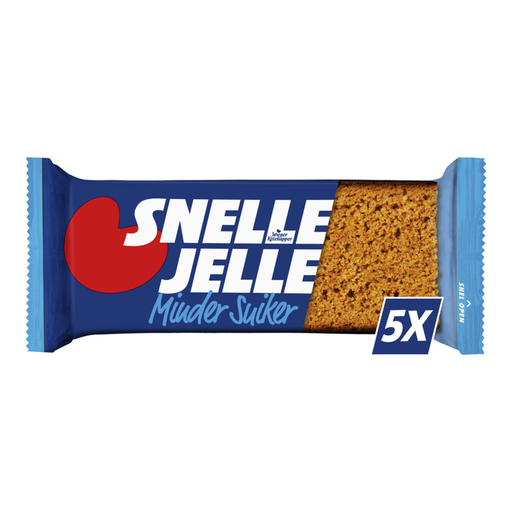
Snelle Jelle Breakfast Cake Less Sugar-Free 250g
The individually wrapped portions are well suited to self-service without any slicing. According to the product name, the pack contains 250 g. Don’t assume from the version name Less Sugar-Free that the Dutch breakfast cake is sugar-free: check the nutrition information on the pack. Before serving, also check the ingredients and allergens, particularly if any attendees need to avoid gluten, milk or nuts.
View at Joybuy
Frequently asked questions
How do I work out how many portions of Dutch breakfast cake I need for a conference break?
Start with the expected number of attendees and decide whether you’ll set out one portion per person or replenish a buffet as needed. For individually wrapped portions, you can use the stated number of pieces: for example, Albert Heijn and PLUS describe a Peijnenburg Naturel 10-pack with 10 portions of 28 g. Also consider the other snacks on offer and any late arrivals.
Is a multipack of individual portions always convenient for catering?
No. Individual portions are best suited to self-service and lunch boxes. If someone can replenish a buffet, a larger pre-sliced cake may suit that serving style better; just make sure you plan how to serve it and what to do with opened packs.
How can I make allergen information clear at the buffet?
Keep the allergen information for every Dutch breakfast cake you offer available at the serving point, and make it clear which information relates to which product. The Netherlands Food and Consumer Product Safety Authority states that allergens must be listed on the labels of pre-packed products. Keep the packaging, then check it before passing any information on to attendees.
Does gluten-free Dutch breakfast cake also meet other dietary requirements?
No. Check gluten-free Dutch breakfast cake separately for other ingredients and allergens. For example, the gluten-free Peijnenburg version described by Albert Heijn lists milk and lupin. Only choose an alternative after comparing its label with the dietary requirements you’ve been given.


