What should you look for when choosing?
When you’re having coffee with friends, taste, wholemeal ingredients, sugar content or ease of serving may be the deciding factor. Decide which matters most to your guests, then compare the labels of the options that meet their needs.
| What to consider |
What to check |
Who it matters to |
| Familiar taste |
Check that it’s a plain breakfast cake and look at the sugars per slice. |
If guests don’t have a particular preference for wholemeal or sweeteners, I want to serve a familiar option. Around 40% of consumers are said to prioritise a familiar taste when buying. |
| Wholemeal and fibre |
Compare the wholemeal content, fibre and sugars per 100 g. |
If a guest is looking for wholemeal rye, I want to know what’s in the cake without assuming that it’s also low in sugar. Wholemeal and fibre are said to be top priorities for around 30% of consumers. |
| Less sugar |
Check the sugars per 100 g and per slice; for a no added sugar version, read the ingredients too. |
I want to offer a lower-sugar option, but I need to be able to see whether a product contains less sugar or has no added sugar. This is said to be the main consideration for around 20% of consumers. |
| Allergens and serving |
Read the allergen information and possible traces, the number of servings and any warnings about sweeteners. |
When serving several guests, I want to ask about dietary requirements in advance and keep the pack to hand. These practical checks are said to be the main buying consideration for around 10% of consumers. |
Breakfast cake for coffee on Joybuy
These products offer two different options for a coffee break: a sliced wholemeal breakfast cake and a Snelle Jelle version whose sugar information is worth checking. If your guests have allergies, always check the pack.
 No image available
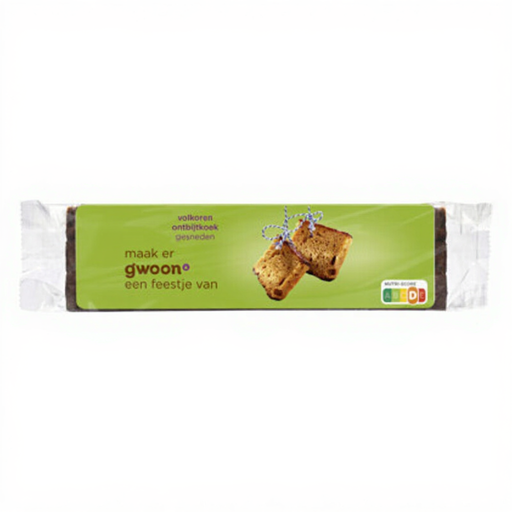
g'woon sliced wholemeal breakfast cake, 485 g
A sliced option if you’d like to offer your guests wholemeal breakfast cake. Joybuy’s product information lists 43% wholemeal rye flour, 5.9 g of fibre and 34 g of sugars per 100 g. If anyone has allergies, check the pack: the ingredients list rye, but the allergen information doesn’t match.
View on Joybuy
 No image available
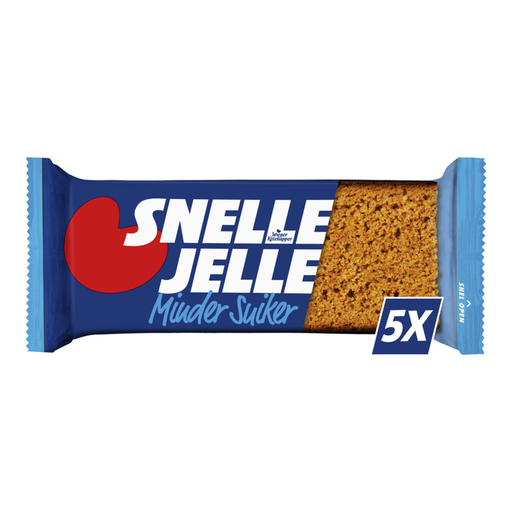
Snelle Jelle Breakfast Cake Less Sugar-Free, 250 g
A breakfast cake to consider if a guest is particularly mindful of sugar. The words ‘Less Sugar-Free’ in the product name don’t prove that the cake is sugar-free; check the sugars per serving and per 100 g, and read the explanation of the claim on the pack. If anyone has allergies, also check for rye and gluten, and the possible presence of nuts and milk.
View on Joybuy
Frequently asked questions
Does wholemeal breakfast cake automatically contain less sugar?
No. Assess the wholemeal ingredients and sugars separately. PLUS lists its wholemeal breakfast cake as containing 41% wholemeal rye flour, 5.7 g of fibre and 34.1 g of sugars per 100 g; compare the figures on the pack you’re thinking of buying.
Is breakfast cake with no added sugar also sugar-free?
No. According to the product information at Jumbo, Peijnenburg Wholemeal with no added sugar still contains 4.9 g of sugars per 100 g. Read the nutritional information and ingredients if you also want to check which sweeteners are used.
Which allergens should I check before serving breakfast cake?
Read the label for each specific version and ask guests which ingredients they need to avoid. For Peijnenburg Breakfast Cake Less Sugar, Albert Heijn lists rye, wheat and cereals containing gluten, with the possible presence of nuts; PLUS also notes that its wholemeal breakfast cake may contain wheat, barley and oats.
What should I look out for if there’s a dog in the house?
Keep breakfast cake containing xylitol out of your dog’s reach. The product information for Peijnenburg Wholemeal with no added sugar warns that xylitol is not suitable for animals and advises contacting a vet if it’s eaten.
Can I assume that breakfast cake contains iodised baker’s salt?
No, don’t assume that a particular breakfast cake contains it without checking the label. The Dutch Commodities Act Decree on the Addition of Micronutrients to Foods defines baker’s salt as iodised table salt for bread and other baked goods; that definition doesn’t tell you which salt was used in the breakfast cake on your table. Check the ingredients list to find out.


