Who is a smaller pack useful for?

A small gathering with fewer leftovers

If you’re using Dutch breakfast cake in one dish or serving just a few people, a 280 to 350 g pack may be a better fit than a 485 to 550 g pack. Work out how much you’ll need for Christmas dinner, and whether you’d like to eat any leftovers later.

Home cooks using breakfast cake in a recipe

The recipe determines which type will work. Lidl features Dutch breakfast cake in a stew, for example. For a dish like this, compare the required shape and flavour with those of the pack you’re buying.

Guests with specific ingredient requirements

If your guests need to avoid certain allergens, check the ingredients of the exact product. Jumbo’s product information lists rye and wheat, among other ingredients, in its 280 g Dutch breakfast cake; PLUS lists milk and lupin in Peijnenburg’s gluten-free breakfast cake.

What should you look for when choosing?

First, work out how much Dutch breakfast cake you need and how you’ll use it in your Christmas dinner. Then compare the ingredients and availability of the product you’ve chosen.

What to consider What to check Who it matters to
Quantity and leftovers Compare the net weight with the amount needed for your recipe or table. Think about whether you’ll use any leftover cake later. If I only need a few slices or a small amount for a dish, I don’t want to open a large pack. Around 36% of consumers prioritise getting the right amount.
Flavour and use Check whether the recipe calls for plain Dutch breakfast cake or allows for a ginger or pearl sugar variety. For a stew, I want to know whether an extra flavour note will change the dish; for a sweet course, I might deliberately choose a flavoured variety. For around 29% of consumers, how they’ll use the product is the deciding factor.
Ingredients and allergens Read the ingredients list and allergen information on the exact pack, even if the product carries a dietary claim. If a guest needs to avoid certain ingredients, I look beyond terms such as ‘gluten-free’ or ‘zero’. Around 21% of consumers prioritise the ingredients.
Availability Check whether your chosen product is available at your shop and whether you need to buy it in store. If I want to use a particular pack for dinner, I need to be able to buy it in time. Around 14% of consumers prioritise availability.

Common selection mistakes

  • Treating ‘half loaf’ as a standard size

    Smaller examples weigh 280, 285 or 350 g; larger packs in the ranges mentioned weigh 485 or 550 g. The term alone doesn’t tell you how much Dutch breakfast cake you’re buying.

    Work out how much you need for your dish or gathering, then choose by net weight rather than assuming there’s a standard half-size.

  • Choosing a flavoured variety without checking the recipe

    Koek & Bakker’s ginger and pearl sugar varieties add a distinct flavour or texture. They won’t necessarily suit a dish where you’d planned to use plain Dutch breakfast cake.

    Choose a strongly flavoured variety only if you want that flavour to be part of the dish or dessert.

  • Relying on a dietary claim alone

    A label such as ‘gluten-free’ doesn’t answer every question about other allergens. For example, PLUS lists milk and lupin in Peijnenburg Ontbijtkoek Glutenvrij, which weighs 285 g.

    Read the ingredients and allergen information on the exact pack before choosing Dutch breakfast cake for a guest.

  • Not taking leftovers into account

    A larger pack may be a good choice if you’ll use the cake after Christmas dinner too. Without a plan, you could end up with more left over than you intended to buy.

    Keep opened Dutch breakfast cake tightly sealed in a cool, dry, dark place. The Netherlands Nutrition Centre also lists freezing as a storage option.

Brands to consider

Peijnenburg

Peijnenburg offers Dutch breakfast cake in a range of shapes and varieties, including sliced plain and unsliced gluten-free options.

  • Albert Heijn lists 550 g and 18 slices for its sliced plain variety; PLUS lists a 285 g unsliced gluten-free variety.
  • PLUS lists milk and lupin in the gluten-free variety. Check the pack label if you’re serving it to guests.

Jumbo

Jumbo offers plain and wholemeal Dutch breakfast cake in 280 g packs, giving you two options if you’re looking for a smaller quantity.

  • Both varieties have the same stated net weight, so you can choose the type you prefer without moving up to a larger size.
  • The product information lists gluten, rye and wheat in these varieties.

Albert Heijn

Albert Heijn lists a 350 g sliced own-brand Dutch breakfast cake.

  • Its size sits between the 280 g packs and the larger examples weighing 485 to 550 g.
  • Albert Heijn states that this variety is only available in store; check the pack information there too.

PLUS

PLUS lists a range of own-brand options, including 485 g sliced plain Dutch breakfast cake and 550 g unsliced plain Dutch breakfast cake.

  • The different shapes let you choose a pack to suit how you plan to use it.
  • For a small dinner, the larger quantity could leave you with more leftovers. Check the latest product information and packaging.

Koek & Bakker

ALDI lists a range of Koek & Bakker products, including wholemeal Dutch breakfast cake and unsliced varieties with ginger or pearl sugar.

  • The ginger and pearl sugar varieties give you distinct flavours to choose from for a sweet dish.
  • The 465 and 485 g varieties mentioned aren’t small packs; choose them if the flavour and quantity suit your plans.

Dutch breakfast cake at Joybuy

If you need a smaller amount of Dutch breakfast cake and can use individual bars instead of slices from a whole cake, this is another option to consider. Check which shape and flavour your recipe calls for.
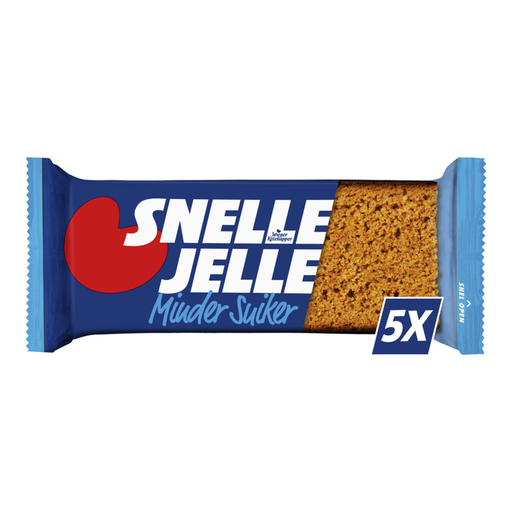
Snelle Jelle Breakfast Cake Less Sugar-Free 250 g

Snelle Jelle Breakfast Cake Less Sugar-Free 250 g

A handy option for a Christmas dinner where you can use a smaller amount of Dutch breakfast cake in individual bars. This isn’t a whole or sliced cake, so if your recipe calls for slices, check whether the bar shape will work. For ingredient or dietary requirements, read the latest label and don’t infer the nutritional value from the variety name alone.

View at Joybuy

Frequently asked questions

What weight is roughly equivalent to half a Dutch breakfast cake?

Use the net weight as a guide, as ‘half loaf’ doesn’t refer to a standard pack size. Jumbo lists Dutch breakfast cake at 280 g, while Albert Heijn lists a 350 g sliced variety. Compare these amounts with what you need for Christmas dinner.

Can you keep opened Dutch breakfast cake after Christmas dinner?

Yes. Keep opened Dutch breakfast cake tightly sealed in a cool, dry, dark place. The Netherlands Nutrition Centre recommends storing opened Dutch breakfast cake in a kitchen cupboard for more than two months, or in the freezer for three months. Check the cake for visible mould or signs of drying out too.

Is gluten-free Dutch breakfast cake free from other allergens too?

No. ‘Gluten-free’ doesn’t mean a product is free from other allergens. According to PLUS’s product information, Peijnenburg Ontbijtkoek Glutenvrij, weighing 285 g, contains milk and lupin. Check the exact pack for any ingredients that are relevant to your guest.

Does Dutch breakfast cake always contain iodine because it uses baker’s salt?

No, that doesn’t follow from the Dutch rule. The Netherlands Food and Consumer Product Safety Authority states that iodine compounds may only be present in bakery products through the addition of baker’s salt. This rule doesn’t confirm the ingredients or iodine content of a particular Dutch breakfast cake. Check the label and, if necessary, ask the manufacturer about that variety.
