
Buffet hosts who want to cut thick slices themselves
If you want to use Dutch breakfast cake as a base for topped bites, an unsliced loaf lets you control the thickness of each slice. You’ll need to set aside time to cut the portions yourself.


If you want to control the thickness of topped buffet bites, choose unsliced Dutch breakfast cake and cut the slices yourself. Pre-sliced cake saves on preparation, but the slice count and pack weight don’t tell you exactly how thick the slices are. If you’re serving guests, also check the ingredients, allergens and nutritional information on the pack you buy.
If you want to use Dutch breakfast cake as a base for topped bites, an unsliced loaf lets you control the thickness of each slice. You’ll need to set aside time to cut the portions yourself.
A pre-sliced pack saves you the effort of cutting. When planning portions, check the weight and, if stated, the number of slices; neither confirms a specific slice thickness.
If you’re comparing varieties for their sugar, fibre or ingredients, check the nutritional information and allergen details on the pack you buy. Keep this information handy when serving the cake to guests.
First decide whether you want to cut the slices to your preferred thickness or simply serve them quickly. Then check the details on each pack so you know what you can tell your guests about the ingredients and nutritional value.
| What to consider | What to check when buying | Who it matters to |
|---|---|---|
| Slice thickness | Choose an unsliced loaf if you want to control the thickness yourself. Don’t try to work out the exact thickness from the weight or number of pre-sliced pieces. | For topped buffet bites, I want to decide how thick the slices are, even if that means cutting them myself; this is a priority for around 33% of consumers. |
| Allergens | Read the ingredients and allergen information on the exact pack, and keep it available at the buffet. | If guests ask about the ingredients, I want to be able to show them what’s in the Dutch breakfast cake; this is the main concern for around 27% of consumers. |
| Nutritional information | Compare sugar and fibre per 100 g and, if the portion size is given, per slice. Check the ingredients of wholemeal varieties. | I want to be able to choose between varieties with different sugar or fibre contents; around 20% of consumers prioritise this comparison. |
| Preparation and availability | Check that your preferred variety is available and look up your chosen shop’s opening hours around Boxing Day. | When I want to get the buffet ready quickly, it matters whether I can buy the cake in time and serve it straight away; this is the biggest consideration for around 20% of consumers. |
The number of slices or the pack weight won’t tell you their exact thickness. ‘Generously sliced’ is a product description, not a set measurement.
If thickness matters for your topped bites, choose an unsliced loaf and cut the slices yourself.
Dutch breakfast cake with no added sugars may still contain sugar. The amount per slice also depends on the portion size.
Check the sugar and fibre figures in the nutrition table per 100 g, and only compare portions if you know their weight.
Dutch breakfast cake may contain rye; the label may also mention other cereals in a warning about possible traces. The Netherlands Food and Consumer Product Safety Authority points out that allergen information for pre-packed foods is shown on the label.
Read the label on the exact pack and keep it handy in case guests ask about the bites.
Your planned shop could be difficult if your chosen store has different opening hours over the bank holiday.
Check your branch’s opening hours before planning your buffet shop. Lidl says that adjusted bank holiday opening hours can be checked using its store locator seven days in advance.
Peijnenburg sells both sliced and unsliced plain Dutch breakfast cake, making it a useful brand to compare if you’re considering both types.
PLUS lists a 485 g pack of sliced plain Dutch breakfast cake and a 465 g pack of unsliced ginger cake.
ALDI lists pre-sliced wholemeal Dutch breakfast cake and a pre-sliced zero variety from Koek & Bakker.
An Albert Heijn product description calls Bolletje plain Dutch breakfast cake ‘generously sliced’.
This product selection includes both unsliced and sliced wholemeal Dutch breakfast cake from G'woon.
These Joybuy products illustrate two options for your buffet: unsliced Dutch breakfast cake, which you can cut to your preferred thickness, and sliced wholemeal Dutch breakfast cake, which is ready to serve without any cutting. For both products, check the allergen information on the pack before serving them to guests.
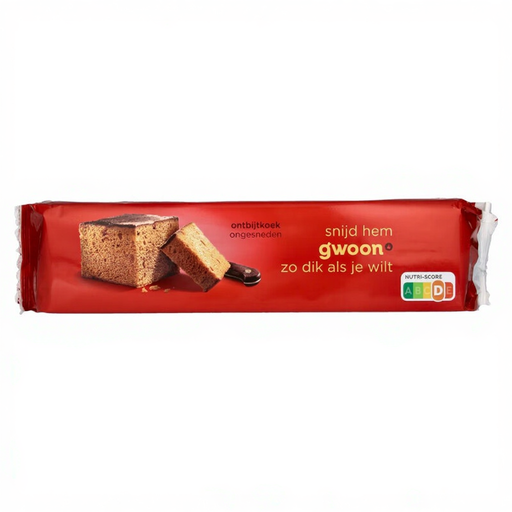 Image unavailable
A good choice if you want to control the slice thickness for topped buffet bites and have time to cut the cake yourself.
Unsliced Dutch breakfast cake in a 550 g pack.
The product information lists rye flour alongside conflicting allergen information. Before serving, check the ingredients and allergens on the physical pack.
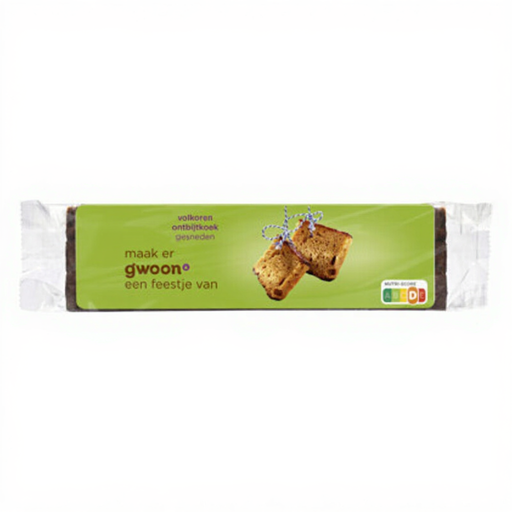 Image unavailable
An option if you want to serve pre-sliced portions and compare wholemeal varieties by their nutritional information; the slice thickness isn’t specified.
485 g pack. Joybuy lists 43% wholemeal rye flour and 5.9 g of fibre per 100 g.
The product information lists rye alongside conflicting allergen information. Before serving, check the ingredients and allergens on the physical pack.
Choose an unsliced loaf if you want to control the slice thickness to suit your toppings. Pre-sliced cake saves time, but a stated weight or slice count won’t tell you the thickness in millimetres.
No, Dutch breakfast cake with no added sugars may still contain sugar. The Netherlands Nutrition Centre lists 0.8 g of sugar in a 30 g slice of Dutch breakfast cake with no added sugar, compared with 11.2 g in a 30 g slice of regular Dutch breakfast cake. Check the label and portion size for the specific product you’re buying.
Keep the label from the Dutch breakfast cake you’re serving available so guests can check the ingredients and allergens. Look out for rye and any mentions of other cereals. The Netherlands Food and Consumer Product Safety Authority says that allergen information for pre-packed foods is shown on the label.
Don’t assume that Dutch breakfast cake contains iodine from baker’s salt. The Netherlands Nutrition Centre says that bakers aren’t required to use baker’s salt. Check the pack or ask the manufacturer which ingredients are used in the specific product.