
If you want guests to help themselves quickly
A pre-sliced cake saves you cutting it up during the party. Peijnenburg states that its 550 g sliced plain version contains 18 slices, which can help you plan how many to serve.


Pre-sliced Dutch breakfast cake is handy for a birthday party, as guests can help themselves to a slice. With an unsliced cake, you can decide how large the pieces should be. Individually wrapped portions are useful if you’re handing them out one per person, but check how many portions are in the pack. Whatever you choose, check the weight, nutrition information, ingredients and allergens for the exact product.
A pre-sliced cake saves you cutting it up during the party. Peijnenburg states that its 550 g sliced plain version contains 18 slices, which can help you plan how many to serve.
Compare the net weight with the number of guests and what else you’re serving. PLUS lists an unsliced 550 g Dutch breakfast cake, while Albert Heijn lists a 600 g cake. With an unsliced cake, you decide how large the pieces should be.
Don’t rely on the product category alone: check the ingredients, nutrition information and allergen warnings on the pack you plan to serve. This is particularly important if any of your guests have specific dietary requirements or allergies.
First, work out how much cake you want to serve and how guests will help themselves. Then check what information you’ll need to meet their dietary requirements.
| What to consider | What should you check? | Who is this important for? |
|---|---|---|
| Amount | Compare the net weight with the stated number of slices or portions. | I want to serve enough cake and estimate how many pieces I can hand out. For around 37% of consumers, the amount is the top priority. |
| Ease of serving | Check whether the cake is unsliced, pre-sliced or individually wrapped. | If guests are helping themselves from the table, I don’t want to have to stop and cut it up. Ease of serving is the most important factor for around 27% of consumers. |
| Dietary preferences | Compare the ingredients and nutritional values of the exact product, including sugars and fibre per 100 g. | I want to check that a specific preference, such as a wholemeal option, is reflected in the actual nutrition information. This is the most important consideration for around 18% of consumers. |
| Allergens | Check the current pack for ingredients and any warnings about the possible presence of allergens. | Before offering a guest a slice, I want to know which allergens are listed for this product. This check is a priority for around 18% of consumers. |
Two cakes of a similar weight won’t necessarily give you the same number of ready-to-serve pieces. Peijnenburg explicitly states that its 550 g sliced version contains 18 slices; with an unsliced cake, the number depends on how you cut it.
Use any stated portion information to plan ahead. If there isn’t any, decide in advance how you’ll divide up the cake.
A description such as ‘zero’ or ‘wholemeal’ doesn’t tell you on its own how much sugar or fibre the Dutch breakfast cake contains.
Check the nutrition table and ingredients for the exact product. Compare values on the same basis, for example per 100 g.
The fact that one Dutch breakfast cake lists baker’s salt doesn’t tell you exactly what’s in another product.
If iodine is important to your choice, check the ingredients list on the pack you actually plan to serve.
Always compare the specific pack within each brand: the slicing, weight and ingredients can vary between products.
Peijnenburg offers, among other products, a 550 g sliced plain Dutch breakfast cake and individually wrapped slices.
Its own-brand range includes a 600 g Dutch breakfast cake for anyone comparing pack weights.
Jumbo lists, among other products, a 475 g sliced plain Dutch breakfast cake and a 550 g plain version.
PLUS lists a 550 g unsliced plain Dutch breakfast cake.
ALDI lists 485 g pre-sliced zero and wholemeal versions from Koek & Bakker.
Lidl lists Tastino Dutch breakfast cakes in sizes from 465 to 550 g, including an unsliced plain version.
These Dutch breakfast cakes suit three ways of serving: cutting your own slices, putting out a pre-sliced cake or handing out smaller portions. Choose a pack weight to suit your group and always check the label if guests have dietary requirements.
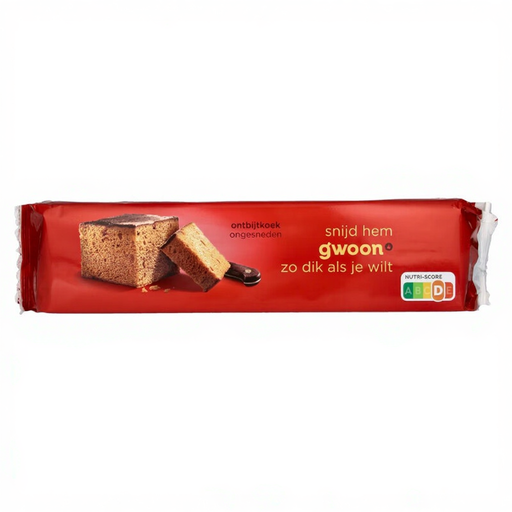 Image unavailable
For anyone who wants to decide how large the pieces should be at the party; remember you’ll need to slice it before serving.
If any guests have allergen requirements, check the ingredients and allergen information on the pack.
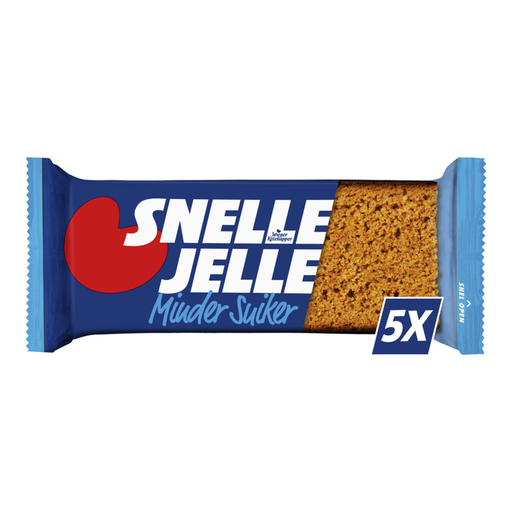 Image unavailable
A smaller pack to consider if you want to hand out individual portions rather than cut into a large cake.
Don’t infer the nutritional value from the product name: compare the sugar and other values on the pack, and check the allergen information.
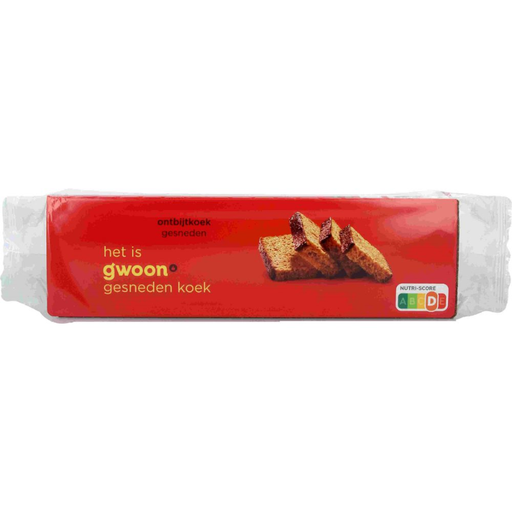 Image unavailable
For anyone who wants to put a sliced cake on the table without having to cut it during the party. Use the pack details and what else you’re serving to decide whether 485 g is enough for your group.
If your guests have dietary requirements, check the nutrition information, ingredients and allergens on the pack.
Use the net weight and, if stated, the number of slices to plan. Peijnenburg lists 18 slices for its 550 g sliced plain cake. Then think about how many guests will want some and what else you’ll be serving.
Choose a sliced cake if you want guests to be able to take a slice straight away, or an unsliced cake if you want to decide the portion size yourself. Individually wrapped slices are handy for handing out one per person; just check that the pack contains enough for your group.
Check the ingredients and allergen warnings on the exact pack before serving the cake. Rye is a gluten-containing grain, so don’t assume a product is suitable based on its name.
Check the ingredients list on the specific pack; don’t assume every Dutch breakfast cake contains the same salt. If this information matters to your choice, check the label of the product you plan to serve.