
Vandaag of morgen in huis

Kwaliteit gegarandeerd

Welkomstaanbiedingen ontgrendelen: GRATIS bezorging | Tot 80% korting | Gratis 30 dagen JoyPlus-proefperiode
Download de app
When you’re looking for durable stainless steel kitchenware, you usually want something that won’t need replacing anytime soon, is easy to clean, and keeps your food safe to store. Yet not every metal plate, lunchbox or thermal food jar is automatically a smart buy. Product photos and marketing jargon often don’t tell you how an item will perform in daily use.
So pay close attention to the material, construction, closure and permitted uses. That way, you’ll avoid discovering that a stainless steel plate is too small, a lunchbox leaks, or an insulated food jar is awkward to clean.
Stainless steel plates and other unbreakable tableware are practical for children, students and campers. However, stainless steel can get hot when used with warm dishes. A plate that the product description says is suitable for an oven or induction hob shouldn’t be treated as a serving dish or cooking pan without checking first.
Always check:
With a stainless steel lunchbox or air-tight food containers, the silicone ring, valve and closure determine how practical the product really is. A metal container without a good seal isn’t suitable for soup in a full work bag.
Pay attention to the care advice. For example, the Cooker King containers state that the stainless steel tubs are dishwasher-safe, while the lids and silicone seals should ideally be cleaned in the top rack or by hand. An insulated lunch bag, according to the description, should not go in the dishwasher.
A manufacturer may state a number of hours of heat or cold retention, but the actual duration also depends on the starting temperature, the amount of food and how often you open the lid. So treat such figures as a product specification, not a guarantee for every situation.
According to the product description, Stanley states up to 13 hours of heat retention for the Artisan Thermal Food Jar. Thermos states up to 14 hours hot and up to 24 hours cold for the SK Food Jar. These values come from the brands’ product information and can vary in use.
Many products in this category list 304 stainless steel. This material is linked in product descriptions to corrosion resistance, easy cleaning and everyday use. Also check whether the seller provides information about suitability for food contact and the responsible party within the EU.
A smooth or seamless interior is practical, because there are fewer edges where food residue can get trapped. A brushed finish can make fingerprints and minor signs of use less visible, but abrasive cleaning products can damage the surface.
A large stainless steel plate is handy for main meals, while a smaller plate can be suitable for fruit, snacks or children’s portions. For meals with separate components, a stainless steel divided plate or a 3-section plate are logical choices.
Don’t just look at the diameter; also consider:
According to the product information, the PURECOOK 3-section plates have a diameter of 19.5 cm and a height of 3.9 cm. The set is intended for children, family portions, picnics and camping, among other uses.
For food storage, a wide opening and a removable silicone ring are useful. A wide opening makes filling and cleaning easier, especially with porridge, soup or sauces. With hot food in a sealed container, you also need to be able to release the pressure.
Also check whether “dishwasher-safe kitchenware” applies to the entire product or only to the metal part. Lids, cork components and silicone rings may have different care instructions.
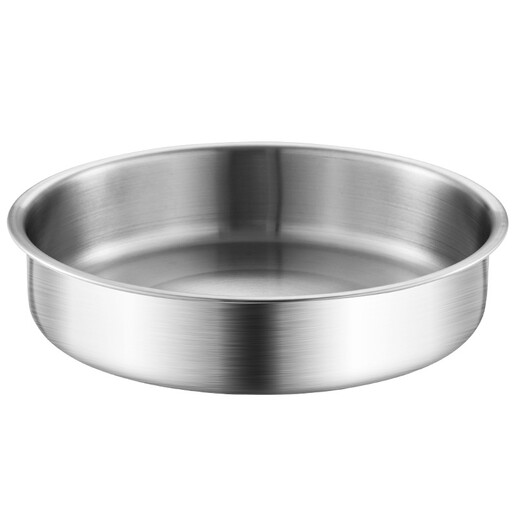
Why this fits the profile: A compact metal plate for everyday use at home, in student digs or during a simple picnic.
The product description states 304 stainless steel, an unbreakable construction and easy cleaning. Do check the suitable applications before heating it.
20 cm diameter; according to the product information, suitable for oven, steam oven and induction.
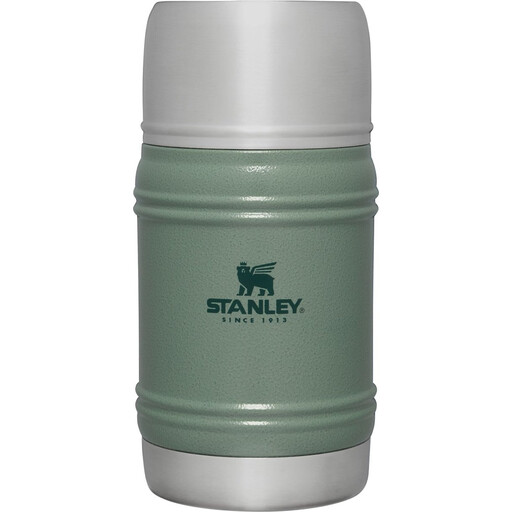
Why this fits the profile: Suitable for office professionals, hikers and meal preppers looking for an insulated food jar with a compact capacity.
The product information states a leak-proof closure and a wide range of uses for hot meals and soup. Check the recommended care for the version you choose.
0.50 litre capacity; according to the product description, made from recycled stainless steel and featuring double-wall insulation.
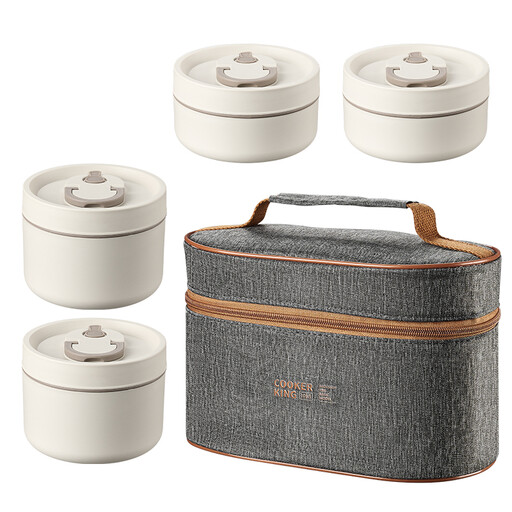
Why this fits the profile: A practical choice for meal preppers and families who want to store or take multiple portions at once.
The description mentions a silicone valve for pressure release with hot food. This helps with practical opening, but the closure must be fully sealed for transport.
Set of five; metal containers are dishwasher-safe according to the product information.
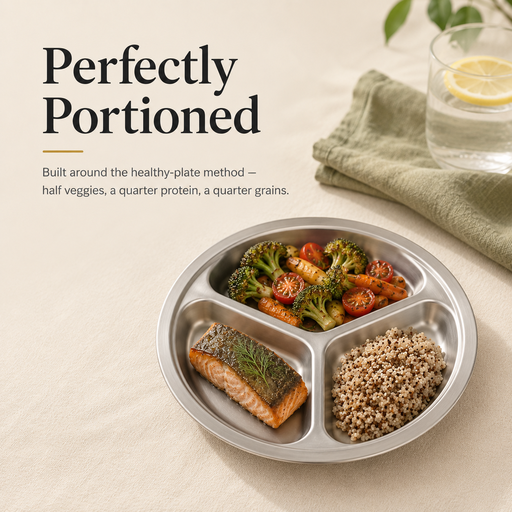
Why this fits the profile: The three sections are handy for children, portion control, picnics, camping tableware and meals where flavours need to stay separate.
The one-piece construction has no seams or gaps between the sections, according to the product description. The plate is not intended for the microwave.
Set of two; 304 stainless steel, dishwasher-safe according to the product information and suitable for outdoor use.
We’ve put together a full, up-to-date list of products that fully meet these strict selection criteria and current European safety regulations.
A few simple habits will help keep your stainless steel kitchenware in good condition:
Porcelain ramekins and ovenproof tableware require a different approach. According to the product description, the DAFUCERAMIC ramekins are suitable for oven, microwave, freezer and dishwasher, but the plastic lids have a lower temperature limit. Also avoid sudden temperature changes to reduce the risk of cracking.
According to the product descriptions, 304 stainless steel is used for food contact and everyday kitchen and serving use. Check the stated material information, care instructions and EU responsible party for each product. A material name alone doesn’t tell you whether every component, such as a lid or coating, has the same properties.
No, don’t assume it can. Metal tableware is generally not intended for microwave use. Check the product information and use an alternative that is explicitly stated as microwave-safe.
The lifespan depends on the thickness of the steel, the closure, how you use it and how you care for it. The metal part can remain usable for a long time, while silicone rings and lids may show wear sooner. Replace a seal when it becomes deformed, no longer closes properly or holds onto food odours.
