
Vandaag of morgen in huis

Kwaliteit gegarandeerd

Welkomstaanbiedingen ontgrendelen: GRATIS bezorging | Tot 80% korting | Gratis 30 dagen JoyPlus-proefperiode
Download de app
Transporting a sofa, removal boxes or garden waste in a trailer seems straightforward until the load shifts while you are driving. A 4-metre Dunlop ratchet strap can be a practical solution, but only if its length, load capacity and attachment method suit your needs.
Pay particular attention to these common purchasing pitfalls:
A length of 4 metres is suitable for many applications involving boxes, furniture and materials in a trailer. Measure the distance between the attachment points beforehand and allow for the size of the load. The 250 kg Dunlop version has a strap width of 25 mm. This makes it relatively compact for everyday use.
For larger or heavier objects, a wider strap may be more suitable. The 500 kg Dunlop ratchet strap, for example, is 38 mm wide. However, a wider strap is not automatically suitable for every situation: the hooks, anchor points and trailer structure must also be able to withstand the load.
Treat the stated capacity as a product specification, not as a general guarantee for every transport situation. Therefore, check:
When securing a load in a trailer, it is sensible to use several straps when the shape or weight of the load requires it. Tighten the strap firmly, but avoid damage caused by over-tightening.
Nylon is often used for a removal tie-down strap because it is lightweight and flexible. Check the condition of the material before setting off: fraying, cuts, wear-related discolouration or a bent ratchet are all reasons to stop using the strap.
A ratchet mechanism allows controlled tightening. An automatic rewind function or automatic winding system can help you store the strap neatly after use. Wind the strap up when it is clean and dry, and do not store it under tension for extended periods.
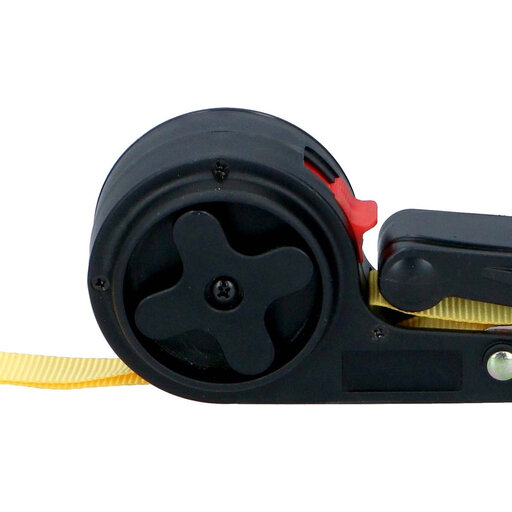
Why it suits this profile: This 4-metre strap is designed for everyday transport tasks, such as securing removal boxes, furniture or materials in a trailer.
The length, 25 mm width and maximum capacity of 250 kg are clearly stated. This means you do not have to rely solely on the colour or marketing name.
Nylon material, ratchet mechanism, automatic rewind function and a length of 4 metres.
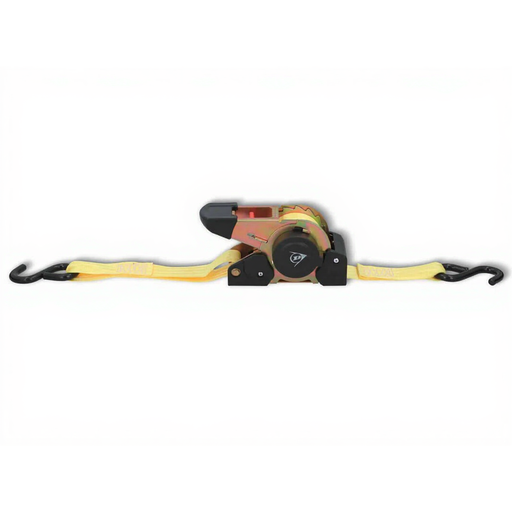
Why it suits this profile: The wider strap is a logical choice if you regularly transport larger items of furniture, building materials or heavier loads.
The specifications state both the 38 mm strap width and the 500 kg capacity. However, check that your attachment points support this application.
38 mm nylon strap, ratchet system, 4-metre length and automatic winding system.

Why it suits this profile: This is not a tie-down strap, but it can be used alongside one to make edges, steps or hazardous areas around a work or loading site more visible.
The clear black-and-yellow marking helps improve visibility, but it is not a substitute for a ratchet strap when securing a load.
Self-adhesive tape, 50 mm wide and 18 metres long, designed for indoor and outdoor use.
We have put together a complete, up-to-date list of products that fully meet these strict selection criteria and the applicable European safety regulations.
Do not use a car and trailer tie-down strap as a tow rope, lifting strap or substitute for a seat belt. Do not secure loads to components that are not designed for this purpose. According to the product information, the Dunlop models mentioned come with a minimum statutory guarantee of two years under European consumer law. Also check the current product information and safety instructions before use.
It can be suitable for many medium-sized loads, such as removal boxes, garden waste or furniture. First check that 4 metres is enough to go around the load and reach the attachment points. Large or irregularly shaped objects may require several straps or a longer version.
The stated 250 kg is a product specification, not general permission to transport any load weighing that much. Safe use also depends on the attachment points, weight distribution, condition of the strap and tightening method. Do not exceed the stated capacity.
Its service life depends on use, storage and wear. Before every journey, inspect the strap for fraying, tears, mould, burn marks and damaged hooks. Store it somewhere dry and clean, away from direct sunlight. Replace the strap if in doubt; a low purchase price is not worth the risk of a load coming loose.
