
Dune walker with a small bag
You want to capture landscapes on a walk and are weighing up the size and weight of your complete kit against the angles you use.


Choose based on what you want to photograph from accessible paths: wide dune landscapes, distant details or different angles during a single walk. A fixed-lens camera keeps your kit simple, a travel zoom gives you more framing options without changing lenses, and a mirrorless camera lets you choose your lens. With a mirrorless camera, compare the complete kit and check what protection against the weather and sand applies to each camera-and-lens combination.
You want to capture landscapes on a walk and are weighing up the size and weight of your complete kit against the angles you use.
You stick to accessible paths but also want to frame distant ridgelines or details. Optical reach matters, but more zoom alone is no guarantee of more usable detail.
You often take photos in wind or rain and want to know what protection applies to both the camera and the lens. A weather-resistant rating does not automatically mean your kit is protected against sand or salt water.
| What to consider | What should you check? | Who is this important for? |
|---|---|---|
| Size of the complete kit | Compare the weight including battery and card. With a mirrorless camera, also include the lens you plan to take. | If I want to carry a kit that takes up little space on a walk, I look at the overall size, not just the camera body. Around 31% of consumers put portability first when buying. |
| Field of view and landscape detail | Check the field of view in 35 mm equivalent, along with the sensor and lens on the exact model. Consider whether that framing suits the viewpoints available from the path. | If I want to fit dune ridges and foreground into one shot, field of view matters more than a high megapixel count alone. Around 25% of consumers prioritise landscape detail and the right framing. |
| Wind, sand and rain | Check the protection claim for the exact model, lens and any accessories. Limit exposure to windblown sand, especially around openings and when changing lenses. | If I want to take photos in changeable coastal weather, I want to know what protection applies to my complete kit and what conditions apply. Around 25% of consumers put protection in coastal weather first. |
| Optical reach | Compare the optical zoom and focal lengths in 35 mm equivalent. Assess the lens and sensor separately from the zoom range too. | If I want to frame distant dune edges from an accessible path, optical reach helps me do so without walking closer. Around 19% of consumers choose reach for distant subjects as their main buying priority. |
The stated weight of a body is not directly comparable with that of a complete compact camera. With a mirrorless camera, you need to add the lens you’ll be carrying.
Compare the kit you actually plan to carry, including the battery, card and chosen lens.
Protection may depend on the exact camera-and-lens combination and the accessories required. Sand can damage equipment that is not sealed.
Check the conditions for the exact model and limit exposure to windblown sand.
Zoom determines the framing you can achieve, but on its own it says nothing about how much detail or what image quality you’ll get.
Choose the reach you need from accessible viewpoints, and assess the lens and sensor separately.
The RX100 VII is a compact fixed-zoom alternative for anyone who wants to frame a range of angles with one camera.
The X100VI is a fixed-focal-length camera for anyone who wants to shoot with a 35 mm equivalent field of view.
The GR IV is a fixed-lens camera with a wide field of view for anyone who deliberately wants to shoot with a single focal length.
The LUMIX TZ99 is a compact fixed-lens camera with a wide optical zoom range.
The OM-5 Mark II is a mirrorless option for anyone who wants to choose a lens and assess the protection offered by the combination.
Canon offers both a compact fixed-zoom camera and a mirrorless camera with interchangeable lenses.
This Joybuy product selection includes compact cameras and a mirrorless camera kit for landscape photography on the go. Check whether the range, field of view and protection of each model suit your plans for the dunes.
 No image available
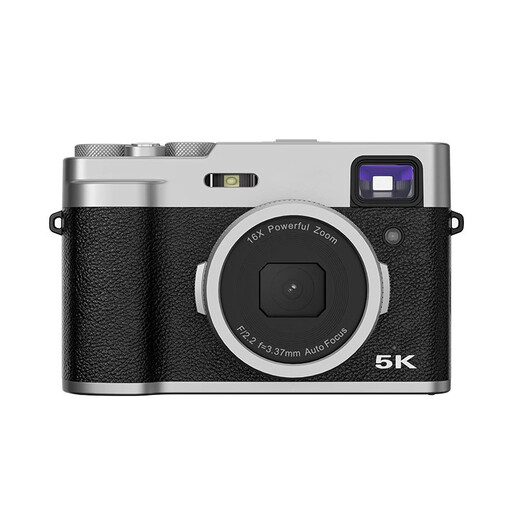
An option to consider if you want to capture different framings with one camera.
The product title lists 12× optical zoom; the description mentions 4K video and Wi-Fi.
 No image available
A camera to take along for everyday photography on the go.
The title lists 48 MP; the product description mentions autofocus, an optical viewfinder and an LCD screen.
 No image available
An option to consider if you want to use optical zoom for distant subjects.
The title lists 56 MP and 10× optical zoom; the description mentions electronic image stabilisation and front and rear cameras.
 No image available
The zoom may be useful if you want to frame distant subjects.
The title lists 18× zoom. The product description warns that the camera should be protected from water and moisture.
 No image available
A mirrorless camera kit to consider if you want to frame landscapes and close-ups with a single interchangeable zoom lens.
The product description mentions an APS-C sensor and an included 16–50 mm zoom lens. It also warns against exposing the camera to moisture.
Compare the field of view in 35 mm equivalent of the lens on the exact model, and consider whether you can frame the landscape you want from accessible viewpoints. A fixed lens of 28 or 35 mm equivalent gives you a different framing from the 24 mm equivalent wide-angle setting on the zoom cameras mentioned. Megapixels alone do not determine photo quality.
Only if local access rules allow it. Staatsbosbeheer generally allows walking in the Schoorlse Duinen only on official paths, with specific exceptions. Natuurmonumenten directs visitors to the information and signs for the area in question, so check the rules for the place you’re visiting.
Under Natuurmonumenten’s area rules, you do not need permission to take photos independently for your own enjoyment, as long as you follow the site rules. You do need to apply for permission for the professional or commercial productions and photography workshops described there. This applies to Natuurmonumenten’s rules and is not a general permit statement for all Dutch dunes.
Canon warns that sand can damage equipment that is not sealed. Check what protection applies to your exact kit, put your camera and lens away when you’re not using them, and avoid changing lenses when sand is blowing. These precautions do not guarantee that a camera is sand-resistant.
For a consumer purchase in the Netherlands, the Dutch government advises contacting the seller if a product is faulty. A manufacturer’s warranty is additional; whether an issue is covered by the legal guarantee depends on the circumstances and the cause.