
Vandaag of morgen in huis

Kwaliteit gegarandeerd

Welkomstaanbiedingen ontgrendelen: GRATIS bezorging | Tot 80% korting | Gratis 30 dagen JoyPlus-proefperiode
Download de app
A dumbbell set seems simple: choose a weight, place your order and start training. In practice, dumbbells vary considerably in how easy they are to use and store, and in how easy they are to expand. Beginners sometimes buy a set that’s too light, while others pay for features they’ll hardly use at home.
Use these checks to compare dumbbell sets based on specifications you can verify, rather than marketing claims.
A description such as ‘10 kg dumbbell set’ could mean that the complete set weighs 10 kg. With a fixed set of 2 x 5 kg, each dumbbell weighs 5 kg. With an adjustable set, the total weight is divided between the weight plates, bars and collars.
So always check:
A 20 kg or 30 kg dumbbell set may therefore be different from what you’d expect based on the title.
Neoprene dumbbells feel comfortable and often offer extra grip. They’re useful for cardio, light exercises and longer sets. However, a soft coating can be damaged if you put the weights down hard or use them on a rough surface.
Check the material and care instructions. The specifications for various sets state that they’re made from cast iron with a neoprene coating. This gives you a clear indication of the construction, but doesn’t mean the coating is completely wear-resistant.
Adjustable dumbbells save space, but you’ll need to change the plates and tighten the collars properly. This takes more time than training with fixed weights. Check that all the collars are secure before each exercise.
A 5-in-1 system may also support several types of training, but converting it into a barbell, kettlebell or push-up stand, for example, requires assembly. For short workouts, a fixed dumbbell set may be more practical.
For light cardio, arm exercises and high-repetition workouts, hand weights of 1 to 3 kg are often a good place to start. A set with 2 x 1,5 kg or 2 x 2 kg is suitable if you mainly want to perform controlled movements.
Lunges, squats, rows and presses may require more resistance. A pair of 2 x 4 kg or 2 x 5 kg provides more of a challenge without the need to fit weight plates. If you want to build up your strength, you could choose adjustable dumbbells weighing 10, 20 or 30 kg.
The handle should be long enough to hold comfortably and shouldn’t turn during a movement. Check the stated grip length and diameter if you have small or large hands.
Hexagonal dumbbells have flat ends, so they’re less likely to roll away when you put them on the floor between sets. This is useful for exercises such as renegade rows, but always put the weights down gently to reduce the risk of damaging the floor or the product.
Fixed dumbbells are ready to use straight away and need little maintenance. They’re practical for beginners, office workouts and cardio. One drawback is that you’ll need several pairs if you want different levels of resistance.
Adjustable dumbbells take up less storage space than several separate weights. For example, a 20 kg set may consist of weight plates, bars and spin-lock collars. Before you buy, check how the set is assembled, the size of the plates and how much storage space you have.
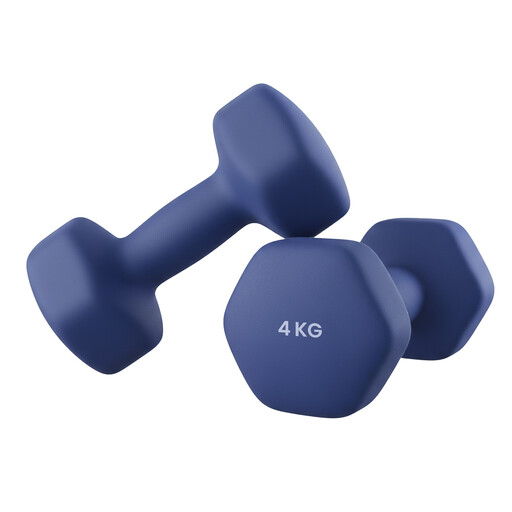
Why it suits this profile: This fixed pair of 2 x 4 kg is ready to use for strength training at home, with no assembly or loose plates required.
The product page clearly states 2 x 4 kg. The hexagonal shape also helps prevent the dumbbells from rolling away.
Cast iron with a neoprene coating, an ergonomic grip and a fixed weight that needs no adjustment.

Why it suits this profile: Three pairs weighing 1, 2 and 3 kg offer a choice of weights for different exercises and users in the same household.
The set makes the weight of each pair clear and comes with a PP plastic stand. This helps keep the weights neatly stored instead of lying around.
Six dumbbells, a neoprene coating, hexagonal ends and a stand for tidy storage.
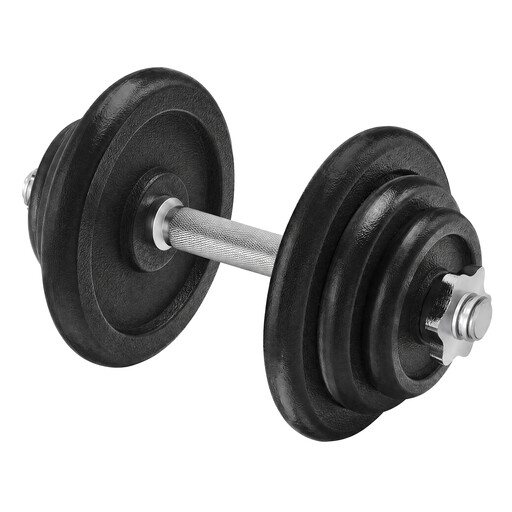
Why it suits this profile: This adjustable set is designed for users who want to combine several resistance levels for a range of exercises.
The set contents list the 5 kg, 2,5 kg and 1,25 kg plates separately, along with the bars and spin-lock collars. This makes it easier to plan your workout load.
A 20 kg set, adjustable resistance, knurled bars and cast-iron plates with a painted finish.
Use the dumbbells on a flat, stable surface. Put them down gently after each set and don’t store them on a high shelf. Check the threads and spin-lock collars on adjustable models regularly. Children shouldn’t play with fitness weights.
For some neoprene models, the product information states that the weight may vary by 3%. If you want to increase your weights accurately, check the product specifications and the parts included. If the product instructions advise against it, don’t place coated weights directly on a delicate wooden floor.
We’ve put together a complete, up-to-date list of products that meet these strict selection criteria and the applicable European safety regulations.
For beginners, fixed dumbbells weighing 1 to 4 kg are easy to understand and ready to use. A set with several pairs is practical if you want to alternate between lighter and slightly heavier exercises. Don’t choose based on appearance alone: check the weight of each dumbbell, the grip and the storage method.
Neoprene dumbbells can be used for light to medium-intensity strength training, cardio and high-repetition exercises. Adjustable cast-iron dumbbells are often more versatile if you want to progress to heavier weights. The right choice depends on the maximum resistance you need and how much space you have available.
Their lifespan depends on the material, how you use them and how well you maintain them. Cast iron is generally designed for long-term use, but collars, coatings and bars can wear out. Put dumbbells down gently, keep adjustable parts clean and check them before every workout. This helps reduce unnecessary wear and lets you train with greater control.
