
Vandaag of morgen in huis

Kwaliteit gegarandeerd

Welkomstaanbiedingen ontgrendelen: GRATIS bezorging | Tot 80% korting | Gratis 30 dagen JoyPlus-proefperiode
Download de app
If you’re looking for duck dog treats for your dog, you’ll soon come across terms such as “natural”, “high in protein” and “easy to digest”. These words only mean something if they’re backed up by the ingredients list, nutritional analysis and serving size. Attractive packaging or a lengthy product description is no substitute for verifiable information.
The choice is particularly important for small dogs, during training sessions or if your dog has a sensitive stomach. A treat that is too large, an unclear composition or packaging that cannot be sealed properly can mean you end up buying a product that is less practical than expected.
A treat may be marketed as natural, yet still contain several types of meat, grains, sugars or additives. So check whether the composition clearly states which animal ingredient it contains. With single-protein dog treats, the animal protein source comes from one type of meat, making the ingredients easier to compare.
Also pay attention to the difference between “with duck” and a product in which duck is the only ingredient. This distinction is usually shown in the composition, not just on the front of the packaging.
Duck chews for dogs or large pieces of dog jerky may be suitable as chew treats, but are less practical when you reward your dog frequently. For training, soft dog treats or jerky that can easily be broken into smaller pieces are usually more convenient.
Look at the weight per pack as well as the shape. A 100-gram snack may consist of a few large strips, while another pack may contain lots of small pieces. This affects how many rewards you get from one bag.
Terms such as “high protein” or “low fat” can only be properly assessed when the analytical constituents are shown. Look for percentages for crude protein, crude fat, moisture and fibre. If this information is missing, it is harder to compare the claim with other natural dog treats.
A treat is not a replacement for a complete meal. The portion should be suitable for your dog’s size, activity level and daily diet.
If you want a simple composition, choose a product where duck is clearly listed as the first ingredient or where the packaging states “100% duck”. A mixed recipe, such as chicken with duck and sweet potato, has a different composition from pure duck jerky.
MeatyWay Duck Tenders list duck as the only ingredient. The analytical values on the product page are: at least 30% crude protein, at least 15% crude fat, no more than 1% crude fibre and no more than 18% moisture. This makes the product easier to assess than a treat whose packaging only says “high in protein”.
For dog treats for training, a soft texture is useful. You can divide a strip into smaller portions and give several rewards without using a large piece each time. With small dogs, always adjust the pieces to suit the dog’s size.
A hard treat or bone requires more chewing. Supervise your dog while eating and follow the warnings on the label. A product description may state that chewing helps to reduce plaque or tartar; according to the brand’s own product information, this is a usage claim, not a guarantee for every dog and not a replacement for dental care.
Check whether the packaging can be properly resealed after opening and what storage instructions apply. Dried treats should generally be stored in a cool, dry place. Check the best-before date and any information about use after opening.
Different conditions apply to frozen animal products. These are not the same as ready-to-eat dog treats, so always check the packaging for instructions on defrosting, refrigeration and preparation. For everyday rewards, shelf-stable jerky, grain-free biscuits or small training treats are usually easier to use.
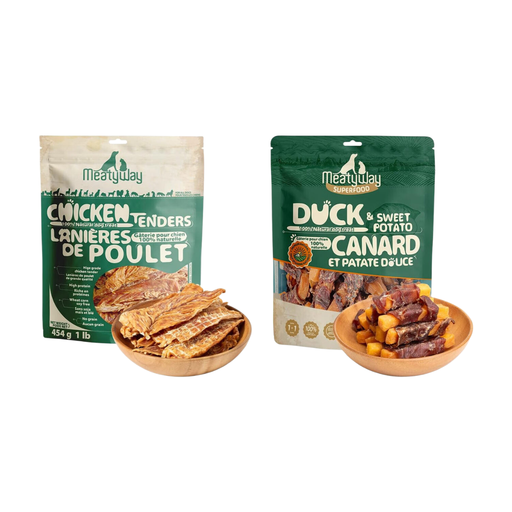
Why it suits this profile: The pack contains two 454-gram bags, giving you 908 grams in total. The soft jerky can be broken into pieces for rewards during walks or training.
The product information clearly lists chicken, duck and sweet potato. This means the treat is not a single-protein product, but its composition is clear.
Soft texture, grain-free recipe according to the product description, and a generous total quantity of 908 grams.
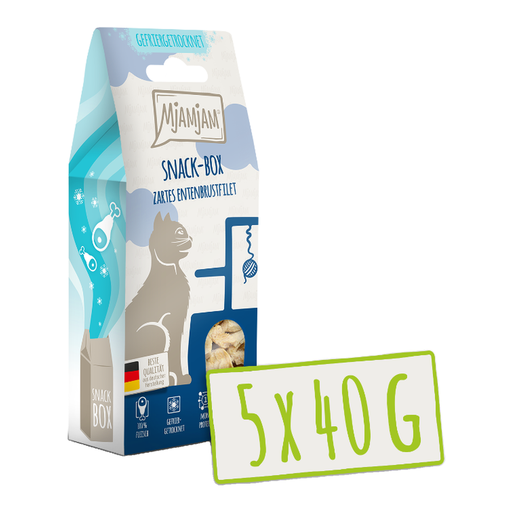
Why it suits this profile: This snack box contains five 40-gram portions of freeze-dried duck breast fillet. The composition states that it contains 100% duck breast fillet.
The ingredients and analytical data are clearly stated. According to the product information, the treat is grain-free, gluten-free and sugar-free.
Single-protein recipe and 90.9% crude protein according to the stated analysis. The pieces can be given as a treat or soaked in water.
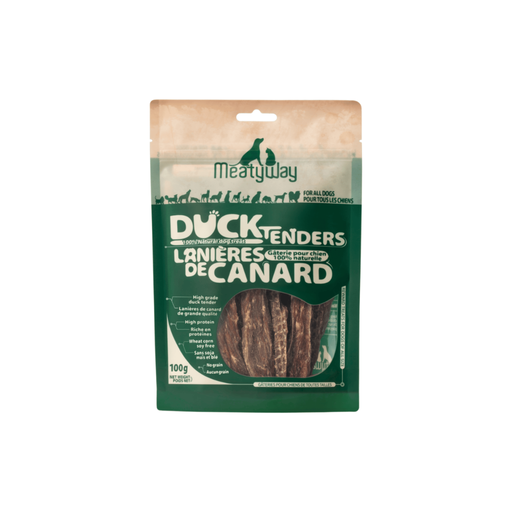
Why it suits this profile: A convenient choice for dog owners looking for a clear, pure treat for training, walks or a small daily reward.
One ingredient is listed: duck. According to the product description, the soft strips can be broken into smaller pieces, allowing you to control the portion more easily.
100 grams per pack, at least 30% crude protein and no more than 1% crude fibre according to the product information.
We’ve put together a complete, up-to-date list of products that fully meet these strict selection criteria and the applicable European safety regulations.
This varies from dog to dog. A short ingredients list or single-protein dog treat makes it easier to see what you are giving your dog, but it does not guarantee that every dog will tolerate it well. Introduce a new treat gradually and always check the full composition.
Soft dog jerky and soft dog treats that can be broken into small pieces are practical choices. Pay attention to the size, total fat content and the amount you give during each training session. A large chew treat is more suitable as an occasional reward than for frequent repetition.
No. Grain-free dog biscuits may suit your preferences, but being grain-free says nothing in itself about protein content, fat content, serving size or overall nutritional value. So compare the ingredients list and analytical constituents, and follow the feeding advice on the packaging.
