
Vandaag of morgen in huis

Kwaliteit gegarandeerd

Welkomstaanbiedingen ontgrendelen: GRATIS bezorging | Tot 80% korting | Gratis 30 dagen JoyPlus-proefperiode
Download de app
If you’re looking for duck dog food, you’ll quickly come across terms like grain-free, high-protein, hypoallergenic and natural. On their own, these words don’t tell you whether a product is right for your dog. A small dog needs different kibble sizes and portions than an active large dog. It also makes a difference whether you’re after a complete meal or just a reward.
The following points will help you separate marketing claims from verifiable product information.
Duck necks, duck wings and seasoned duck are treats, not a complete meal. Always check whether the packaging states the product is complete food or intended only as a complementary food. Treats should never replace a meal.
Also watch out for products made for humans. A bag of seasoned duck can contain a lot of salt, sugar, oil, flavour enhancers or spices. The Besotre Duck Snack Bag, for example, lists rock sugar, salt, monosodium glutamate and spices among its ingredients. This is not a product you should consider as a dog treat based on its name alone.
In grain-free duck dog food, grains are often replaced with sweet potato, peas, quinoa or other carbohydrate sources. That may suit a particular dietary choice, but always check the full ingredients list. Grain-free describes one characteristic and says nothing about the overall nutritional balance, energy content or suitability for your dog.
A product with duck is not automatically hypoallergenic duck dog food. With an elimination diet, you need to know exactly which protein sources and other ingredients are present. A recipe with duck and chicken, fish or egg is not the same as a product with a single animal protein source. If symptoms persist, the choice of a diet food should be made in consultation with a vet.
First, look at the order of ingredients and the stated analytical constituents. Pay attention to:
The MeatyWay Duck and Sweet Potato 454g, for example, states 20% crude protein, 5% crude fat, a maximum of 2% crude fibre and a maximum of 18% moisture. According to the product information, the composition consists of duck and sweet potato. That makes comparison easier than with a product that only says “high protein” without an exact percentage.
For small dogs, small kibble or easily breakable treats are practical. The product information for Buddy’s Delicious Duck Meat Chunks states a kibble size of approximately 0.5 to 0.7 cm. For larger or active dogs, a bigger kibble and a larger pack may be more convenient.
With duck dog treats, you need to consider hardness and shape. Hard pieces may not be suitable for every dog. Always supervise your dog while eating and break a jerky treat into smaller pieces for small dogs if the packaging advises it.
A 700g pack may seem good value, but it’s only practical if your dog gets the treat regularly and the product can be stored properly after opening. Check:
A treat should remain a limited addition. Also, always ensure fresh drinking water is available.
The selection below is based on the stated ingredients, nutritional values, packaging and usage instructions. Brand descriptions about, for example, digestibility, muscle support or dental care are presented as product information, not as guaranteed effects.

Why this fits the profile: A small pack is handy for trying out whether your dog accepts duck and sweet potato, without committing to a large supply straight away.
The product information lists only two ingredients: duck and sweet potato. It is clearly labelled as a treat and not as a replacement for the main meal.
100g, grain-free according to the product description and suitable for giving in portions.
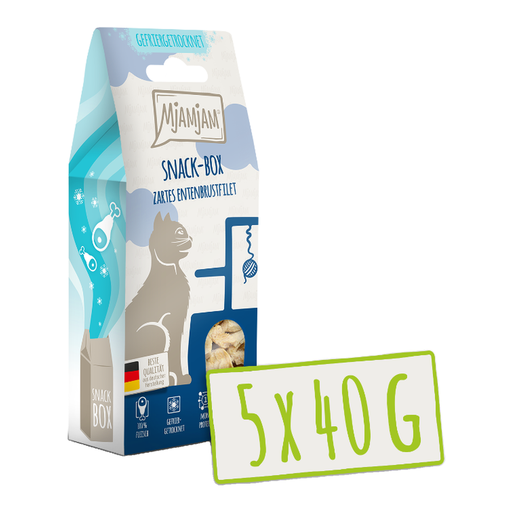
Why this fits the profile: This snack box offers five individual portions and, according to the label, consists of 100% duck breast fillet. That suits owners who want a short ingredients list.
The packaging states one animal protein source and no grains, gluten or sugar. For a sensitivity diet, always check the current label information.
90.9% crude protein, 6.5% fat and five portions of 40g.
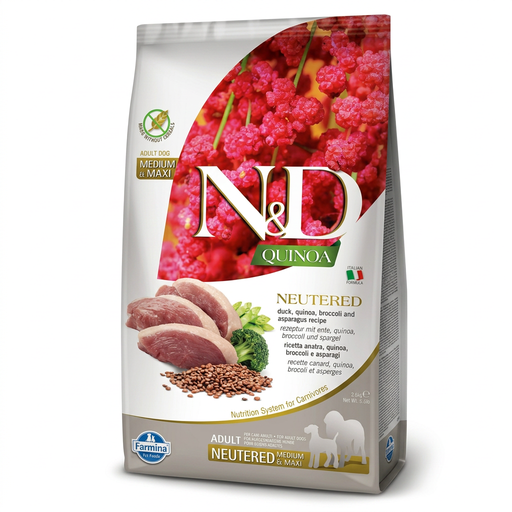
Why this fits the profile: This is a dry food for adult, sterilised or neutered dogs of medium to large size, with a specified composition and nutritional analysis.
The product is not simply described as grain-free; the ingredients and analytical constituents are listed in detail. However, it also contains chicken, egg and herring, so it is not a single-protein food.
30% crude protein, 11% fat and an energy statement of 3444 kcal/kg according to the provided product information.
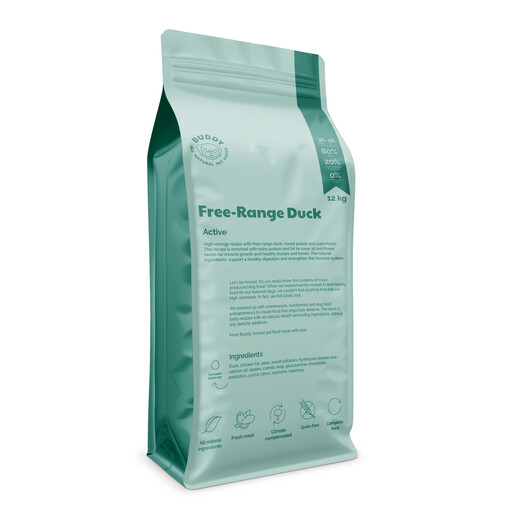
Why this fits the profile: The large bag is aimed at dogs that need more food daily. The stated kibble size is approximately 1.2 to 1.6 cm and the product information mentions duck, sweet potato and superfoods.
The product description states a ratio of 80% animal ingredients and 20% vegetables, fruit and superfoods. Do check the full packaging and feeding guide before purchase.
12 kg pack, stated duck and sweet potato base and kibble size for larger dogs.
We’ve put together a full, up-to-date list of products that fully meet these strict selection criteria and comply with current European safety regulations.
Not automatically. Consider your dog’s age, size, activity level and any dietary sensitivities. Also check whether it’s a complete food or a treat. For medical conditions or a prescribed diet, it’s wise to consult your vet.
They can be, if you can give small portions and the treat is easy to break. MeatyWay and MjAMjAM treats may be practical for this based on their size or texture. Deduct the amount of treats from the daily food allowance and supervise your dog while eating.
Always follow the best-before date and the instructions on the label. Store dry treats in a cool, dry place and seal the packaging well. An opened product can deteriorate in quality more quickly; don’t give it if the smell, colour or texture has clearly changed.
