
People who wear delicate summer dresses
Follow the dress’s care label and recommended drying position. GINETEX distinguishes between different ways of air-drying clothes.


Start with your dress’s care label and the available hanging height. These will determine whether you need an airer or a tower airer, and whether the dress can be dried on a heated rail at all. A heated airer may be worth considering if you regularly want to dry clothes indoors more quickly, but it uses electricity and is no substitute for ventilation. Only choose a specific electric model once you’ve checked that it meets the relevant conformity requirements.
Follow the dress’s care label and recommended drying position. GINETEX distinguishes between different ways of air-drying clothes.
Compare the airer’s open dimensions and available hanging height with the space you share with others, and think about where you can store it after use.
Weigh the need for faster drying against electricity use and ventilation. Milieu Centraal recommends extra ventilation when you dry clothes indoors.
Start with the care label: the right drying position for your particular dress takes priority over the type of airer or whether it’s heated.
| What to consider | What should you check? | Who is this important for? |
|---|---|---|
| Dress and care label | Check whether the dress should be dried hanging or flat, and whether heat is permitted. | I want to follow the drying instructions for my summer dress and avoid treating the fabric in a way that could damage it. Around 33% of consumers prioritise looking after their clothes for this reason. |
| Sharing space | Measure the airer’s width when open and the available hanging height; also check whether you can put it away. | In a shared home, I want a drying spot that doesn’t unnecessarily block the way and can be cleared after use. Around 25% of consumers prioritise making the best use of space. |
| Drying speed | Check the airer’s design, any timer and the care instructions for the dress; only compare drying times under the same conditions. | If I regularly want to dry clothes indoors more quickly, I’ll check whether a heated airer is suitable for my dress. Around 25% of consumers prioritise drying speed. |
| Electricity and moisture | Calculate electricity use from the wattage and how long you use the airer; choose a spot where you can ventilate appropriately. | I want to weigh up electricity use and prevent moisture building up in our shared living space. Around 17% of consumers prioritise electricity use and indoor moisture levels. |
Wattage tells you the power rating, not how much electricity a full drying session uses. Comparing wattages tells you little about the cost unless you use the airers for the same length of time and under the same conditions.
Compare consumption in kWh over the same period of use, and calculate the cost using your own electricity tariff. Don’t treat a manufacturer’s savings claims as independent test results.
An airer’s footprint doesn’t tell you how much clearance a dress will have while it dries. A long dress may touch lower rails or the floor.
Measure the dress and the available height. If the care label says to dry it flat, follow that advice rather than hanging it on a hanger.
Even when you use a heated airer, moisture from the washing ends up in the room. Heat doesn’t remove that moisture by itself.
Agree on a suitable place to dry clothes with your housemates, and ventilate appropriately for your home. Milieu Centraal recommends extra ventilation when drying clothes indoors.
The features below apply to the product ranges mentioned; they are not a judgement on a brand’s entire range. For a mains-powered electric model, check the requirements that apply to that specific product. Ondernemersplein explains that, when a product conforms, the manufacturer affixes a CE mark and draws up an EU Declaration of Conformity.
Offers a heated clothes airer and a heated tower airer with a cover, for anyone considering a wide or vertical design.
DOMO describes the heated DO7117DR as a compact rail airer that can stand freely or be mounted using the supplied fixing kits.
Offers unheated clothes airers, including models with hanger hooks and tower airers for longer garments.
Offers unheated Pegasus airers, including models with holders or rails for clothes hangers.
The Joybuy options below are standard clothes airers for hanging or laying out clothes without a heating function.
 No image available
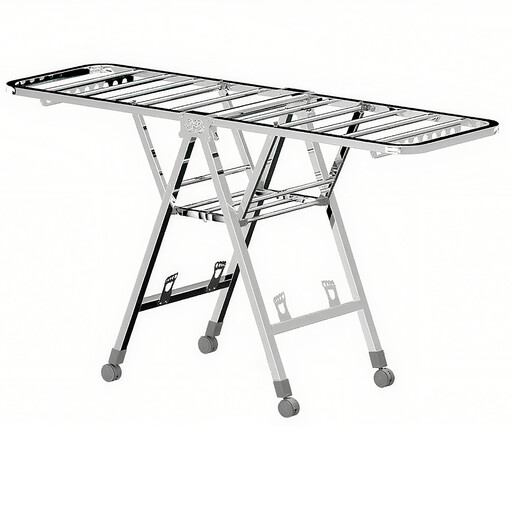
A freestanding multi-tier airer for drying clothes on different rails.
Multiple tiers and adjustable angles; folds away for storage after use.
 No image available
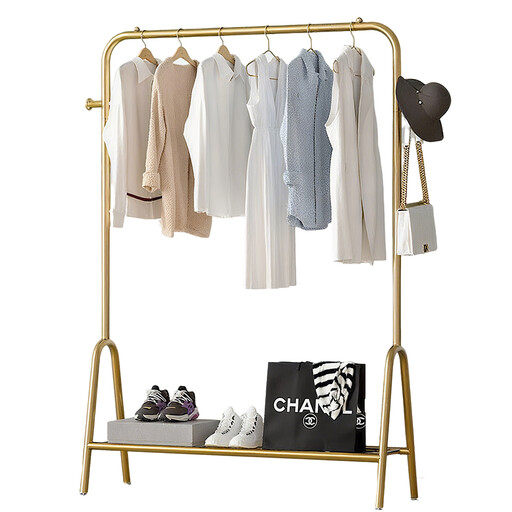
A freestanding rail with a single bar for clothes that can be dried on a hanger.
The bar is 100 cm wide. The product description mentions airing and drying delicate garments; always follow the care label for each dress.
 No image available
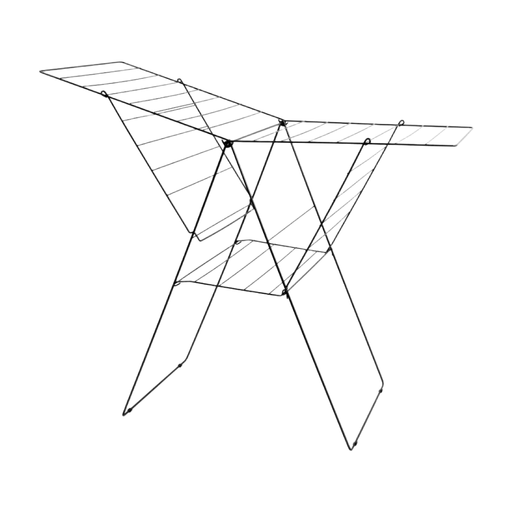
An airer with 20 m of drying space for anyone who needs room to dry several items of washing.
Drying surface: 95 × 128,5 × 59 cm. Folded: 101 × 59 × 4,5 cm. The product description states a maximum load of 10 kg.
 No image available
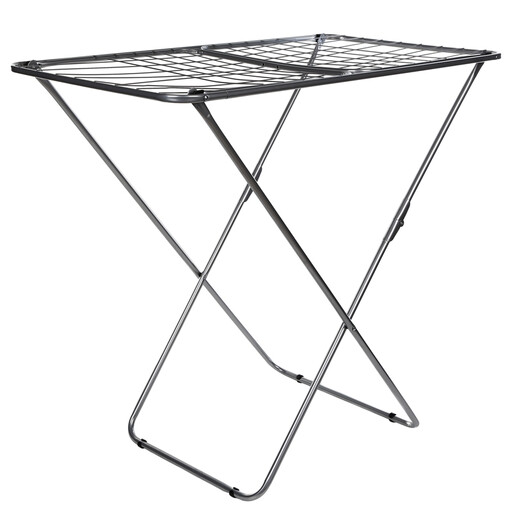
A clothes airer with 18 m of drying space for anyone who wants to hang up several garments.
According to the product description, the frame is made from metal and plastic. The description says it can be used indoors and outdoors.
No. Follow the care label for the specific dress. GINETEX distinguishes between hanging and flat drying, among other methods; a warning against tumble drying doesn’t in itself confirm that contact with heated rails is suitable.
Yes. When drying clothes indoors, it’s still important to remove moisture from the air. Milieu Centraal recommends extra ventilation; agree on a drying spot with your housemates where air can be expelled.
Multiply the power rating in kilowatts by the number of hours it’s used. At 300 W, one hour of use at the rated power is 0,3 kWh; the final cost also depends on your tariff and the actual time in use. This is a calculation, not a measurement of a drying session.
No. DOMO lists IPX4 for model DO7117DR, but that model specification doesn’t make every spot in a bathroom suitable, and it doesn’t apply to other airers. Follow the instructions for the appliance you choose, and also check that any mains-powered electric model meets the relevant conformity requirements. Ondernemersplein explains that, when a product conforms, the manufacturer affixes a CE mark and draws up an EU Declaration of Conformity.