
Drying clothes in a small space
You want to hang summer dresses indoors without the airer blocking the room for too long. Compare its fully extended dimensions, the available hanging height and how easy it is to put away after use.


Start by checking the drying instructions on the care label and choose an airer that lets the dress hang freely. Then measure up to make sure the airer fits when fully extended. Heating may be worth considering if you often dry clothes indoors, but it uses electricity and doesn’t replace ventilation. An airer with hanging space may not be suitable for dresses that need to dry flat.
You want to hang summer dresses indoors without the airer blocking the room for too long. Compare its fully extended dimensions, the available hanging height and how easy it is to put away after use.
You put the care instructions and the shape of the dress ahead of drying speed. Check whether the label says to dry it hanging or flat.
You often dry clothes indoors and are considering a heated airer, but also want to take ventilation and electricity use into account.
First, choose a suitable way to dry the dress. Then check both the available hanging height and how much space the airer takes up when fully extended.
Suitable if: you often dry clothes indoors and can find a tower with enough hanging height for your dress.
Trade-off: the tiers may leave limited room for a long dress; heating uses electricity and doesn’t replace ventilation.
Suitable if: you want an airer that folds away and can hang the dress from a suitable rail.
Trade-off: the extended wings take up floor space; an adjustable height doesn’t guarantee that every dress will hang freely.
Suitable if: you can leave the dress to air-dry and don’t need a heated airer.
Trade-off: the airer doesn’t provide heat. Check its fully extended dimensions, as these may be a deciding factor in a small space.
| Buying consideration | What to look for | Who should pay particular attention? |
|---|---|---|
| Space and hanging height | Measure the available floor space and the distance from the rail to the floor or the tier below. | If I want to hang the dress in a small room, I make sure the hem hangs freely and the airer fits when fully extended. Around 33% of consumers prioritise space and hanging height. |
| Care label | Check whether the dress needs to dry hanging or flat, and choose a suitable spot. | I check the drying instructions first to make sure the dress dries as it should. Around 27% of consumers put fabric care first. |
| Drying speed and ventilation | Weigh up heating against electricity use, and make sure the room can be ventilated. | If I often dry clothes indoors and speed matters, I want to know what heating can do while still keeping ventilation in mind. Around 20% of consumers prioritise drying speed. |
| Electricity use | Compare the stated power rating and the actual time in use; the power rating alone doesn’t tell you how much energy one drying session will use. | I’d rather use a drying method that doesn’t need electricity for the airer if speed is less important. Around 20% of consumers prioritise electricity use. |
An airer can be compact when folded but still take up a lot of space when fully extended. According to Leifheit, the Leifheit Pegasus RockSolid Maxx is 200 cm long when extended.
Measure both the space where the airer will stand and the available hanging height for the dress.
Drying laundry adds moisture to your home; heating doesn’t remove it automatically.
Ventilate the room and follow the instructions for using any cover. Milieu Centraal recommends ventilating your home.
Energy use depends on both the power rating and how long the airer is in use. So the power rating alone doesn’t tell you how much energy one drying session will use.
Work it out using the power rating in kilowatts, the actual time in use and your own price per kilowatt-hour.
Worth considering if you’re looking at a heated tower airer or heated clothes airer.
An unheated option to compare if you want to dry a dress on a hanger.
A vertical tower airer to consider if you’re mainly looking for hanging space.
These Joybuy picks are suitable for hanging or drying clothes; compare the hanging options and the space each airer takes up.
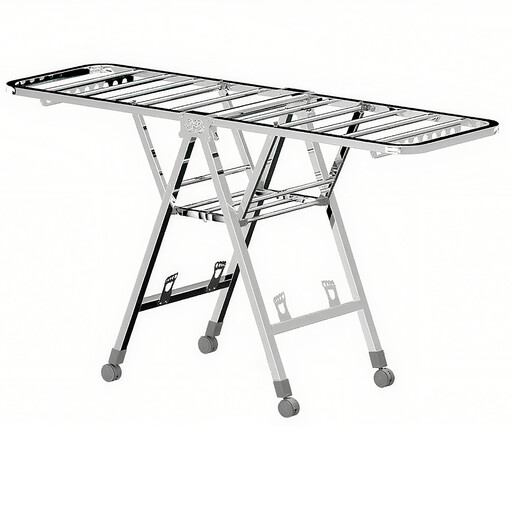 No image available
An option to compare if you want to dry clothes on a hanger and be able to fold the airer away.
The product title describes a freestanding, folding design with wings, made from stainless steel.
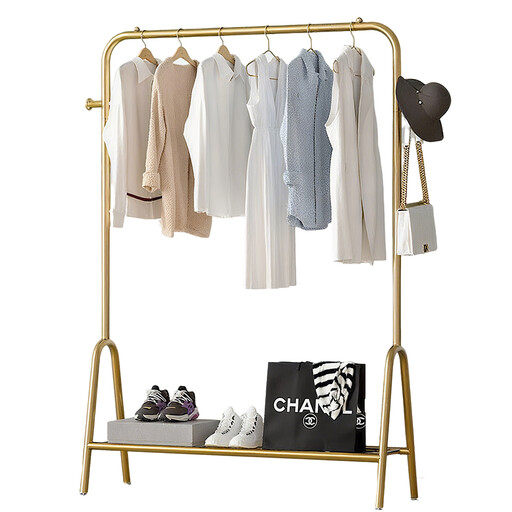 No image available
A single bar may suit you if you want to dry a dress on a hanger; check that it fits in the available space.
The product description lists a 100 cm bar and the Light Luxury Gold finish.
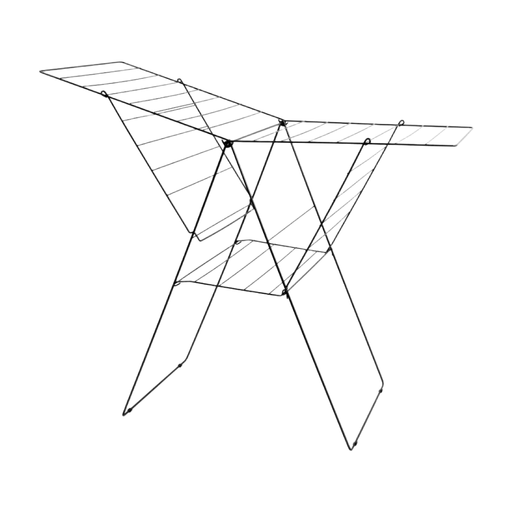 No image available
A folding airer to compare if you want to put your drying space away when it’s not in use.
Stated dimensions: 95 × 128.5 × 59 cm. The description lists a drying length of 20 m and a folded depth of 4.5 cm.
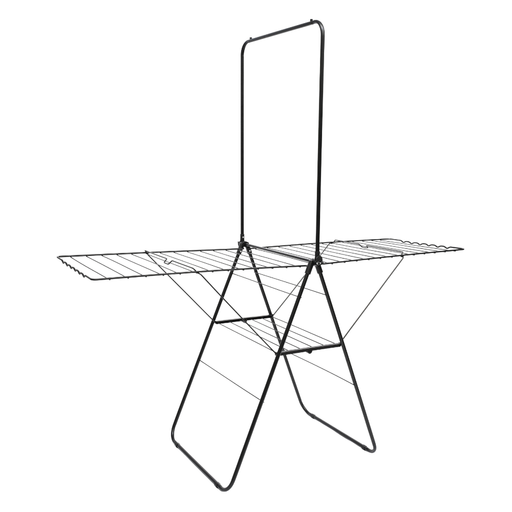 No image available
An airer to compare if you want to dry clothes on hangers and fold it away after use.
The description lists a high rail, 12 hanger hooks, a folding design and a drying length of 26 m.
 No image available
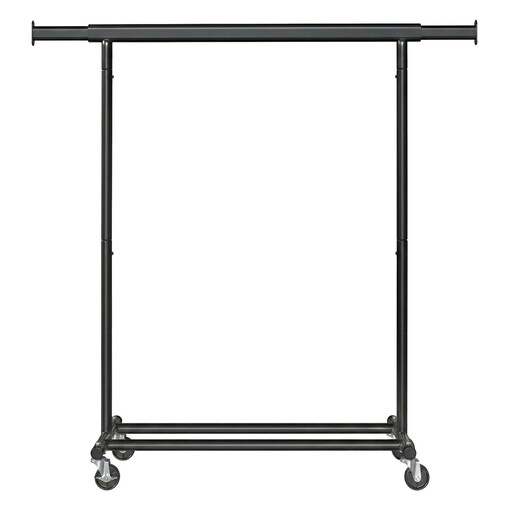
An option to compare if you want to hang dresses on a clothes rail and move it between rooms.
Stated dimensions: 45 × (92–132) × 161.5 cm. The description lists four castor wheels, two of which lock, and a load capacity of 100 kg.
No, you can’t tell that from the product description. Check the care label: the symbols indicate, among other things, whether an item should dry hanging or flat. A low temperature alone doesn’t confirm that a heated rail is suitable.
Yes. Milieu Centraal identifies drying laundry as a source of moisture in the home and recommends ventilation. Heating in the airer doesn’t remove that moisture automatically.
Multiply the power rating in kilowatts by the actual time in use, in hours, to calculate the energy use in kilowatt-hours. Silvergear lists 300 W for the Premium tower airer reviewed; that power rating isn’t a fixed amount of energy used per dress.
For an electric clothes airer sold in the Netherlands, check that it complies with the relevant EU product safety rules and carries a CE mark. The Dutch government lists CE marking as a requirement for electrical appliances; also read the instructions for the specific product.
According to ACM ConsuWijzer, you’re entitled to a product that meets what you could reasonably expect from it. If there’s a problem, contact the seller for a suitable solution; any manufacturer’s warranty doesn’t replace your statutory rights.