
Sportspeople with limited floor space
If a wide rack gets in the way, compare a hanging or wall-mounted rack with a model that makes better use of height. Also check how much space the rack takes up when open.


Choose based on how much space the rack takes up when open and the care instructions for your sports shirts. A heated rack or drying tower may suit you if you regularly dry clothes indoors and want extra warmth. For just a few shirts, an unheated hanging or wall-mounted rack may be enough. Ventilation is important when drying clothes indoors, and wattage alone won’t tell you how much energy a drying session uses.
If a wide rack gets in the way, compare a hanging or wall-mounted rack with a model that makes better use of height. Also check how much space the rack takes up when open.
Check the care label before using a heated setting, especially for shirts made from synthetic fabrics or with prints. Nike Netherlands advises sportspeople to follow the garment care label.
Weigh the electricity used for heating against how long you use it, and remember to ventilate. Milieu Centraal points out that ventilation helps remove moist air.
Choose this if: you want to hang up a few shirts at a time and would rather avoid a wide rack. The Dutch retailer describes the Dirt Devil model as a rack with six bars that can be wall-mounted or placed on the floor.
Bear in mind: its limited bar capacity and the space needed for installation or positioning.
Choose this if: you want to hang several shirts and would rather use height than floor width. Silvergear describes an electric drying tower with a heat cover, temperature control and timer.
Bear in mind: its dimensions when unfolded, the electricity it uses while switched on, and whether the heat is suitable for your garment care label.
Choose this if: a few shirts can dry without extra heat and you want to keep your floor clear. Tomado describes a hanging rack for a suitable door or edge; Leifheit offers various wall-mounted and hanging racks.
Bear in mind: you’ll need a suitable place to hang or mount it; this type of rack does not provide electric heat.
Choose this if: you want several bars and can fold the rack away after use. InnovaGoods describes the Warmmat as having twenty bars and adjustable temperature.
Bear in mind: the floor space the rack takes up when its wings are open. Also check that the version you want is available and suitable for your shirts.
| What to consider | What should you check? | Who is this important for? |
|---|---|---|
| Space and storage | Compare the dimensions when open and folded, and check whether you can hang or mount the rack where you plan to use it. | I want to dry my shirts without a rack blocking the walkway, and be able to put it away afterwards; around 36% of consumers say space is their main concern when choosing. |
| Suitability for your shirt | Read the garment care label and check whether the rack’s instructions allow the heat setting you’ve chosen. | If I’m drying shirts made from synthetic fabric or with prints, I want to follow the garment care instructions; around 29% of consumers put preserving their clothes first. |
| Heat and operating time | Compare the rated power with the expected operating time; a wattage figure alone doesn’t tell you how much energy one drying session uses. | When I need to wear a shirt again soon, I weigh the extra heat against how long the rack will be switched on; around 21% of consumers prioritise drying speed. |
| Electricity use and ventilation | For a heated model, take its power rating and operating time into account; make sure the room is ventilated when drying clothes indoors. | I want to know how much electricity the heating uses and avoid moist air lingering in my home; around 14% of consumers prioritise electricity use and the indoor climate. |
A rack can offer plenty of drying space and still block the walkway when unfolded.
Measure the available space and compare the dimensions when the rack is open and folded. Also check what fittings or hanging arrangements it needs.
The rated power doesn’t tell you how long your shirts need to hang or how long the rack will be switched on.
Compare power and operating time together. Don’t treat a brand’s claims about drying speed or savings as independent measurements.
A garment care label may give guidance or restrictions on drying; drying clothes indoors also adds moisture to the air.
Check the shirt’s care label and the rack’s instructions. Ventilate the room when drying clothes indoors.
In the Netherlands, the brand offers both a heated clothes airer with a heat cover and an electric drying tower.
The Dutch retailer describes the MEQ-EL8980/002 as a compact electric rack for wall or floor placement.
The manufacturer describes the Warmmat as a foldable heated winged airer.
A non-electric option for a few shirts is the Den Haag 9 hanging rack, which the manufacturer says can be hung over a suitable door or edge.
The Dutch range includes wall-mounted and hanging airers as non-electric options for spaces with limited floor area.
These product options are designed for hanging and storing laundry; pay particular attention to how much space they take up while in use.
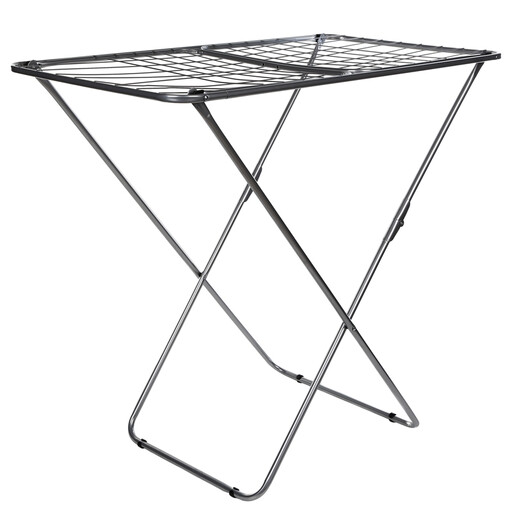 Image unavailable
Suitable if you’re looking for an airer that can be used indoors or outdoors and put away after use.
The product name specifies 18 m of drying space; the description mentions that it is easy to set up and store away.
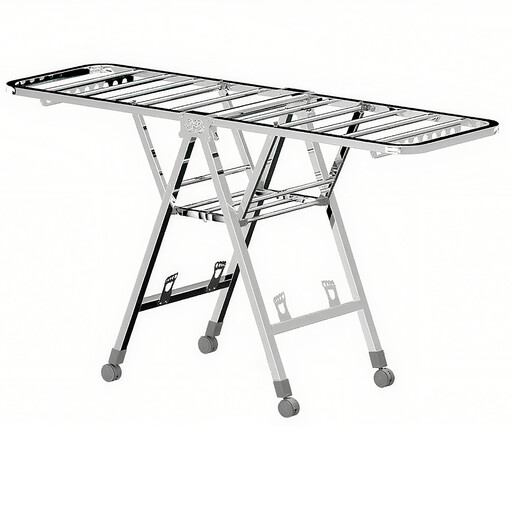 Image unavailable
An option if you’re looking for a foldable airer that you can store compactly after use; bear in mind that it takes up floor space while drying.
The title and description mention a folding mechanism; the description also lists multiple levels, adjustable angles and space for clothes and duvets.
Don’t assume heat is suitable for every shirt. Nike advises checking the garment care label. It won’t necessarily tell you which setting on a heated rack is suitable, so follow the rack’s instructions too.
Yes, ventilate when drying clothes indoors. Milieu Centraal warns that insufficient ventilation allows moist air to build up; heating or a heat cover won’t remove that moisture by itself.
Compare the rated power in kilowatts with the actual operating time in hours: together, these give you an estimate in kilowatt-hours. This is a calculation based on how you use the rack, not a measured drying performance or guaranteed saving.
Electrical equipment with a rated AC voltage between 50 V and 1,000 V must meet the applicable safety requirements. The Netherlands Food and Consumer Product Safety Authority and Ondernemersplein explain that the manufacturer applies the required CE marking and draws up an EU declaration of conformity; check the documentation for the specific model.
If the product doesn’t do what you could reasonably expect under normal use, ACM ConsuWijzer says you’re entitled to a legal guarantee; the seller must then offer an appropriate solution free of charge. Distance purchases are also generally covered by a 14-day cooling-off period after delivery, subject to legal exceptions.