
The busy leggings wearer
Wants to wear several pairs of leggings again after a full school week and needs space to hang them separately. Only use heat if the care label and instructions allow it.


A heated clothes airer could work if you want to dry several items indoors and the care labels and instructions allow heat. For stretchy leggings, an unheated airer is the safer choice if you’re unsure about using heat. Focus on the space available to hang clothes separately, the floor space you have and ventilation: a higher stated wattage alone doesn’t prove that clothes will dry faster.
Wants to wear several pairs of leggings again after a full school week and needs space to hang them separately. Only use heat if the care label and instructions allow it.
Prioritises keeping stretchy leggings in shape, so also considers an unheated airer. Nike recommends air-drying synthetic sportswear where possible and notes that heat can affect elastic.
Has limited floor space and is comparing a folding airer with a compact freestanding model or a suitable wall-mounted one. Remember ventilation too: Milieu Centraal notes that drying laundry indoors adds moisture to the air.
First check whether your leggings can tolerate heat. Then compare the hanging space and where you’ll put the airer while it’s in use.
| What to consider | What to look for | Who is this important for? |
|---|---|---|
| Suitable for stretchy leggings | Check the care label, the lowest temperature setting and any guidance on contact with heated bars. | If I want to keep my stretchy leggings in good shape, I’ll follow the care label; around 33% of consumers are most concerned about preserving fabric and fit. |
| Hanging space and drying time | Look at the bar layout and check whether you can hang each pair of leggings separately. Only compare drying-time claims when the conditions are the same. | If I want to dry several items after the school week, I need enough space to spread them out; around 27% of consumers prioritise hanging capacity and a practical drying time. |
| Positioning and storage | Measure the space with the airer fully open, and check the installation instructions for wall-mounted models. | If space is limited, I want to know in advance how much room the airer takes up while drying; around 20% of consumers prioritise a suitable position and storage space. |
| Power and ventilation | Check the stated wattage and expected running time, and make sure the drying area is well ventilated. | If I dry clothes indoors, I want to consider both electricity use and moisture in the room; around 20% of consumers say this is their main concern. |
Heat can affect the elastic in synthetic sportswear. Nike recommends air-drying where possible; the care label on your own garment is the best guide.
Check the label and the airer’s instructions. Choose an unheated airer if you can’t confirm that heat is suitable.
Wattage alone doesn’t tell you how quickly leggings will dry. Drying time also depends on factors such as fabric thickness, residual moisture, room temperature and humidity.
Don’t compare models on wattage alone, and check the conditions behind any drying-time claims.
A folding airer can take up more floor space while in use. A compact model, on the other hand, may leave less room to hang several pairs of leggings separately.
Measure the available space with the airer open, and leave room between the garments.
Heat doesn’t automatically remove moisture from wet laundry. Milieu Centraal points out that drying laundry indoors adds moisture to the air.
Choose a suitable drying spot that you can ventilate, and follow the airer’s positioning instructions.
The Warmmat is a heated winged airer with adjustable temperature and a timer, for anyone who wants to spread out several items.
According to the manufacturer, the DO7117DR is a more compact heated model that can be used freestanding or wall-mounted.
The Pegasus clothes airers are unheated alternatives for anyone looking for drying space without electric heat.
The range includes wide HangOn airers and drying towers, giving you different ways to arrange your drying space.
This selection includes standard clothes airers and heated options for hanging or drying clothes indoors. For heated models, always check that the care labels and the airer’s instructions allow heat.
 No image available
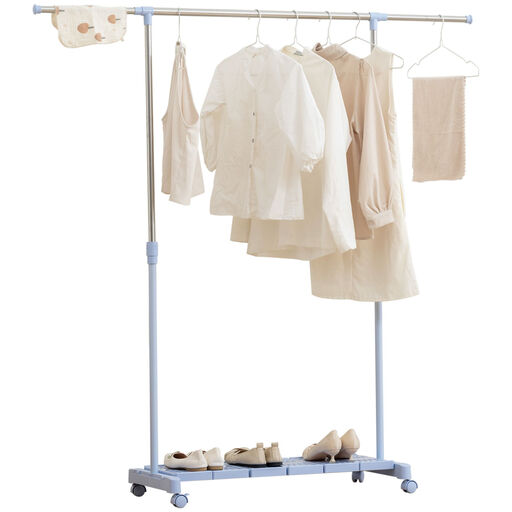
An extendable clothes airer on wheels for drying clothes; check that its dimensions suit the space where you plan to use it.
The product name specifies a stainless steel bar and a shoe rack.
 No image available
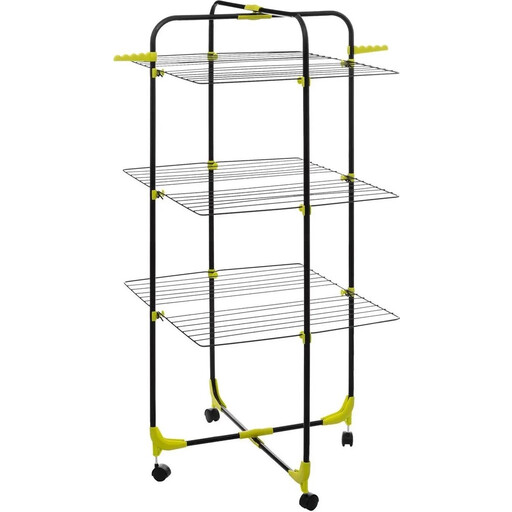
A folding drying tower with multiple drying levels, designed to let you spread clothes out at different heights.
The product name specifies a 30 m drying length. Check the dimensions and whether you can hang leggings separately.
 No image available
The side wings offer extra hanging space for laundry after a busy week; check that the airer fits your drying area when fully open.
The product information specifies 230 W, a temperature range of 45–55 °C and dimensions of 144 × 53 × 91 cm. Only use the heat if the garment’s care label and the instructions allow it.
Use the airer indoors on a stable, level surface with good ventilation, at least 31 cm away from walls. Also follow the guidance on sockets and switching the airer off after use.
 No image available
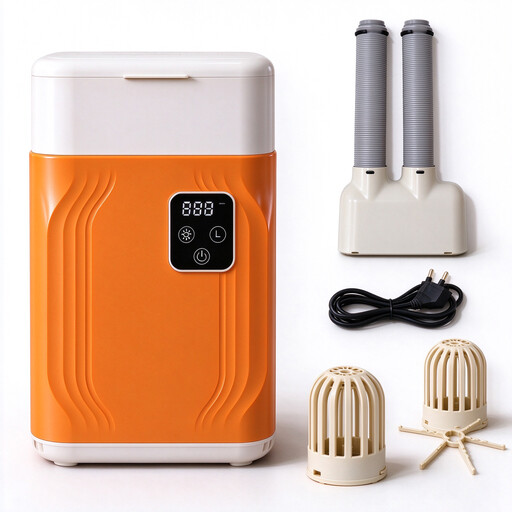
A portable heated solution with a timer for drying clothes indoors; this is a clothes dryer, not a standard open clothes airer.
Only use the heat for leggings if the garment’s care label and the instructions allow it. Keep it at least 50 cm away from flammable materials, don’t block the air vents and be aware that the air outlet gets hot.
No, you can’t tell from the type of airer alone. Check the leggings’ care label and the airer’s instructions. Nike recommends air-drying synthetic sportswear where possible and warns that heat can weaken elastic.
Yes. Heat doesn’t automatically remove moisture from laundry. Milieu Centraal notes that drying laundry adds moisture to your home; keep ventilation openings clear and follow the airer’s positioning instructions.
No, wattage alone doesn’t prove that clothes will dry faster. Fabric thickness, residual moisture, room temperature and humidity all play a part. Only compare drying-time claims when the conditions are the same.
Check how much space there is to hang leggings separately and follow the installation instructions for the specific model. A compact design doesn’t automatically provide enough hanging space; also measure the area where the airer will be used.
Yes, an unheated airer is a cautious choice if the care label advises against heat or you’re unsure whether a heated model is suitable. Leave space between the leggings and ventilate the room where you’re drying them indoors.