Who is this relevant to?

If you dry laundry in a cool space

If you regularly hang your laundry in a room that isn’t heated much, compare the stated operating range of desiccant models with the temperature of that room. The Consumers’ Association lists room size and temperature as factors to consider when choosing.

If you dry laundry in your living space

If your clothes airer is close to a seating or sleeping area, consider the noise level of the setting you’ll use and allow enough space for airflow. A laundry-drying appliance doesn’t remove the need to ventilate.

If you do laundry often and watch your running costs

If you use the appliance for long periods, the power consumption of the setting you choose and how long you run it will affect your electricity use. Don’t apply a tumble dryer energy label to a dehumidifier.

What should you look for?

Desiccant dehumidifier

When it’s a good fit: if you dry laundry in a cool or intermittently heated room and want to capture extra moisture as well as ventilating.

What to bear in mind: check the operating range and laundry setting for the exact model; only compare stated capacity figures when they’re based on the same test conditions. The models reviewed also give off heat, so check their power consumption and how many hours you expect to use them for.

Compressor dehumidifier

When it’s a good fit: if the drying space is usually warmer than 15 °C. The Consumers’ Association says compressor dehumidifiers work best above this temperature.

What to bear in mind: a lower stated power consumption for one model doesn’t prove that every compressor model will dry laundry more efficiently in your flat. Compare actual use and test conditions.

Clothes airer and ventilation

When it’s a good fit: if your laundry dries well enough with extra ventilation and you don’t have a persistent damp problem.

What to bear in mind: you won’t need an additional dehumidifier, but drying laundry indoors still calls for extra ventilation. A dehumidifier doesn’t bring in fresh air.

Concern What to check before buying Who is it most relevant to?
Drying laundry in a cool space Measure the room temperature and check the operating range, laundry setting and test conditions for the stated capacity. If I dry laundry in a cool room, I want to know whether the appliance can operate there under its stated conditions of use. Around 31% of consumers prioritise drying in a cool space.
Electricity use during regular operation Compare the stated power consumption for each setting and the number of hours you expect to use it. The European Commission has not established an EU energy rating for dehumidifiers. If you do laundry often, you’ll want to weigh the electricity use of the setting you need against how long you’ll use it for. Around 25% of consumers focus mainly on running costs.
Noise and where to place it Compare the noise level of the setting you’ll actually use, and check the dimensions and placement instructions. If the appliance is close to a seating or sleeping area, noise and enough room for airflow matter. Around 25% of consumers focus mainly on quiet operation and placement.
Ventilation and collected water Check how your home is ventilated and whether you can empty the tank or fit a drain hose in line with the instructions. If you want to dry laundry indoors without overlooking ventilation, consider how you’ll empty or drain the water too. Around 19% of consumers focus mainly on damp control and maintenance.

Common buying mistakes

  • Assuming a high daily capacity means the same output in your flat

    The stated amount of moisture removed depends on the temperature and humidity at which it was measured. The Consumers’ Association tests dehumidifiers under several combinations of these conditions.

    Only compare capacity figures alongside their test conditions and the temperature of the space where you dry your laundry.

  • Using a dehumidifier instead of ventilating

    Capturing moisture doesn’t replace bringing in fresh air and removing stale air. Milieu Centraal recommends extra ventilation when you dry laundry indoors.

    Continue to ventilate appropriately, and investigate the source of any recurring damp problems too.

  • Treating a product title or energy label claim as proof of the exact model specification

    A Joybuy listing found for the De'Longhi DNS80 describes a white version and mentions R290 refrigerant; De'Longhi’s Dutch product information describes a grey DNS80. The European Commission has not established an EU energy rating for dehumidifiers.

    Before buying, check the product number, technology, colour and power consumption of the version being offered. Don’t treat the Joybuy listing mentioned as confirmation that it’s an identical desiccant model.

Brands to compare

Trotec

Trotec’s product information describes the TTR 57 E as a desiccant model with a laundry-drying mode for rooms up to 20 m².

  • Trotec specifies a 5 l tank and operation from 1 °C.
  • These model specifications don’t guarantee a set drying time or energy savings in a flat.

De'Longhi

De'Longhi’s Dutch product information describes the DNS80 AriaDry Light as having a laundry function.

  • The manufacturer specifies 7,5 l per 24 hours at 30 °C and 80% relative humidity, 695 W and 34 dB(A).
  • The Joybuy listing mentioned differs in colour and description of the technology; don’t assume that version is identical.

Wood's

Wood's describes the WDD80 as a desiccant model for small spaces, including cold rooms.

  • The manufacturer specifies operation down to 0 °C, three fan settings and a hose connection.
  • The stated tank capacity is 2 l; consider how you’ll empty it or position a drain hose when choosing.

EcoAir

EcoAir describes the DD1 Classic as a desiccant model for drying laundry and use in unheated spaces.

  • The manufacturer specifies up to 7,5 l per day at 20 °C and 60% relative humidity, with an operating range of 1–40 °C.
  • The sales information described relates to the UK and doesn’t confirm the specifications of the Dutch version.

Eurom

Eurom’s DryBest 10 is a compressor dehumidifier to compare with desiccant models; it isn’t a desiccant model itself.

  • Eurom specifies 230 W, a 2 l tank and an operating temperature of 5–35 °C.
  • Don’t compare wattages as if they show drying performance at the same temperature.

Joybuy products for warmer drying spaces

These Joybuy products are compressor dehumidifiers with a stated laundry-drying function. They’re an alternative to compare if the drying space is usually warmer than 15 °C; they aren’t desiccant models for a cool drying space.

CONOPU 16L compressor dehumidifier with 2,5 l tank

CONOPU 16L, 2,5 l tank

A compressor option to compare for a warmer drying space where you want to use a laundry-drying setting.

The product description specifies a 2,5 l tank, continuous drainage with hoses, a 24-hour timer, automatic humidity control and R290.

The sleep mode has a stated noise level of 30 dB.

Joybuy

ELECCI 12L/D compressor dehumidifier with drain hose

ELECCI 12L/D with drain hose

A compressor option to compare if you’re looking for a laundry-drying setting and the option of continuous drainage.

The product description specifies a 3,8 l tank, a drain hose, a 24-hour timer, automatic defrosting and R290.

The description says it’s suitable for rooms up to 25 m².

Joybuy
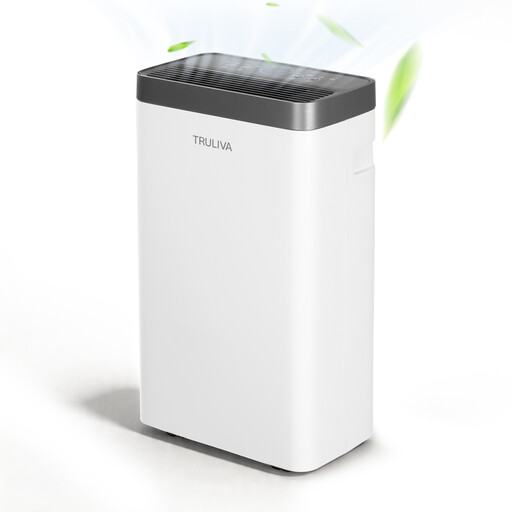
TRULIVA AP10-2012EE compressor dehumidifier

TRULIVA AP10-2012EE

A compressor option to compare for a drying space within its stated operating temperature range.

The product description specifies 5–35 °C, automatic defrosting, a 1,35 l tank, continuous drainage and a 24-hour timer.

The description mentions possible frost below 15 °C. Check that the temperature in your drying space is suitable for the stated conditions of use.

Joybuy
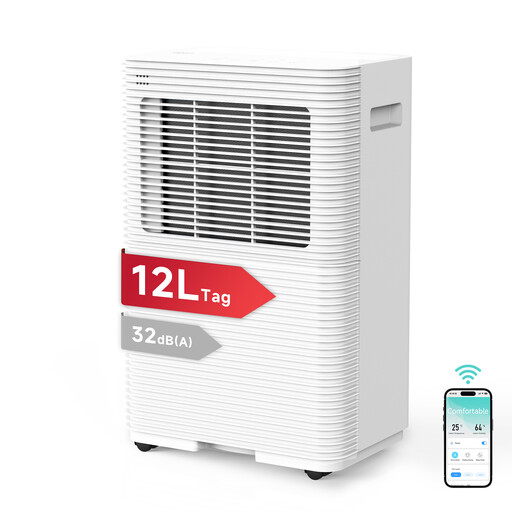
VINO 12L compressor dehumidifier with Wi-Fi control

VINO 12L Smart Dehumidifier

A compressor option to compare for a smaller drying space where you’d like a laundry-drying function.

The product description specifies an operating temperature of 5–35 °C, a 1,8 l tank, a drainage option and R290.

The sleep mode has a stated noise level of 32 dB; the description says it’s suitable for spaces up to 24 m².

Joybuy
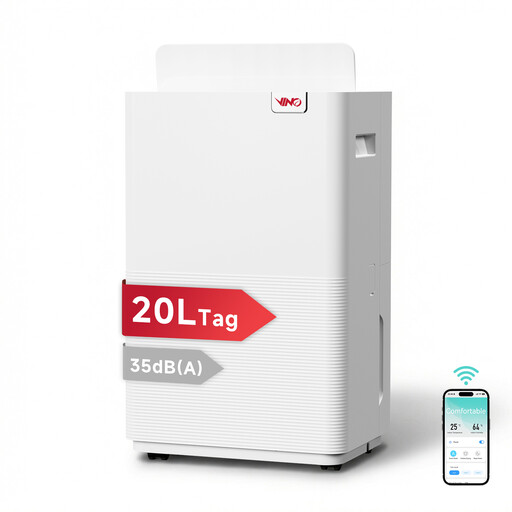
VINO 20L compressor dehumidifier with Wi-Fi control

VINO 20L Smart Dehumidifier

A compressor option to compare if you want a laundry-drying function and continuous drainage for a warmer drying space.

The product description specifies an operating temperature of 5–32 °C, a 2,5 l tank, continuous drainage and R290.

The sleep mode has a stated noise level of 35 dB.

Joybuy

Frequently asked questions

Can I turn off the ventilation while the dehumidifier is running?

No. A dehumidifier removes moisture, but it doesn’t replace bringing in fresh air and removing stale air. Milieu Centraal recommends extra ventilation when drying laundry indoors and advises against switching off a mechanical ventilation system.

Where should I put the appliance, and how do I maintain it?

Follow the instructions for your chosen model and keep the airflow unobstructed. Make sure you can reach the tank and empty it when needed; maintain the filter as directed. For the Wood's WDD80, the manufacturer specifies a washable dust filter and optional continuous drainage.

Does a dehumidifier need a compulsory EU energy label?

No. The European Commission has not established an EU energy rating for dehumidifiers. So don’t use a tumble dryer energy label to compare appliances in this category; check the power consumption and how long you’ll use the appliance for.

What warranty and cooling-off period apply when buying online in the Netherlands?

If a product is faulty, contact the seller, who is responsible for ensuring it meets the required standards. For eligible online consumer purchases, a 14-day cooling-off period generally applies; the Netherlands has no fixed statutory warranty period for all products. Also check the specific seller and the terms that apply to your purchase.

What product safety requirement applies to sales in the Netherlands?

CE marking is required for electrical and electronic equipment covered by the applicable harmonised EU rules. According to the European Union, CE marking is a declaration by the manufacturer, not an independent quality mark that automatically makes a specific offer safe or suitable.
