
Drying small loads quickly
You want to hang a few pairs of cotton shorts indoors after a busy week at school, and are weighing the benefit of warming your laundry against electricity use and the space available for hanging it.


A heated airer can be handy if you often dry small loads indoors after a busy week and want to add warmth to your laundry. However, it uses electricity, and heat does not guarantee a particular drying time. An unheated airer is a more sensible choice if you have time and want to avoid using electricity for drying. Whichever option you choose, check the care label and ensure good ventilation when drying indoors. If you opt for an electric model, also check how and where to set it up, and follow the instructions for that specific appliance.
You want to hang a few pairs of cotton shorts indoors after a busy week at school, and are weighing the benefit of warming your laundry against electricity use and the space available for hanging it.
You dry clothes at home and want to be able to refresh the damp air. A heated airer does not replace ventilation.
You’re mainly concerned with how much room the airer takes up when in use, how you can hang it and where you can store it. An unheated hanging or tower airer may also be worth comparing.
First decide whether targeted heat for small loads matters more to you than drying without using electricity. Then check that the airer fits your drying space and that you can ventilate the room properly.
| Consideration | What should you look for? | Who is this important for? |
|---|---|---|
| Heat for a small load | Check how many rails are heated and how many pairs of shorts you can hang without crowding them. For an electric model, check the wattage of that specific version. | If I want to wear a few pairs of shorts again after a busy week, I look for warmth and enough usable hanging space. Around 33% of consumers make targeted heat for small loads their main consideration. |
| Moisture when drying indoors | Choose a suitable spot and check that you can ventilate the room; heating does not remove moisture from your laundry by itself. | Anyone drying shorts at home will want to refresh the damp air and choose a drying spot accordingly. Around 27% of consumers prioritise managing moisture when drying indoors. |
| Hanging and storage space | Measure the space for the airer when it is open and the space where you plan to store it. Compare the rail layout and drying length with the clothes you want to hang. | If floor or storage space is limited, the airer needs to fit in both places. Space is the main concern for around 20% of consumers. |
| Electricity use | For a simple estimate, use the wattage of your chosen model, how long you use it and your own electricity rate. Don’t assume that the wattage guarantees a particular drying time. | If you want to avoid or manage electricity use, you can weigh up using an electric airer against drying without heat. Around 20% of consumers prioritise electricity use and running costs. |
Laundry dried indoors releases moisture into the air. Heating the airer does not replace refreshing the air.
First decide where you can dry your laundry and how you’ll ventilate the room.
A cost claim in pence for a UK model won’t tell you what it will cost to use in the Netherlands.
Make your own estimate using the wattage of the version you choose, how long you use it and your electricity rate. Don’t treat a quoted drying time as a measurement for your cotton shorts.
A hanging airer, a tower airer and a heated freestanding airer make use of space in different ways. Drying length alone won’t tell you how much room your shorts will actually have.
Measure the space available for use and storage, and check where your shorts can hang freely.
DOMO describes the DO7117DR as a heated airer that can be used freestanding or wall-mounted.
Brabantia describes unheated airers, including wide, tower and hanging designs.
The Pegasus range includes unheated airers with different stated drying lengths.
This selection includes freestanding clothes rails and an electric heated airer, as well as a portable clothes dryer as an alternative drying method. The clothes dryer is not an airer for hanging shorts on.
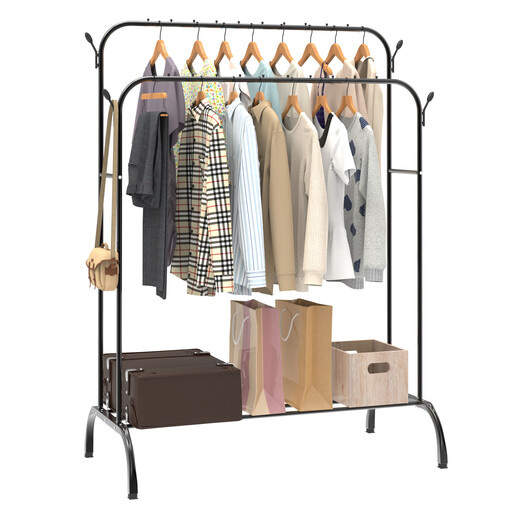 Image unavailable
A freestanding rail for hanging clothes without wall mounting.
The product name mentions a double rail and a bottom storage shelf.
 Image unavailable
A heated airer to consider if you want to add warmth when drying laundry indoors.
The product name lists 230 W and two side wings. The product description gives a maximum recommended load of 10 kg and says the airer should be used indoors on a stable, level surface, with ventilation and at least 31 cm of clearance from walls. Switch it off and unplug it after use.
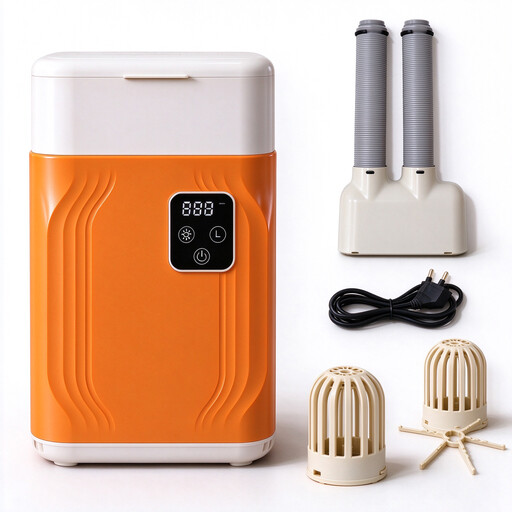 Image unavailable
This is a portable clothes dryer, not an airer for drying shorts on rails.
The product name mentions model HB-222 and a timer. The product description warns that the air outlet gets hot and must be kept at least 50 cm away from flammable materials.
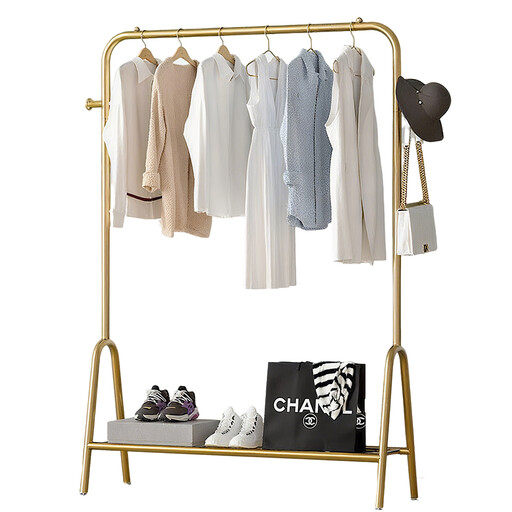 Image unavailable
A freestanding rail for air-drying clothes without wall mounting.
The product name lists a single rail and a width of 100 cm.
Don’t assume so just because they’re made of cotton. Read the care label for the whole pair of shorts, including any finishes and embellishments, and follow the airer’s instructions. A tumble-drying symbol doesn’t automatically mean that every other form of heat is suitable.
Yes. When drying laundry indoors, damp air needs to be able to escape and fresh air needs to come in. A heated airer won’t remove moisture from your home by itself; Milieu Centraal recommends paying attention to ventilation at home.
For a simple estimate, use the wattage of the specific model you’ve chosen and the number of hours you use it: watts × hours ÷ 1,000 gives an approximate figure in kWh. Multiply that figure by your own electricity rate. Actual consumption may differ if the appliance doesn’t run continuously at its rated power.
Follow the instructions for the exact appliance. A product description for an electric airer mentions, among other things, using a stable surface, ensuring ventilation, checking the mains voltage and unplugging the appliance before cleaning. Don’t assume that the clearances and instructions apply to another model.
CE marking is mandatory for electrical products covered by the applicable rules. The Netherlands Food and Consumer Product Safety Authority states that the Low Voltage Directive applies to electrical equipment with a rated AC voltage of 50–1,000 V. Check the details for the specific appliance; CE marking is not an independent performance test.