
Student with limited floor space
You want to set up your airer without blocking the room or a shared walkway, and be able to put it away after use. So compare its dimensions when open and folded.


A standard clothes airer may be enough if you can hang your shorts with space around them and ventilate the room to remove moisture. A heated airer is mainly an option if you want to use the heating function and are happy to accept the extra electricity use. When comparing heated airers, look at their dimensions when open, controls and stated power rating, but don’t use these to estimate how long cotton shorts will take to dry. In the Netherlands, electrical products must carry the CE mark; check the marking and product information for the specific model you’re buying, as required by the NVWA.
You want to set up your airer without blocking the room or a shared walkway, and be able to put it away after use. So compare its dimensions when open and folded.
You’re considering heating for regular laundry days and want to weigh up the extra electricity use and controls that come with this feature. Check the features of the exact model.
You want to know where you can hang wet laundry without making damp problems worse. Milieu Centraal points out that excess moisture can cause mould, so heating is no substitute for ventilation.
When drying cotton shorts in student accommodation, space, heat, moisture and electricity use can each involve different trade-offs. The percentages show which consumers consider each factor their top priority.
| What to consider | What to look for | Who will care more about this? |
|---|---|---|
| Positioning and storage | Measure the space where you’ll use and store it; compare the dimensions in both positions and keep walkways clear. | If my room has very little free floor space, I want to know whether the airer will fit and can be put away after use. Around 31% of consumers prioritise positioning and storage. |
| Extra heat | Compare heated bars, temperature controls and timers for each model. A heating function doesn’t guarantee a specific drying time for shorts. | If I regularly dry clothes indoors, I want to decide whether heating suits the way I’ll use it. Around 25% of consumers give extra heat top priority. |
| Moisture and safe use | Choose a spot where air can circulate and, for a heated model, follow the manual, positioning instructions and product markings. | If I dry laundry indoors in a shared space, I want to be able to ventilate the room and use the appliance as instructed. Around 25% of consumers prioritise moisture and safe use. |
| Electricity use | Note the power rating in kW and the number of hours you use it for: kW × hours gives an estimated consumption in kWh. Use your own rate per kWh to calculate the cost. | If I plan to use the heating function often, I want to weigh up the extra electricity use against a standard airer. Around 19% of consumers prioritise electricity use. |
A heated airer won’t remove moisture from the indoor air by itself. Milieu Centraal warns that excess moisture can cause mould.
First, choose a suitable place to dry your laundry and make sure the room is ventilated while you dry clothes indoors.
You need both the power rating and the length of time you use the airer for to estimate electricity consumption. The wattage alone won’t tell you how much electricity a full drying cycle uses.
Compare calculated or measured consumption on the same basis, and include an unheated airer as an alternative.
The longer the heating is on, the longer the appliance uses electricity.
An airer with plenty of hanging space can still be too large for your room or the spot you have in mind when fully opened.
Measure the available floor space and check the full dimensions when open before buying.
Silvergear lists heated winged airers and a heated tower airer, giving you different designs to compare.
DreamGoods lists heated airers with stated drying lengths of 12 m and 21 m.
Leifheit describes the Pegasus Slim 15 m as a foldable, unheated clothes airer.
This selection includes adjustable, wall-mounted and freestanding airers, as well as a heated model. Compare the space and features you need with the spot where you plan to dry your cotton shorts.
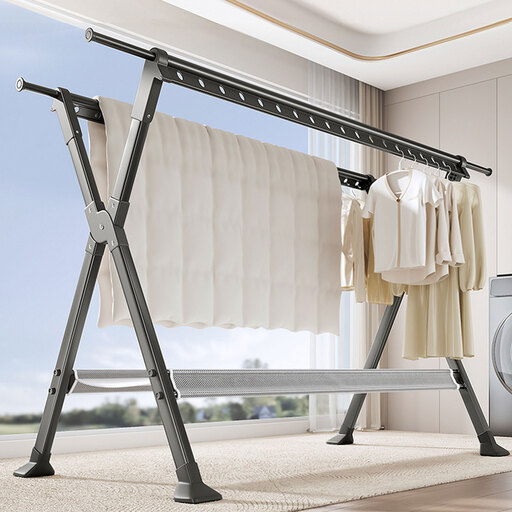 Image unavailable
An adjustable length can be useful if you want to change the amount of hanging space available; allow for 230 cm when fully extended.
Adjustable length: 136–230 cm. The description says the airer folds flat and includes a drying net for small or delicate items.
 Image unavailable
This heated model has fold-out side wings; before buying, check the instructions for use and the CE marking on the specific model.
Stated power rating: 230 W. Dimensions: 144 × 53 × 91 cm. The description recommends a maximum load of 10 kg.
According to the product information, it is designed for indoor use on a stable, level surface, with adequate ventilation and at least 31 cm of clearance from walls. The description also says to connect it to an earthed socket and switch it off and unplug it after use.
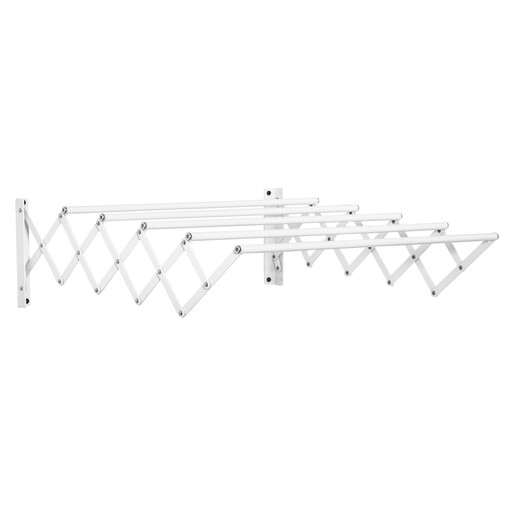 Image unavailable
A wall-mounted model can free up floor space when folded away; choose one only if you can install it on the wall in your chosen spot.
Dimensions: 63,5 × 60 × 20 cm. The description specifies a maximum load of 2 kg per rail and 10 kg in total, with pre-drilled mounting holes.
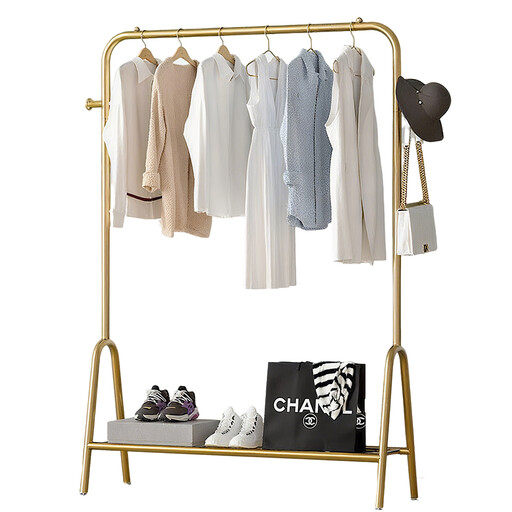 Image unavailable
A freestanding single rail is an option if you want to dry clothes on one rail without wall-mounting; measure the available space first.
The title specifies one 100 cm rail.
Follow the care label on the specific pair of shorts; the fact that they’re cotton alone doesn’t determine the right treatment. Don’t choose a one-size-fits-all airer temperature without considering the garment’s finish and components.
Follow the manual and make sure the room is ventilated, as a heated airer won’t remove moisture from the room by itself. If you have mechanical ventilation, keep the air inlets clear and use the system as instructed when drying laundry indoors; Milieu Centraal highlights the importance of ventilation.
It depends on the power rating, how long you use the airer for and your electricity tariff. Multiply the power rating in kW by the number of hours used to estimate consumption in kWh; a stated wattage isn’t a measurement of your complete drying cycle.
Yes. The NVWA states that electrical products must carry the CE mark. This alone doesn’t prove that a specific model is safe; check the marking and product information for the model you’re buying.
For an online consumer purchase, the statutory cooling-off period is 14 days from delivery, according to ACM ConsuWijzer. The seller is responsible for the statutory guarantee if a product is faulty, according to the Authority for Consumers & Markets. Also check the specific returns and delivery terms.