What should you look for in a clothes airer for shirts?
Heated winged airer
Choose this if: you want to hang several shirts indoors and add heat to the airer.
Bear in mind: your cotton shirts won’t necessarily dry faster; check the space required and the electricity consumption, too.
Compact heated airer
Choose this if: standing or wall-mounted use matters more to you than having lots of separate hanging spaces.
Bear in mind: DOMO presents the DO7117DR mainly for towels, clothes and swimwear, so check that its hanging space suits your shirts.
Unheated airer with hanger space
Choose this if: having enough space to hang shirts is important and air-drying without electric heat suits your needs.
Bear in mind: the airer doesn’t add heat, and you’ll still need to ventilate the room when drying clothes indoors.
The main question is whether you need separate hanging spaces, extra heat, compact storage or a well-ventilated place to dry your clothes.
| What to consider |
What to look for |
Who it matters to |
| Hanging space |
Count the hanger spaces and measure the area around the airer; total drying length doesn’t tell you how many shirts can hang separately. |
If I want to dry shirts neatly on hangers, I look at the available space and the care label. Around 28% of consumers have hanging space as their main priority. |
| Heat support |
Check which parts are heated, along with the usage time and instructions provided by the manufacturer. |
If laundry takes a long time to dry indoors, extra heat may be worth considering. Around 22% of consumers have heat support as their main priority. |
| Floor and storage space |
Compare the airer’s dimensions when in use with the space available and the room you have for storage. |
In a smaller home, I want to know in advance where the airer will fit and how I’ll put it away after use. Around 17% of consumers have space as their main priority. |
| Electricity consumption |
Compare actual consumption for a similar load and length of use; wattage alone doesn’t tell you how much electricity a drying session will use. |
If comparing electricity use with ordinary air-drying matters to me, I compare usage on a like-for-like basis. Around 17% of consumers have running costs as their main priority. |
| Ventilation |
Choose a spot where air can circulate in and out, whether or not the airer is heated. |
When drying clothes indoors, I want to be able to remove the damp air from the room. Around 16% of consumers have moisture control as their main priority. |
Clothes airers for indoor use at Joybuy
This selection at Joybuy includes freestanding, folding and wall-mounted clothes airers, plus one explicitly electric heated model. Compare the hanging space, dimensions and positioning with the spot where you want to dry your cotton shirts.
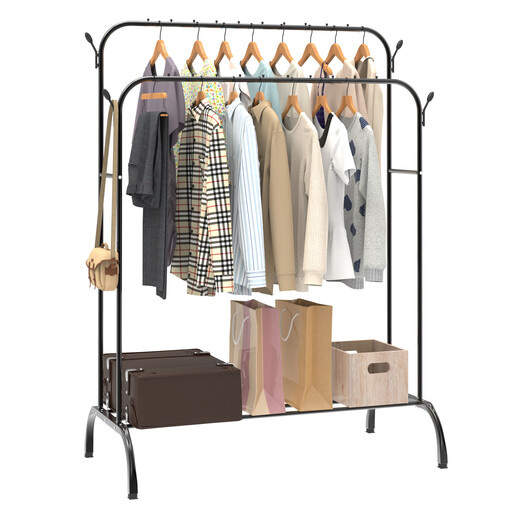 Image unavailable
Freestanding clothes airer with double rail and storage shelf
May suit you if you want to hang clothes on two levels; the product name mentions use in the bedroom and on the balcony.
Freestanding design with a double rail and storage shelf at the bottom.
View at Joybuy
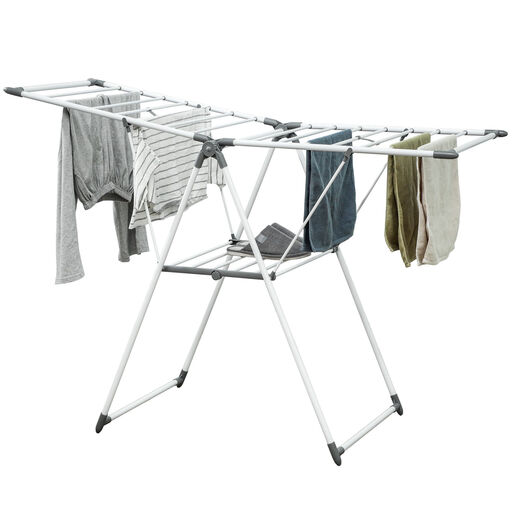 Image unavailable
Folding clothes airer with 2 adjustable levels
May suit you if you’re looking for an airer that folds away neatly after use; check that its dimensions fit your drying space.
Metal and plastic; 156,5 × 61,5 × 97 cm; white.
View at Joybuy
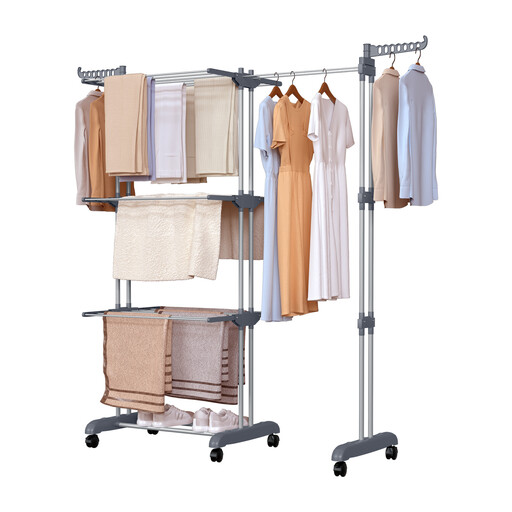 Image unavailable
Oak & Tea clothes airer with 360° hangers
May suit you if you want a folding airer that you can move between indoor and outdoor spaces; check the space available and the conditions of use.
Stated load capacity: 60 kg; length: 176 cm; with wheels and 360° hangers; grey.
View at Joybuy
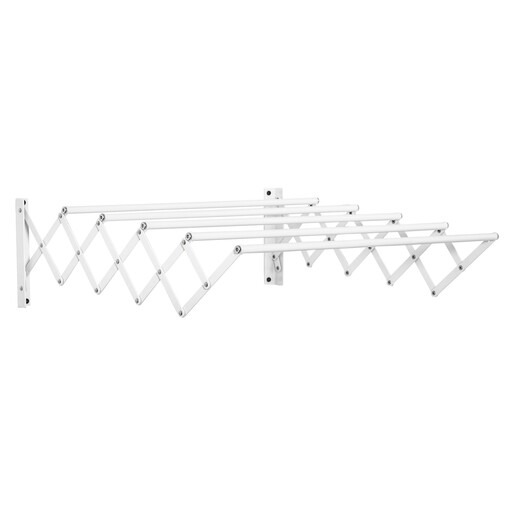 Image unavailable
Folding wall-mounted clothes airer with 5 rails
May suit you if you want to free up floor space and have a suitable place to mount it.
63,5 × 60 × 20 cm. This is a wall-mounted model; the product description says it is installed using pre-drilled holes.
View at Joybuy
 Image unavailable
Electric heated clothes airer with 2 side wings
May suit you if you want extra heat for drying clothes indoors; the product name specifies a folding design.
230 W; 144 × 53 × 91 cm; silver-coloured. Use indoors on a stable, level surface with good ventilation and at least 31 cm clearance from walls. Follow the other instructions for use and check the relevant product documentation before buying.
View at Joybuy
Frequently asked questions about drying cotton shirts
Can I put any cotton shirt on a heated airer?
Check the care label on each shirt and the airer’s instructions for use. The fabric type alone doesn’t tell you which drying method is suitable for that garment.
Do I need to ventilate the room if my clothes airer is heated?
Yes. When drying clothes indoors, make sure air can flow in and out. Milieu Centraal points out that drying laundry adds moisture to your home; a heated airer won’t remove that moisture by itself.
How do I calculate the electricity used for one drying session?
If the power draw stays constant during use, multiply the power in kilowatts by the number of hours used to calculate consumption in kWh. Multiply that by your own rate per kWh; the stated power rating alone doesn’t determine the cost per shirt.
What product rules apply to an electric clothes airer sold in the Netherlands?
Electrical equipment placed on the market in the Netherlands must comply with the applicable European rules. Business.gov.nl states, among other things, that the manufacturer must affix the required CE marking and draw up an EU Declaration of Conformity; check the information for the specific model.
What can I do if a clothes airer breaks too soon?
Contact the seller. According to ACM ConsuWijzer, your statutory guarantee is in addition to any manufacturer’s guarantee and doesn’t have a fixed two-year term; what you could reasonably expect from the product and how it was normally used are also taken into account.


