
Vandaag of morgen in huis

Kwaliteit gegarandeerd

Welkomstaanbiedingen ontgrendelen: GRATIS bezorging | Tot 80% korting | Gratis 30 dagen JoyPlus-proefperiode
Download de app
Dry hair often feels rough, tangles more easily and can become frizzy after washing. A conditioner for dry hair can help make the lengths easier to comb and more manageable. However, not every nourishing conditioner suits every hair type. A rich formula can weigh fine hair down, while a lightweight conditioner may not be enough for thick or damaged hair.
Coconut oil, argan oil, avocado oil and shea butter are often highlighted as nourishing ingredients. However, the presence of one such ingredient does not give you the complete picture of the formula. Also look at the rest of the ingredients list and the order in which the ingredients are listed.
A coconut oil conditioner may feel pleasant on dry or thick hair, but a rich formula may be less suitable for fine hair. “With oil” also does not automatically mean that a conditioner is silicone-free.
A conditioner can make damaged hair feel smoother and easier to comb. This does not mean that split ends or structural damage are permanently repaired. Claims about repair or reduced hair breakage come from the brand’s product communication. According to the brand’s own research, specific results may be associated with these claims, but the outcome varies depending on hair type and how the product is used.
Therefore, focus mainly on information that can be checked, such as:
A conditioner multipack can be convenient if you use conditioner every day or if several people in your household use it. However, compare the total price with the volume per bottle. A set of six 200 or 250 ml bottles also requires enough storage space. Check that it contains exactly the same variant and not an assortment with different formulas.
Dry hair is not one single hair type. Fine, straight hair usually needs a lightweight conditioner that does not quickly feel heavy. Thick, coarse or curly hair may benefit from a richer formula that helps with detangling and reducing frizz.
For a conditioner for curly hair, the ingredients and your personal preferences are particularly important. If you follow the Curly Girl method, you may want to look for a CG-proof, silicone-free conditioner. Always check the current packaging, as formulas can change.
Silicones can make hair feel smoother and make it easier to comb. If you prefer to use a silicone-free conditioner, check the ingredients list rather than relying solely on the front of the packaging.
Fragrance and fragrance ingredients such as limonene, linalool or geraniol may be unwanted by some users. If you have a sensitive scalp or experience irritation, stop using the product and follow the safety information on the label. It is best to apply conditioner to the lengths and ends, rather than routinely applying it to the scalp.
A 385 ml bottle of conditioner contains more product than a 200 ml variant, but the right choice depends on how much you use per wash. A larger bottle may be practical for long, thick or curly hair. For occasional use, a smaller size may be more convenient.
The general method is simple:
With a conditioner for frizzy hair, distributing the product evenly often helps more than using extra product. Too much conditioner can leave hair limp or weighed down.
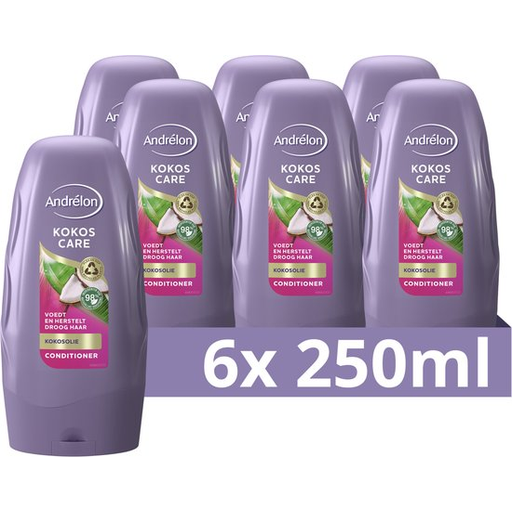
Why it suits this profile: The pack contains six 250 ml bottles, making it suitable for regular use or a household with several users. The product description mentions coconut oil, coconut milk and a silicone-free formula.
The volume and number of bottles are clearly specified. However, check the price per 100 ml before buying the multipack.
1,500 ml in total, silicone-free according to the product information and intended for dry hair.
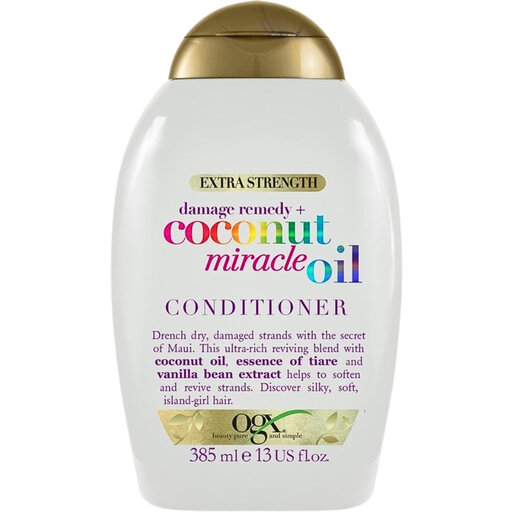
Why it suits this profile: According to the product information, this conditioner is intended for dry, damaged, thick or treated hair. The formula contains coconut oil and is recommended to be left on for a few minutes.
The description states that it should be left on for 2 to 3 minutes. Check the full ingredients list, which includes silicones and fragrance.
385 ml volume, rich texture according to the product description and intended for dry and damaged hair.
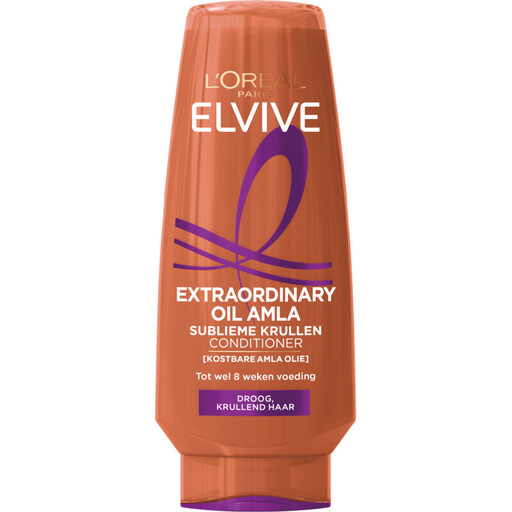
Why it suits this profile: This variant is specifically described for dry and curly hair. That makes it relevant for users who mainly want to tackle tangles and difficult-to-manage curls.
The target audience is clearly stated in the product information. The ingredients list includes amodimethicone, so this is not a silicone-free conditioner.
Developed for dry and curly hair, with amla and flower oil extracts according to the product description.
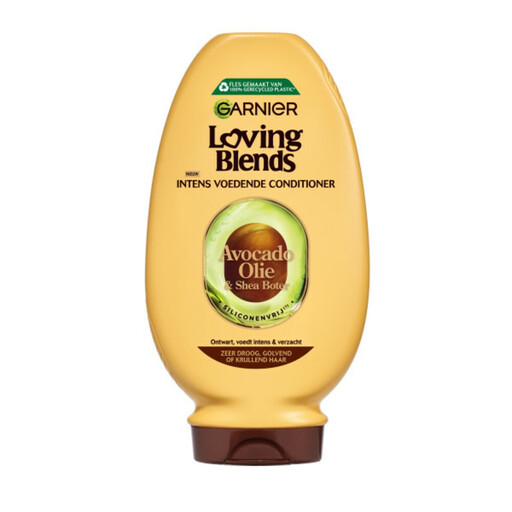
Why it suits this profile: The product information positions this conditioner for very dry and frizzy hair. Avocado oil and shea butter suit users looking for a richer, softening formula.
The description mentions both the hair concern and the key nourishing ingredients. If you have fine hair, it is sensible to start with a small amount.
250 ml volume, intended for very dry and frizzy hair and vegan and paraben-free according to the product information.
We have put together a complete, up-to-date list of products that fully meet these strict selection criteria and the applicable European safety regulations.
You can use conditioner after every wash if you have dry hair, as long as it does not leave your hair feeling heavy or greasy. Apply the product mainly to the lengths and ends. If you wash your hair less often, you can use conditioner less often too.
The shelf life is stated on the packaging. Look for an open-jar symbol indicating the period after opening, an expiry date or other information from the manufacturer. Store the bottle at room temperature and keep the cap securely closed. Has the smell, colour or texture changed? Do not continue using the product.
Look for a formula intended for dry, thick, coarse or frizzy hair that detangles it effectively. A conditioner containing oil, shea butter or silicones can make hair feel smoother, while a silicone-free conditioner is better suited to users who deliberately avoid silicones. Always check the label and adjust the amount to suit your hair structure.
