
Vandaag of morgen in huis

Kwaliteit gegarandeerd

Welkomstaanbiedingen ontgrendelen: GRATIS bezorging | Tot 80% korting | Gratis 30 dagen JoyPlus-proefperiode
Download de app
Buying a bag of dog food sounds simple enough, until you have to choose between dry dog food, dog biscuits, puppy food, grain-free recipes and different protein sources. Packaging is often covered in terms such as “natural”, “premium” and “for sensitive dogs”. On their own, these words say very little about whether the food is suitable for your dog’s everyday needs.
As a Joybuy Product Recommendation Officer, I therefore focus on verifiable information: life stage, dog size, ingredients, analytical constituents and feeding guidelines. This helps you avoid paying more for a marketing story that does not meet your dog’s needs.
A recipe containing chicken, fish, lamb, duck or game may sound appealing, but always check the ingredients list. “With chicken” does not automatically mean that chicken is the only animal ingredient. Some recipes also contain, for example, fish oil, egg, pork fat or chicken fat.
This is important if you want to avoid a particular protein source because of a food sensitivity. Do not just read the front of the bag; check the complete ingredients list as well.
Grain-free dog food contains no grains, but that does not automatically make it suitable for every dog. Grains such as oats, barley or spelt can be part of a complete diet. Instead, look at the recipe as a whole, its energy content and how your dog responds to it.
For example, according to the product information, ACANA Classic Red Meat contains barley and oats, among other ingredients, but no maize, wheat or soya. The recipe is therefore not grain-free. Farmina N&D Pumpkin Duck Adult Medi/Maxi, on the other hand, is listed as having a grain-free recipe containing duck, fish, pumpkin, peas and chickpeas.
Puppies, adult dogs and senior dogs do not always have the same nutritional needs. A medium-sized or large dog may also benefit from a recipe specifically formulated for its life stage and size.
Pay attention to the legally defined product name. Food described as a complete feed for puppies is different from dog food intended for adult dogs. Also check the recommended amount on the packaging and adjust the portion according to your dog’s weight, activity level and body condition.
First choose between puppy food and adult food. For young medium-sized and large breeds, the growth stage is particularly important. According to the product information, Farmina N&D Prime Chicken Puppy Medium/Maxi Breed Dog Food is offered as food for puppies of medium-sized and large breeds. The analysis lists 34% crude protein and 18% crude fat, among other figures.
Adult dogs have different options available. According to the product information, Farmina N&D Pumpkin recipes with lamb, duck and wild boar are intended for adult dogs of medium-sized and large breeds.
Check the first ingredients and see whether the recipe contains several animal protein sources. Examples:
A recipe with several protein sources is not necessarily unsuitable. However, it can make things more difficult if you want to identify step by step which ingredients your dog tolerates. If your dog has persistent symptoms or is on a prescribed diet, it is sensible to consult a vet.
Compare crude protein, crude fat, crude fibre, moisture and metabolisable energy. These figures provide more useful guidance than general claims on the packaging. An active dog may have different energy needs from a calm household pet.
For example, ACANA Classic Red Meat lists 27% crude protein, 16% crude fat and 3425 kcal/kg. Farmina N&D Ocean Salmon lists 30% crude protein and 18% crude fat. These figures are not a judgement in themselves; they help you compare recipes more objectively.
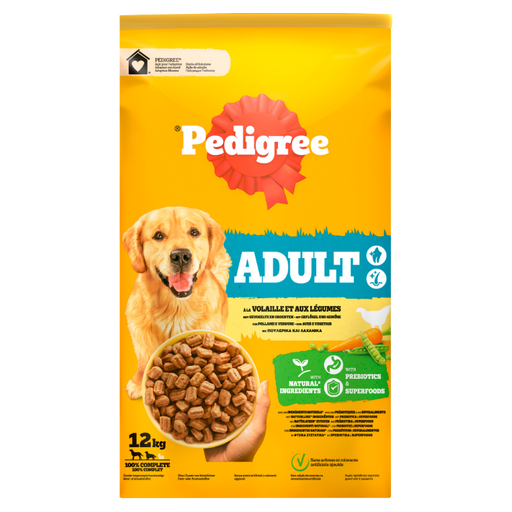
Why it suits this profile: A practical choice for owners looking for adult dog food in a large bag and who prioritise everyday convenience.
The product information identifies the life stage as adult dogs and clearly states that it is dry food. Before buying, however, check the current ingredients and feeding guidelines on the packaging.
Complete food for adult dogs according to the product description; available in a 12 kg bag.
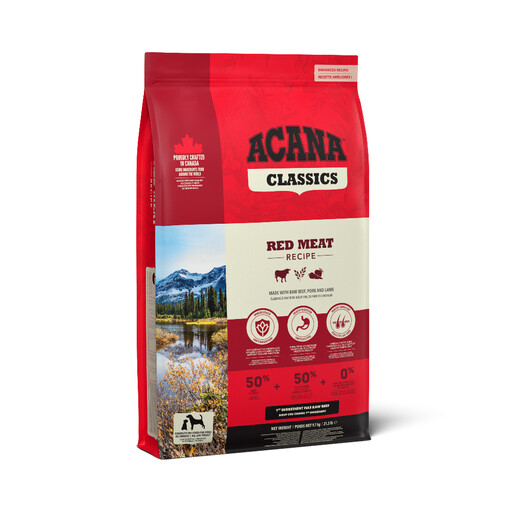
Why it suits this profile: Suitable for anyone comparing several types of red meat and a complete food for all life stages.
The product information gives the percentages of beef, lamb and pork ingredients. At the same time, the recipe is not grain-free: it contains barley and oats, among other ingredients.
27% crude protein, 16% crude fat and 3425 kcal/kg; free from artificial colourings, flavourings and preservatives according to the product description.
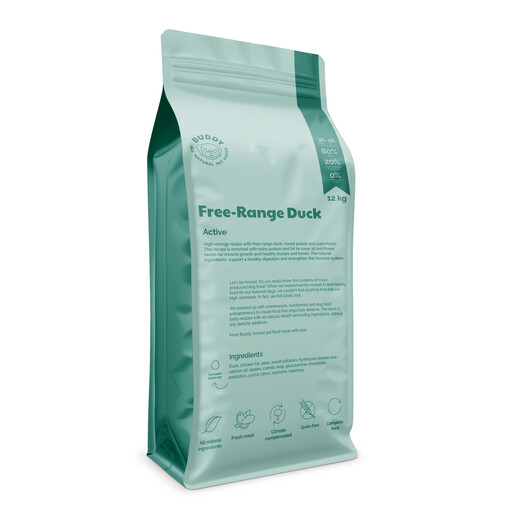
Why it suits this profile: Designed for owners of large, active or working dogs who want an energy-rich duck recipe with larger biscuits.
The product information gives the dimensions of the round, flat biscuit: approximately 1.2 to 1.6 cm. It also does not list grains or gluten as ingredients.
The ingredients list identifies duck as the main ingredient and includes sweet potato, salmon oil, glucosamine and chondroitin sulphate, among others.
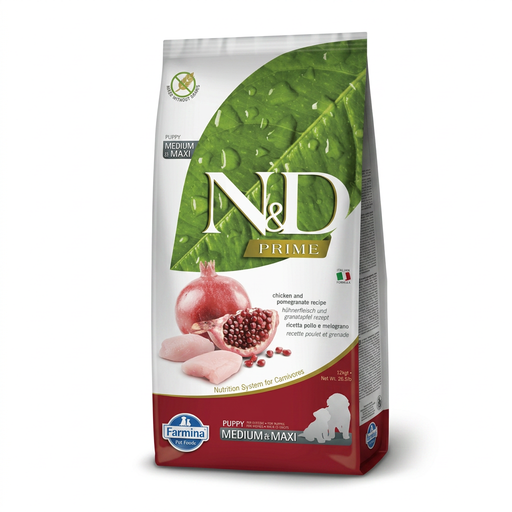
Why it suits this profile: A targeted choice for puppies of medium-sized and large breeds, with a grain-free recipe according to the product information.
The product information identifies puppies and medium-sized to large breeds as the target group. The recipe contains no grains, peas, lentils or pea protein.
34% crude protein, 18% crude fat and chicken as the main animal ingredient according to the product specifications.
When changing to a new brand or recipe, make the transition gradually. A practical guideline is to mix the new food with the old food over approximately seven days. Start with a small proportion of new food and increase it step by step. Keep an eye on your dog’s stools, appetite and general response.
Store dog biscuits in a cool, dry place, seal the bag securely and use the food according to the best-before date and batch information. Always provide fresh drinking water. A large bag offers better value per kilogram, but do not buy more than you can use if the bag will remain open for months and your dog eats only small amounts.
There is no universally suitable recipe. Look for a clear ingredients list, an appropriate protein source and a gradual changeover. Grain-free dog food may be an option, but grain-free does not automatically mean that a recipe is right for your dog. If symptoms keep returning, it is sensible to seek advice from a vet.
Use the feeding table on the packaging as a starting point. The right amount depends on body weight, age, activity level and the number of treats. Check your dog’s body condition regularly and gradually adjust the portion if necessary.
This varies by brand and packaging. Seal the bag securely after every use and store it in a dry place away from direct sunlight. Follow the manufacturer’s instructions and check the smell, colour and texture. If in doubt, it is better not to feed the food.
We have compiled a complete, up-to-date list of products that fully meet these strict selection criteria and the applicable European safety regulations.
