
Vandaag of morgen in huis

Kwaliteit gegarandeerd

Welkomstaanbiedingen ontgrendelen: GRATIS bezorging | Tot 80% korting | Gratis 30 dagen JoyPlus-proefperiode
Download de app
Choosing the right dry dog food seems simple, until you start comparing labels. Packaging often features large pictures of meat, vegetables or fruit, while the actual ingredients are less clear. Terms such as “premium dog food”, “natural” and “grain-free dog food” do not, on their own, tell you whether a product is suitable for your dog.
As a Joybuy Product Recommendation Officer, I look past the marketing language and focus on verifiable details: life stage, kibble size, ingredients, analytical constituents and feeding guidelines.
“Dog food with chicken”, “dog food with lamb” or “dog food with beef” does not automatically mean that the named meat makes up a large proportion of the recipe. Always check the ingredients instead. For example, Pedigree Adult Small Dog Beef & Vegetables states that the product contains, among other things, cereals, animal derivatives and 4% beef. The flavour name therefore does not give you the complete picture.
With mixed recipes, such as beef and lamb, it is equally important to check which ingredients appear first in the list. Ingredients are generally listed in descending order by weight.
Grain-free dog food contains no cereals, but it often uses other sources of carbohydrates, such as peas, chickpeas or sweet potato. This may suit certain dietary preferences, but it is not a general reason to choose a grain-free recipe. Always look at the full ingredients list and how your dog responds to the food.
If your dog has persistent gastrointestinal problems, itching or other issues, consult a vet. A webshop description is not a medical assessment.
Puppy food, adult dog food and senior dog food have different nutritional aims. A puppy is still growing and has different energy and mineral requirements from an adult dog. An older dog may benefit from a recipe that takes a lower activity level into account.
Also consider your dog’s size. Small dog food usually contains smaller kibble. Medium dog food and large dog food may have a different energy content and larger kibble size.
Start by asking yourself three questions:
A household pet that mainly goes on short walks will generally need a different portion size from a working or highly active dog. The recommended amount on the packaging is a starting point. Adjust the portion according to body condition, weight and activity level.
For example, according to the product description, EUKANUBA Life Care Dog Adult Medium Chicken is intended for medium-sized adult dogs aged 1 to 7 years. Farmina N&D Pumpkin Lamb Puppy Medi/Maxi is stated in the product information to be intended for puppies of medium and large breeds.
The analytical constituents provide more useful guidance than isolated claims on the front of the packaging. At a minimum, check:
For example, Pedigree Adult Small Dog Beef & Vegetables lists 22% protein, 13% fat and 2.2% crude fibre. Purina Beneful Adult Beef & Garden Vegetables lists 15% protein, 8% fat and 4% fibre. These figures are not a straightforward quality ranking; they need to suit your dog and the rest of the recipe.
Look on the packaging for wording such as complete and balanced dog food or “complete pet food”. According to the product information, this means that the product is intended to provide complete daily nutrition for the specified animal species and life stage.
Pay attention to the changeover period too. Change dog kibble gradually, usually over 7 to 10 days. Mix progressively more of the new food into the old food. This helps prevent an abrupt change to your dog’s daily diet. Keep the bag tightly closed and store it in a cool, dry place.
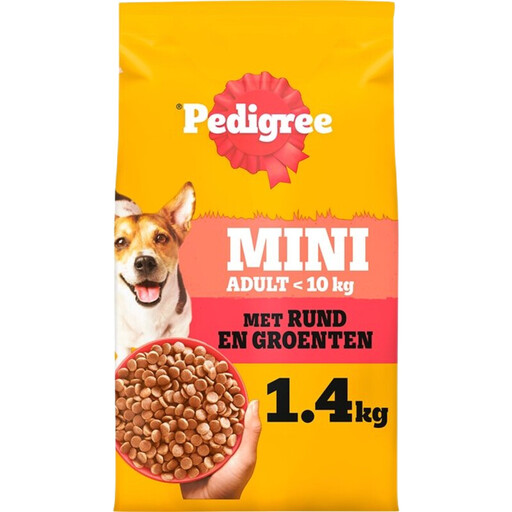
Why it suits this profile: A 1.4 kg pack is practical when you are buying dog kibble for a small adult dog for the first time and do not want to commit to a large supply straight away.
The product information clearly states the format for small adult dogs, the ingredients and the analytical values. This allows you to compare the flavour claim with the label.
Small kibble, 22% crude protein and a stated daily feeding guideline for dogs weighing 1 to 10 kg.
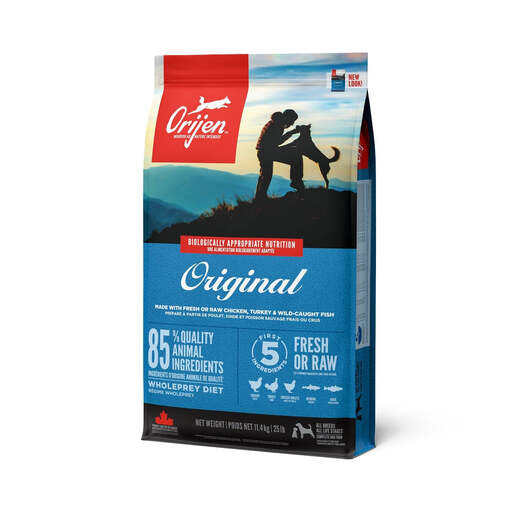
Why it suits this profile: Suitable for anyone who wants to compare a detailed ingredients list with a high proportion of animal-based ingredients.
The product page shows percentages for various animal-based ingredients and lists 38% crude protein. However, check that this suits your dog’s energy requirements.
Grain-free recipe, 38% crude protein and a recipe containing chicken, turkey, herring, cod and egg.
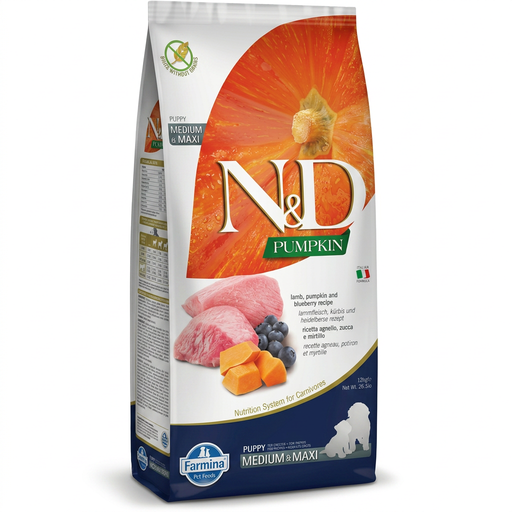
Why it suits this profile: Designed for owners of medium and large-breed puppies who are looking for a grain-free recipe and clear changeover instructions.
The product information identifies the target group, portions for each weight category and a seven-day changeover period. Buyers therefore do not have to rely solely on the front of the bag.
Lamb, herring, pumpkin, peas and chickpeas; intended as complete food for puppies of medium and large breeds.
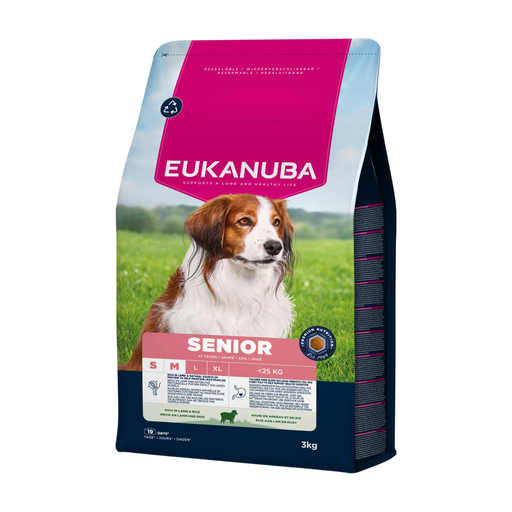
Why it suits this profile: Intended for small and medium-sized senior dogs aged 7 and over, with a recipe based on lamb and rice.
The age range and breed size are stated in the product description. According to EUKANUBA’s own information, the formula contains ingredients including fibre, omega-3 and omega-6; check the packaging for the latest details.
Small to medium-sized kibble, lamb and rice as the main listed ingredients, and a 3 kg pack size.
We have put together a complete, up-to-date list of products that fully meet these strict selection criteria and the applicable European safety regulations.
This varies by product and packaging. Check the best-before information on the label and seal the bag properly after every use. Store dog kibble somewhere cool and dry, preferably in the original sealed packaging or a clean airtight container.
Gradually mix the new food into the current food over approximately seven to ten days. Start with a small amount of the new food and increase it step by step. Monitor your dog’s appetite, stools and body condition. If problems persist, it is advisable to consult a vet.
Use the feeding table on the packaging as a starting point. The correct portion depends on weight, age, breed size, activity level and body condition. Weigh the kibble rather than relying solely on visual estimates. Always provide plenty of fresh drinking water.
