
Vandaag of morgen in huis

Kwaliteit gegarandeerd

Welkomstaanbiedingen ontgrendelen: GRATIS bezorging | Tot 80% korting | Gratis 30 dagen JoyPlus-proefperiode
Download de app
Dry cat food may seem easy to compare: choose a flavour, a brand and a bag size. In practice, the most important differences are on the label. Attractive packaging, for example, tells you little about life stage, nutritional value or daily serving size.
As a Joybuy Product Recommendation Officer, I mainly filter products based on verifiable information. This helps you avoid paying for a marketing term that does not match your cat’s needs.
On a bag of cat food with chicken, fish or lamb, the named flavour may make up a relatively small part of the recipe. So check the ingredients list. Ingredients are generally listed in descending order by weight.
For example, IAMS Naturally Adult Lamb & Rice states that both lamb and rice make up 4.1% of the recipe. However, the ingredient list begins with dried chicken and turkey. This does not automatically make the product unsuitable, but it is useful information if you are specifically looking for cat food with lamb.
Grain-free cat food contains no grains, but it may contain other sources of carbohydrates, such as peas, chickpeas or quinoa. So do not just look at the front of the packaging. Also check the crude protein, fat content, fibre and full ingredient list.
Grain-free food is not necessary for every cat either. If your cat has a diagnosed food sensitivity or persistent symptoms, consulting a vet is wiser than repeatedly changing its food yourself.
A 10 kg bag may have a lower price per kilogram, but only if your cat accepts the food well and the product stays fresh. Once opened, dry food should be stored in an airtight container or tightly sealed bag in a dry place. According to the product information, IAMS Naturally advises closing the opened packaging securely and using it within six weeks.
If you are trying a recipe for the first time, a smaller bag may be the more economical choice. This helps prevent waste if your cat leaves the biscuits untouched.
Choose cat food for adult cats when the packaging states that your cat can switch to adult food from 1 year of age. Kitten food has a different nutritional composition and is intended to support growth. According to the product information, Farmina N&D Ocean Kitten Cod is intended for kittens and is also suitable for pregnant or nursing cats.
For an indoor or neutered cat, a recipe with tailored nutritional guidance may be better suited to its daily activity level. However, pay attention to the exact wording on the packaging. “Indoor” or “Neutered” is not a substitute for checking portion size and body condition.
A product described as complete and balanced cat food is intended to provide complete nutrition when you follow the recommended quantities. Also check which animal species and life stage the food is intended for.
The products selected in this overview are described in the supplied product information as complete food for cats or for a specific life stage. This is more verifiable than general terms such as “premium” or “natural”.
At a minimum, compare:
For example, Farmina N&D Prime Neutered Cat Chicken lists 36% crude protein, 14% fat and 9% moisture. The product information also provides portion guidelines based on body weight. Always use the packaging as your guide, as nutritional needs vary from cat to cat.
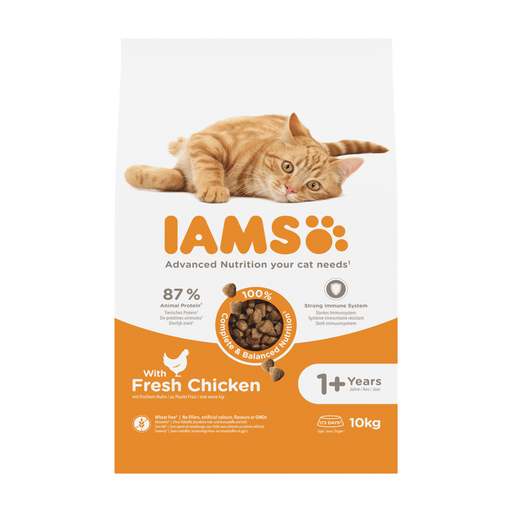
Why it suits this profile: A large format for households with an adult cat that is already used to chicken-flavoured cat biscuits. The product information states that the recipe is suitable for cats from 1 year of age.
The packaging clearly states the life stage and variant. Still, check the portion table and store the opened bag in an airtight container.
10 kg contents; chicken variant; according to IAMS, the formula contains a fibre blend with prebiotics and beet pulp.
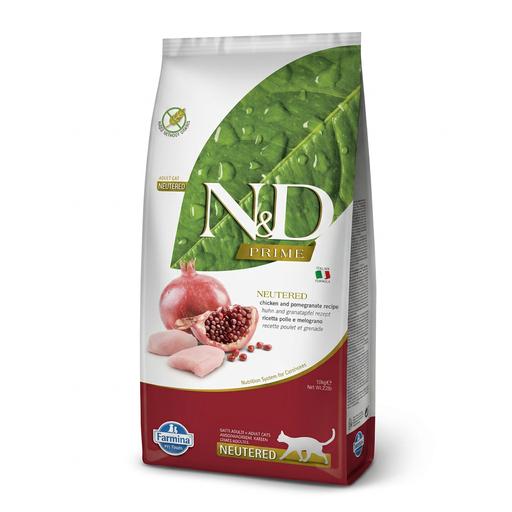
Why it suits this profile: Designed for anyone looking for a grain-free recipe for a neutered cat who wants to compare the analytical values in advance.
The product information explicitly mentions the neutered variant, grain-free recipe and portions based on body weight. This means you do not have to rely on the flavour name alone.
36% crude protein, 14% fat and 9% moisture according to the product specification; with chicken, herring and egg.
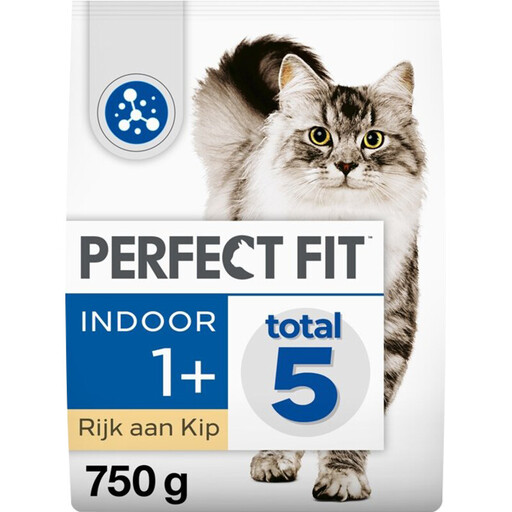
Why it suits this profile: A smaller pack for an adult indoor cat. Handy if you want to see first whether your cat accepts the biscuits.
The pack size reduces the risk of prolonged storage. Even with an indoor cat, check the recommended amount and adjust it to your cat’s activity level.
750 g contents; indoor adult variant; according to the product information, contains no added artificial colourings.
We have put together a complete, up-to-date list of products that fully meet these strict selection criteria and the applicable European safety regulations.
This depends on body weight, age, activity level and whether your cat also eats wet food. Use the table on the packaging as a starting point. Weigh out the portion rather than repeatedly topping up the bowl by eye. Check your cat’s body condition regularly and adjust the amount if necessary.
Gradually mix the new food into the old food. Start with a small amount and increase it over approximately seven days. If your cat develops diarrhoea, vomits or continues to refuse the food, it is best to stop the transition and ask a vet for advice.
Store the bag in a cool, dry place, securely sealed and away from direct sunlight. Follow the storage period stated on the packaging. According to the product information, IAMS Naturally recommends using it within six weeks of opening. The exact shelf life may vary from one product to another. Always provide fresh drinking water alongside dry food.
