
Vandaag of morgen in huis

Kwaliteit gegarandeerd

Welkomstaanbiedingen ontgrendelen: GRATIS bezorging | Tot 80% korting | Gratis 30 dagen JoyPlus-proefperiode
Download de app
Choosing dry cat food may seem straightforward, but attractive packaging says little about whether a product is suitable for your cat. A bag featuring chicken, fish or a prominent health claim may still not be right for your pet’s age, activity level or eating habits.
Three common pitfalls are:
First, check which cat the product is intended for. The packaging should clearly state whether it is kitten food, adult food or senior cat food. A kitten formula, for example, is designed for the period from weaning to around 12 months. Purina One Junior states that the product is suitable for kittens from weaning to 12 months, as well as pregnant or nursing cats.
For cats from around 1 year old, there are options such as:
Always check the exact age indication and feeding advice on the packaging. Energy requirements also depend on weight, activity level and body condition.
Ingredients are generally listed in descending order by weight. Pay attention to the difference between a clearly named animal protein source and general terms such as “meat and animal derivatives”. Both may be used in complete pet food, but they do not provide the same level of information about the recipe.
If you are looking for cat food with chicken, for example, you may want to choose a product that lists chicken near the top of the ingredients list. For cat food with fish, it is worth checking whether salmon, cod or fish derivatives are listed. A recipe containing rice, wheat or other grains is not automatically unsuitable. Grain-free cat food may be a preference, but grain-free does not automatically mean it is a better fit for every cat.
Also check the analytical constituents, such as:
If you want to use a product as your cat’s main daily food, preferably choose one labelled as complete and balanced cat food.
A large bag may offer better value per kilogram, but only if your cat accepts the food well and the product stays fresh. For a first purchase, 300 or 800 grams is more practical than buying 10 kilograms straight away. This helps prevent waste if your cat is fussy or its nutritional needs change.
Store cat biscuits in a cool, dry place and keep them tightly sealed. Follow the best-before date and storage instructions on the packaging. Always provide fresh drinking water alongside dry cat food, as dry biscuits contain little moisture.
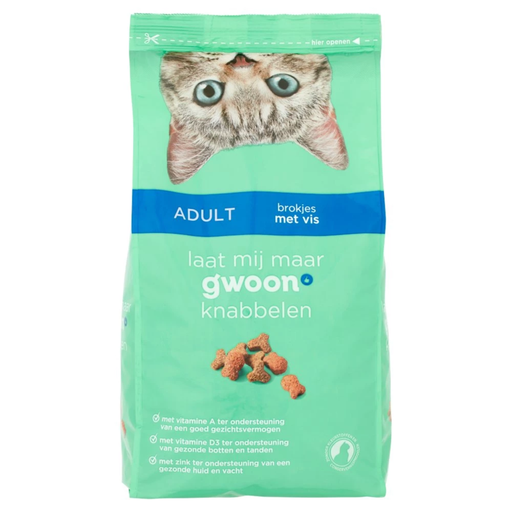
Why it suits this profile: The 2 kg pack is practical for an adult cat and suitable if you are looking for a straightforward everyday option with a fish flavour.
The product information clearly states the target group, flavour and net contents. However, check the full ingredients list and feeding advice before buying.
Complete dry food for adult cats; 2 kg pack; fish flavour.
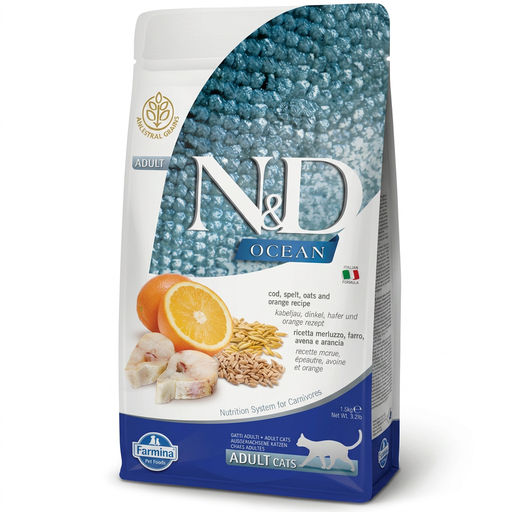
Why it suits this profile: This variant is intended for adult cats and combines cod with spelt and oats for shoppers who want to take a closer look at the protein source and recipe.
The recipe lists fresh and dehydrated cod, including percentages. This allows you to assess the fish content more precisely than by looking only at the front of the bag.
1.5 kg contents; cod as a prominent ingredient; with spelt and oats.
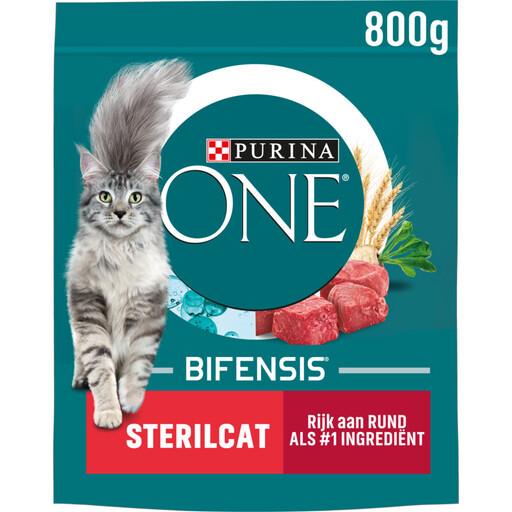
Why it suits this profile: A targeted choice for adult sterilised or neutered cats where portion control and a suitable recipe are important.
The product description explicitly states the target group and an adjusted protein-to-fat ratio. Follow the recommended amount and adjust it according to body condition and activity level.
For sterilised and neutered adult cats; 800 g pack; contains beef as the named flavour.
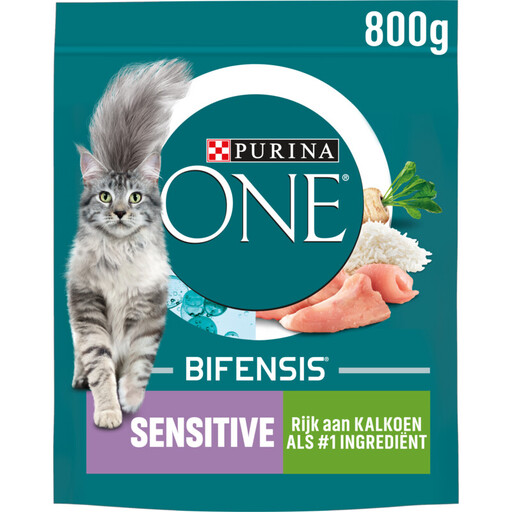
Why it suits this profile: According to the product description, this variant is intended for adult cats with sensitive digestion or fussy eating preferences.
The formula lists turkey as the first ingredient and contains no added wheat. According to Purina’s own research, unpleasant odours from faeces were reduced by 24% after 14 days; this is a brand claim, not a guarantee.
For adult cats; turkey as the first ingredient; 800 g pack with no added wheat.
We have put together a complete, up-to-date list of products that fully meet these strict selection criteria and the applicable European safety regulations.
It can be, provided the product is labelled as complete food for the correct life stage. Follow the portion table on the packaging and always provide fresh drinking water. Some cats also receive wet food; adjust the total amount to prevent overfeeding.
This varies by brand and packaging. Store dry cat food in a cool, dry place and keep it airtight. Check the best-before date and the instructions on the bag. A smaller pack may be the wiser choice if your cat eats slowly or only needs a small amount of biscuits each day.
Gradually mix the new food into the familiar food, usually over around five to seven days. Start with a small amount of new food and increase it step by step. Monitor your cat’s appetite and stools. If symptoms persist, allergic reactions occur or your cat develops urinary problems, it is advisable to consult a vet.
