
Vandaag of morgen in huis

Kwaliteit gegarandeerd

Welkomstaanbiedingen ontgrendelen: GRATIS bezorging | Tot 80% korting | Gratis 30 dagen JoyPlus-proefperiode
Download de app
Dry cat food might seem simple to choose: pick a flavour, decide on the pack size and place your order. In reality, cats vary greatly in age, activity level, weight and preference. A kitten has different nutritional needs to a senior cat, while an indoor cat often uses less energy than an active outdoor cat.
As a Joybuy Product Recommendation Officer, I filter product information on verifiable points. This way, you avoid relying solely on eye-catching packaging or a generic marketing claim.
Cat food with chicken or cat food with fish may sound tempting, but the name doesn't always tell you how much of that ingredient is actually in the recipe. So, always check the ingredients list. If chicken, salmon or cod appears near the top, that ingredient makes up a relatively important part of the recipe. Also look at the analytical content of protein, fat, fibre, ash and moisture.
With Whiskas 1+ Dry Beef, for example, beef is listed as part of the animal-derived ingredients, while the recipe also contains cereals and plant-based ingredients. That doesn't automatically make the product unsuitable, but it helps you assess the packaging more realistically.
Kitten food, adult cat food and senior cat food are not simply interchangeable. Kittens are still growing and need a food designed for their life stage. Products such as Purina One Junior Kitten Food Chicken & Grain Formula 800g are, according to the product description, intended from weaning up to 12 months.
For cats from around one year old, you can look at adult formulas. For cats from seven years old, there are options like Purina One Senior Chicken & Whole Grain Formula Cat Food 800g and Felix Double the Tasty Senior Chicken and Turkey. Always follow the age indication and feeding guidelines on the packaging.
Urinary cat food, cat food for neutered cats and food for sensitive digestion are intended for specific situations. They can meet a particular nutritional need, but they do not replace a diagnosis or treatment. If your cat has symptoms such as difficulty urinating, blood in the urine, persistent diarrhoea or rapid weight loss, it's wise to consult a vet.
Claims about effectiveness should also be read in the right context. According to Purina's own research, certain formulas can, for example, affect stool, tartar or hairball formation. This is not a guarantee for every cat.
Look for the label complete food or fully balanced dry food. Also check which age group and target audience the product is intended for:
A protein percentage on its own doesn't determine whether dry food suits your cat. Compare it with the fat, fibre and moisture content. Purina One Urinary Care Chicken, for example, states 34% protein, 14% fat and a maximum of 12% moisture. Purina One Sterilcat states 37% protein and 13% fat.
Use the recommended amount as a starting point and adjust it based on weight, body condition and activity level. A cat that gets lots of treats may need fewer kibbles. Weigh the daily portion rather than feeding by eye.
Dry food is practical, but it needs to be stored properly. Seal the bag after use and keep it in a cool, dry place away from direct sunlight. A large bag is often handy for a multi-cat household, but only if you can use the food within its stated shelf life. For a fussy cat, an 800g pack may be wiser than going straight for a multi-kilo bag.
Always put fresh drinking water next to the kibble. Dry food contains little moisture compared to wet food. Some cats don't drink much, so keep an eye on their drinking habits and discuss any concerns with a vet.
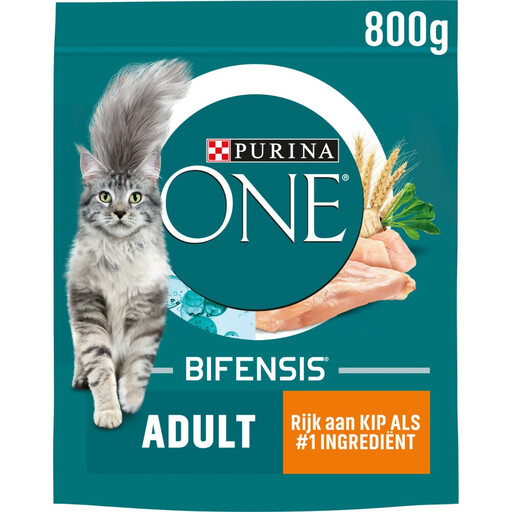
Why this suits the profile: A straightforward 800g pack for adult cats from one year old, without committing to a large quantity straight away.
The product information states the age, composition and feeding guidelines, so you don't have to choose based on the flavour name alone.
Chicken and whole grains are clearly listed; the pack contains 800g and the food is intended as a complete diet for adult cats.
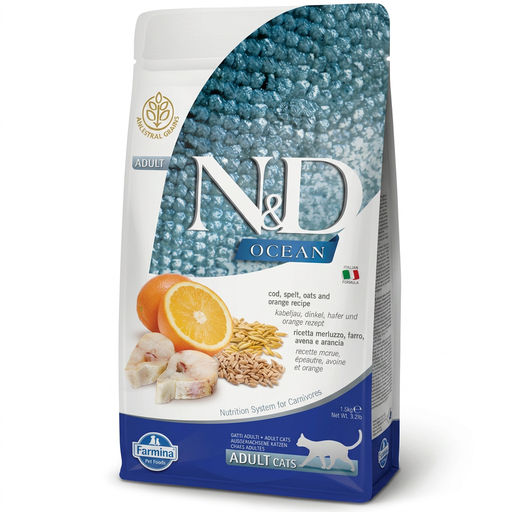
Why this suits the profile: For those who want to compare ingredients and analytical additions in more detail and are looking for a larger pack size.
The recipe lists fresh and dehydrated cod, fish oil, cereals and various added nutrients separately.
1.5kg pack; cod is listed with separate percentages in the ingredients list and taurine is stated as an additive.

Why this suits the profile: Designed for cats that live mainly indoors, where portion control and daily routine are important.
The product description explicitly states the target group (indoor cats) and lists the ingredients, including turkey, wheat and chicory.
Formula for adult indoor cats; according to the product information, it contains fibre and an adjusted protein-to-fat ratio profile.
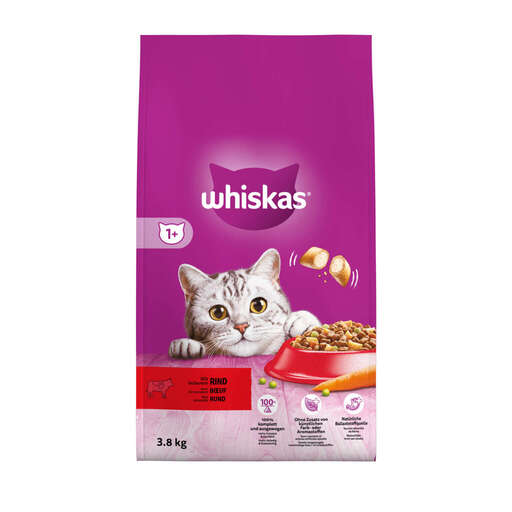
Why this suits the profile: The large bag is practical when several adult cats are eating the same dry food every day.
The packaging states feeding guidelines per body weight and comes with a resealable bag, helping to limit waste and oversized portions.
3.8kg pack; analytical information states 32% protein and 12.5% fat; suitable for adult cats from one year old.
We've put together a full, up-to-date list of products that fully meet these strict selection criteria and comply with current European safety regulations.
That depends on body weight, age, activity level and the energy value of the product. Use the table on the packaging as a starting point. Weigh the portion and check body condition regularly. Treats and wet food should be included in the total daily amount.
Follow the date and storage instructions on the packaging. Seal the bag airtight and store it in a cool, dry place. If the food smells off, feels damp or your cat suddenly refuses to eat it, don't use it without checking the cause.
Not automatically. Urinary formulas are intended for adult cats with a specific nutritional need, but urinary tract issues first require veterinary advice. Also, always ensure plenty of fresh drinking water is available.
