To record one drum clearly among other musicians, start with a directional microphone placed close to the source. For a balanced, spacious recording of several percussion instruments, an overhead setup is a better choice. A stereo pair needs two recording inputs and, for condenser models such as the RØDE M5, suitable phantom power. A microphone designed for bass drum can be useful if you want a separate bass drum track. Experiment with placement in your rehearsal room, and check the phase when using multiple microphones.
Who are these setups for?
Band musician looking to reduce spill
You want to capture one drum or another percussion instrument more clearly than the band around it during a rehearsal. Shure explains that placing a microphone closer to the source captures relatively more of that source and less room sound.
Percussionist looking to record the full ensemble
You want to capture the balance between several instruments or a stereo image, and can assess how the room affects the sound. An overhead microphone will also pick up room sound.
Drummer with multiple recording channels
You want to record, for example, the bass drum and the other drums on separate channels. When using multiple microphones, placement and phase matter; Shure discusses phase issues in drum recording.
What should you look for when choosing?
Dynamic close microphone
A good choice if: you want to record one snare, tom or other source more clearly in a busy rehearsal room.
Trade-off: placing a microphone close captures relatively less room sound, but one microphone won’t automatically capture the full drum kit in stereo.
Overhead or stereo pair
A good choice if: you want to hear several percussion instruments and the balance between them.
Trade-off: placing microphones further away also picks up more of the room and other sound sources; a stereo pair needs two inputs.
Dedicated bass drum microphone
A good choice if: you need a separate recording channel for the bass drum.
Trade-off: a microphone designed for bass drum won’t replace an overhead for the full drum kit; when combining microphones, check the phase and available inputs too.
First decide whether you want to capture one source, the ensemble or the bass drum on its own. Then check that your recording equipment has enough inputs and provides the right power.
| Consideration |
What to look for |
Who should pay particular attention? |
| Isolating a source |
Check the microphone’s pickup pattern, placement and how it attaches to the drum. |
If I want one drum to stand out above the other instruments, I’ll consider directional placement; around 33% of consumers make isolating one source their top priority. |
| Stereo image |
Check whether the pack contains one microphone or a pair, and whether you have two inputs and suitable phantom power. |
If you want to capture the balance and spread of several percussion sources, a suitable stereo setup can help; around 27% of consumers prioritise the stereo image. |
| Separate bass drum track |
Check that the microphone is designed for this source and that you have an extra input available. |
If I want to record the bass drum separately, I’ll look for a microphone designed for the job and check how it will work alongside other channels; around 20% of consumers prioritise a separate low-frequency source. |
| Connection and setup |
Check the inputs, the phantom power required, and which clips or other mounts are included with the exact version. |
If you want to connect the microphone to your existing recording equipment, check the power, channels and mounting options; around 20% of consumers make a suitable, straightforward connection their top priority. |
Common mistakes when choosing
-
Mistaking a single overhead microphone for a stereo pair
The RØDE M5 is supplied as a pair, while the AKG P170 is sold individually. This affects how many microphones and recording channels you need for a stereo setup.
Check how many microphones are included in the exact pack, and count the available inputs on your interface or mixer.
For a stereo pair of a model sold individually, you’ll need a second microphone and an extra recording channel.
-
Choosing a condenser microphone without suitable phantom power
The RØDE M5 and AKG P170 have power requirements that your recording equipment must meet.
Before buying, compare the power requirements of the exact model with what your interface or mixer can provide.
If your equipment can’t supply the required power, you’ll need to adapt your recording setup before you can use the microphone.
-
Assuming more microphones will automatically solve a difficult room
Placing microphones further away can mean recording more room sound. What’s more, the same drum hit can reach different microphones at different times and partially cancel out when the signals are combined.
Start with the source and placement you need. Then listen to each additional channel on its own and in combination with the others.
Brands and relevant models
The models mentioned are designed for different recording positions. Compare the specific model’s design and intended use, rather than judging the brand as a whole.
Shure
The SM57 is an option for close-miking drums and percussion; the BETA 52A is designed for bass drum.
- Shure describes the SM57’s cardioid pickup pattern as focused on the main sound source.
- The BETA 52A isn’t an overhead microphone for the full drum kit; these models serve different purposes.
RØDE
The M5 is a small-diaphragm condenser microphone supplied as a pair for individual recordings or a stereo setup.
- RØDE states that the pair has a maximum sensitivity difference of 1 dB and requires P24 or P48 power.
- In a review from February 2014, Sound On Sound reported that the M5 has no pad or filter switches.
Sennheiser
The e 604 is a compact dynamic microphone for toms, snare and other percussion.
- Sennheiser specifies a cardioid pickup pattern and includes a drum-rim clip.
- The clip will only work if the rim of the drum you’re using is compatible with the mount; one microphone won’t automatically give you a stereo image.
AKG
AKG describes the P170 as a small-diaphragm condenser microphone for overheads, percussion and more. It’s sold individually.
- AKG lists a switchable −20 dB pad and a power supply voltage of 44–52 V.
- You’ll need two P170 microphones for a two-channel setup.
Audio-Technica
Audio-Technica positions the compact dynamic ATM230 for close-miking toms, snare and other percussion.
- According to Audio-Technica, the ATM230 has a hypercardioid pickup pattern and comes with an AT8665 drum mount.
- Check that the included mount suits the position you want to use.
Joybuy products
The Joybuy products below are wireless clip-on lavalier microphones whose product information mentions instrument recording. Check that the clip placement and connection are suitable for your drum setup.
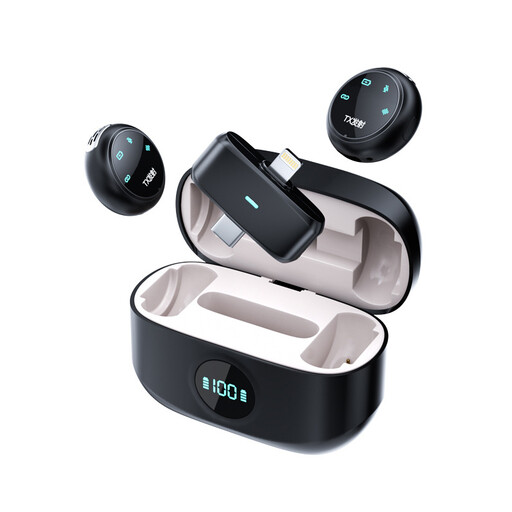 No image available
Verbex K31Pro-Black Dual Microphone Magnetic Wireless Button Clip-on Lavalier Microphone
The product information mentions instrument recording; check that the clip placement and connection are suitable for your recording setup.
The title mentions two microphones, magnetic attachment, and iOS and Type-C interfaces.
View at Joybuy
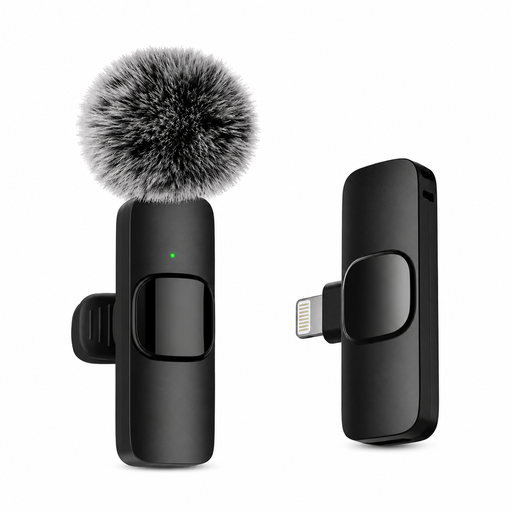 No image available
Verbex K9-Black Single-Mic iOS Interface Wireless Mini Microphone
The product information mentions instrument recording; check that the clip placement and connection are suitable for your recording setup.
The title mentions one microphone and an iOS interface.
View at Joybuy
 No image available
Verbex ST5 Dual-Mic Type-C Interface Wireless Button-Style Lavalier Microphone
The product information mentions instrument recording; check that the clip placement and connection are suitable for your recording setup.
The title mentions two microphones and a Type-C interface.
View at Joybuy
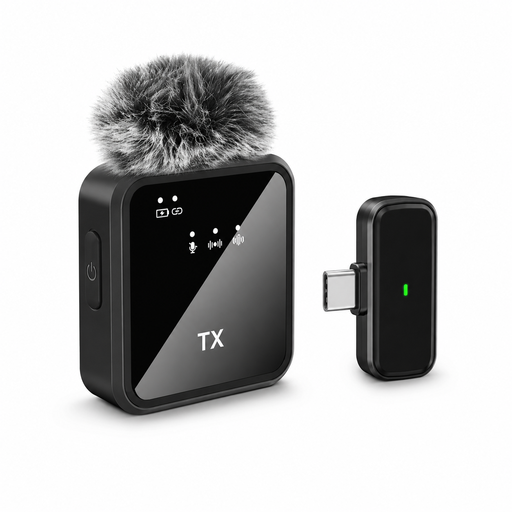 No image available
Verbex ST5 Single-Mic Universal Interface Wireless Button-Style Lavalier Microphone
The product information mentions instrument recording; check that the clip placement and connection are suitable for your recording setup.
The title mentions one microphone and a universal interface.
View at Joybuy
Frequently asked questions
Can I start with one microphone?
Yes, as long as you first decide whether you want to record one instrument or the full ensemble. Shure advises using no more microphones than necessary; a close microphone and an overhead give you different perspectives.
Does an overhead microphone need phantom power?
It depends on the model. RØDE specifies P24 or P48 power for the M5, while AKG lists 44–52 V for the P170. Check that your interface or mixer can provide the power required by your chosen model.
Why can close microphones and overheads sound thin when used together?
The same drum hit can reach the microphones at different times, causing partial phase cancellation when the signals are combined. Listen to the channels together and adjust the placement.
Can I post a rehearsal recording featuring other musicians online?
Don’t assume you have permission just because the recording was made during a rehearsal. The Government of the Netherlands distinguishes between making a copy for personal use and distributing or making protected work available to the public, and also outlines performers’ rights. A recording in which someone can be recognised may also contain personal data; the Dutch Data Protection Authority limits the exception for personal or household use to specific private circumstances. Before publishing, consider which rights and privacy rules apply to your situation.


