
Vandaag of morgen in huis

Kwaliteit gegarandeerd

Welkomstaanbiedingen ontgrendelen: GRATIS bezorging | Tot 80% korting | Gratis 30 dagen JoyPlus-proefperiode
Download de app
Removing stubborn dirt from wheels, grout, tiles or a car interior takes a great deal of time and effort with an ordinary hand brush. A drill brush set uses the rotating motion of a cordless drill or electric screwdriver to make the job easier. However, not every set is suitable for every surface.
The main differences are brush stiffness, the connection and how you use the set. With the right combination of brush and speed, you can clean more efficiently without causing unnecessary damage to surfaces.
A stiff brush can be useful for concrete, plastic or heavily soiled floors, but it is not automatically suitable for car paintwork, glass or leather. Metal wires and very stiff nylon bristles in particular can damage delicate materials.
Always check the stiffness and material of the bristles. A soft brush is better suited to delicate surfaces. For tiles, wheels and bathroom fittings, a medium-stiff variant is often more practical. Stiff brushes are mainly intended for hard-wearing surfaces.
Some buyers focus only on the number of brushes in the pack. Without a suitable connection, that offers little benefit. Check that the set has a standard hexagonal shank and that your drill or electric screwdriver can clamp it securely.
An extension piece is useful for areas beneath car seats, between wheels or behind bathroom fittings. However, check that the connection is firmly secured before switching on the machine.
Cleaning with a drill does not mean you should use it at maximum speed. Prolonged friction in one spot can create heat and damage the surface. With delicate materials, a low speed and light pressure are the safer choice.
For dried-on dirt, use water or a suitable cleaning product first. A brush set is not a substitute for soaking. Remove sand and loose grit beforehand, particularly when cleaning car paintwork and wheels.
Nylon is a commonly used material for drill cleaning brushes. It is lightweight, resistant to moisture and suitable for a range of household and automotive applications. A stiff nylon brush can loosen dirt from tiles, floors and plastic, but you still need to use the right amount of pressure.
A set with several colours or thicknesses can be practical if you want to clean both a car interior and bathroom tiles. Use soft bristles for leather, glass and painted surfaces. Medium-stiff bristles are better suited to wheels, tiles and washbasins. Stiff bristles are intended for robust materials.
Metal brushes, such as those with steel or copper wires, are mainly suitable for stubborn deposits on hard-wearing surfaces. Do not use them on paintwork, chrome, soft plastic or leather.
A round brush works well on flat areas, while a smaller head is better for edges, corners and grout. For a car, different sizes are useful: a larger head for tyres and broad areas, and a smaller brush for wheel bolts, seams and the interior.
Check the dimensions in the product information. With the Oxerbog set, for example, the listed brush sizes range from approximately 2 × 4 cm to 12 × 4 cm. This gives you more choice than a set with a single fixed head.
Wear safety goggles while using the brush to protect your eyes from splashing dirt and cleaning products. Keep loose clothing and long hair away from the rotating brush. Switch off the drill and disconnect the power before changing a head.
Rinse the brushes after use and allow them to dry completely. Otherwise, sand, dirt and cleaning product may remain trapped in the bristles. Replace a brush when the bristles have become flattened, the base is cracked or the head is visibly damaged.
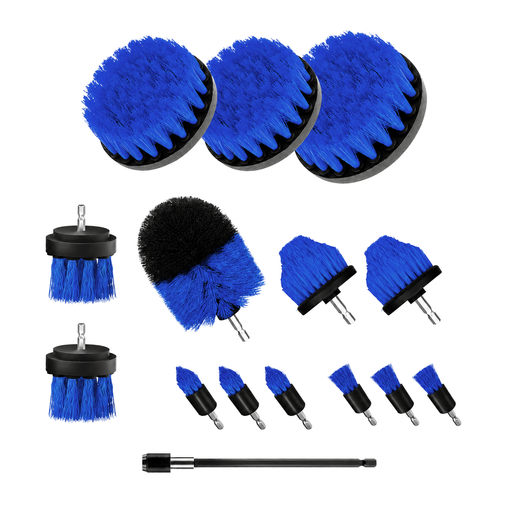
Why it suits this profile: This set is designed for anyone who wants to tackle a range of cleaning jobs with one purchase, from cars and wheels to tiles, bathtubs and sinks.
The set contains seven nylon brush heads in different sizes and levels of stiffness. This means you do not have to use one stiff brush on every surface.
15 components, a standard hexagonal connection and an extension bar. The stated total weight is 0,8 kg.

Why it suits this profile: Suitable for users who want to use different brush materials side by side for maintenance and cleaning tasks.
The product name lists three variants: nylon, stainless steel and copper-plated steel wire. This allows you to match the material to the surface instead of treating everything with nylon.
Three brush heads in one set, combining nylon and metal wire. Check the connection before use and avoid delicate surfaces.
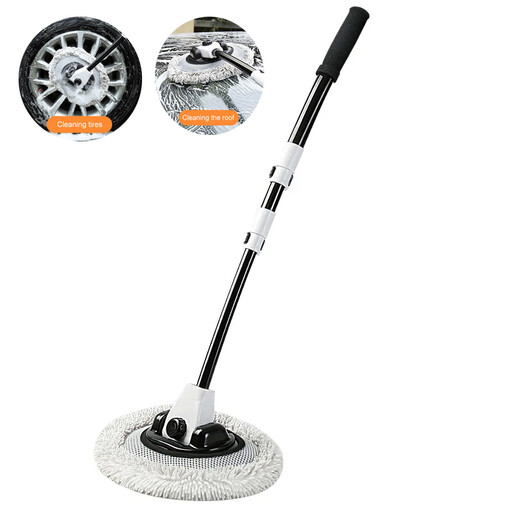
Why it suits this profile: For car enthusiasts who mainly want to wash the outside of a saloon, SUV, van or lorry and do not need a drill.
The chenille head is designed for hand washing. This prevents a rotating stiff brush from being used inappropriately on car paintwork. According to the usage information, sand and dirt should be rinsed off first.
An aluminium telescopic handle, a 90° adjustable head and a detachable brush head. This is an alternative to drill-mounted car cleaning brushes.
Also check that the drill has a secure grip on the hexagonal shank. With an extension bar, every connection must be securely locked. Never start the machine while the brush is loose in the chuck.
We have put together a complete, up-to-date list of products that fully meet these strict selection criteria and the applicable European safety regulations.
That depends on the connection. A set with a standard hexagonal shank will generally fit many drill chucks and keyless chucks, but always check the product information and the maximum clamping diameter of your machine.
Only use a soft nylon brush that the product information confirms is suitable for painted surfaces. Rinse off sand and loose particles first, use light pressure and test it on an inconspicuous area. Metal wire brushes and stiff brush heads are not suitable for car paintwork.
Its lifespan depends on the speed, pressure, cleaning product and surface. Nylon bristles wear out more quickly on concrete and rough floors than during light household tasks. Rinse the brush after use, allow it to dry and replace the head as soon as the bristles become flattened, broken or detached.
