
Vandaag of morgen in huis

Kwaliteit gegarandeerd

Welkomstaanbiedingen ontgrendelen: GRATIS bezorging | Tot 80% korting | Gratis 30 dagen JoyPlus-proefperiode
Download de app
Dried tofu is available as an ingredient for hotpot and stir-fries, as well as a ready-to-eat snack. The names can be confusing: dried tofu, dried tofu sticks, tofu knots, beancurd sticks and tofu snacks don't always refer to the same type of product.
This makes comparing them more difficult than it needs to be. So don't just look at flavour or packaging – pay close attention to the preparation method, nutritional values and ingredients list. That way, you can avoid buying a product that's too salty to eat regularly, needs hours of soaking when you want to cook quickly, or turns out too soft in a hotpot.
Not all dried tofu is meant to be soaked. Ready-to-eat tofu snacks are usually seasoned and can be eaten straight away. Dried tofu sheets, sticks and knots often need to be rinsed and soaked first.
Always check the packaging for:
Protein content varies significantly between products and is usually listed per 100 grams. For dry products, this is often based on dry weight. That's not directly comparable with a ready-to-eat snack that contains water, oil, sugar and flavourings.
For example, Kuai Lai Kuai Wang Shihping Dried Bean Curd Sticks contain 44.8g of protein per 100g of dry product according to the product information. The ready-to-eat Bestore Chewy Tofu Snack lists 12g of protein per 100g. Both can be suitable for their intended use, but they are not the same type of product.
A spicy tofu snack can contain chilli, Sichuan pepper, soy sauce, oil and flavour enhancers. Check the salt content before buying multiple packs. For instance, the Bestore Mala snack lists 2.58g of salt per 100g, while Jin Zai Roasted Tofu Snack lists 3.1g of salt per 100g.
If you're looking for a less seasoned tofu for a meal, it's better to choose a variety with a short ingredients list, such as soya beans and water. You can then add your own flavour with garlic, sesame oil, soy sauce or chilli oil.
For tofu used in hotpot, soups and stews, firm textures are practical. Dried sticks absorb broth and, when properly soaked and cooked, remain relatively firm. The product information for various beancurd sticks recommends a soaking time of around 15 to 60 minutes, depending on thickness and size.
A general method:
Tofu knots and thicker sticks usually need longer than thin strips. Soaking for too short a time gives a chewy centre; soaking for too long can make the texture softer.
The base of dried tofu usually consists of soya beans and water. Also check for:
A product with only soya beans and water gives you more freedom to season it yourself. With ready-to-eat Chinese tofu snacks, the ingredients list largely determines the flavour and nutritional values.
Dried cooking products are compact and suitable for storing in a cool, dry cupboard. Once opened, they should be kept airtight and protected from moisture and pests. Ready-to-eat tofu snacks are often individually wrapped. This is handy for on-the-go or if you want to take small portions with you.
Pay attention to the difference between:
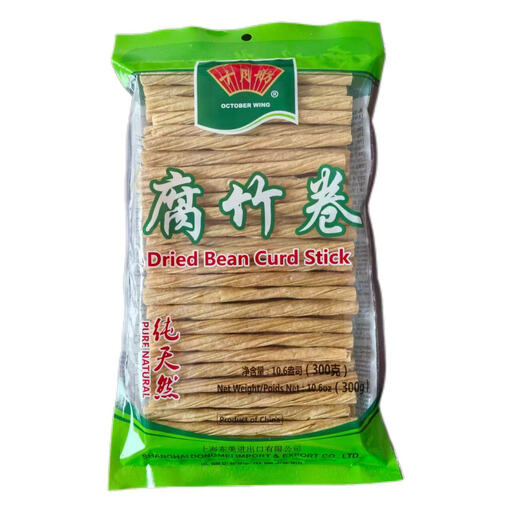
Why this fits the profile: This pack contains 300g of dried beancurd sticks with a short ingredients list: soya beans and water. A practical starting point for hotpot, soup and tofu for stir-fries.
The product description clearly states that this is a dry cooking ingredient. So you're not buying a ready-to-eat snack that might be unexpectedly heavily seasoned.
300g pack; suitable for multiple meals; made from soya beans and water.
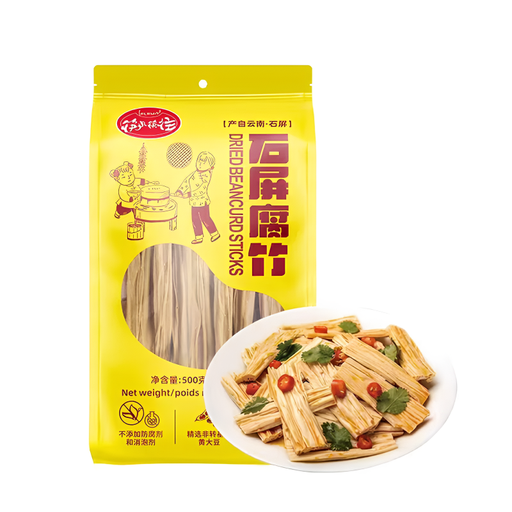
Why this fits the profile: The large pack is aimed at home cooks who regularly make hotpot, soups, stews or stir-fries.
The packaging states a soaking time of 30 to 60 minutes and makes it clear that cooking is required. This allows you to plan the preparation in advance.
500g; 44.8g protein per 100g dry product; ingredients: soya beans and water.

Why this fits the profile: The snack is ready to eat and comes in seven sachets. That suits fans of Chinese tofu snacks who want to take portions on the go or share them.
The usage instructions state that the snack is ready to eat straight away. The protein and salt content are listed per 100g for easy comparison.
128g divided into seven sachets; mala flavour with chilli and Sichuan pepper; 12g protein per 100g.
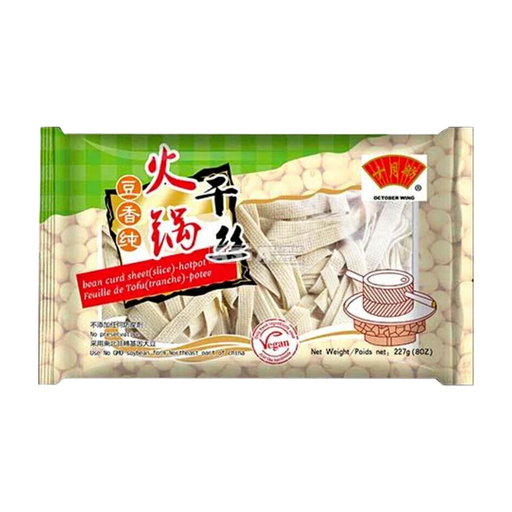
Why this fits the profile: According to the product information, the dried shreds are intended for hotpot, mala tang, soups, stews and cold salads.
The packaging clearly states: soak for 20 to 30 minutes first, then cook. So you know this is not a ready-to-eat snack.
227g; listed protein content of approximately 40g per 100g dry product; suitable for multiple cooking methods.
We've put together a full, up-to-date list of products that fully meet these strict selection criteria and comply with current European safety regulations.
In practice, the terms are often used interchangeably. Dried tofu, dried bean curd and beancurd sticks are usually made from soya, but the form differs. Sticks and sheets are intended for soaking and cooking. A packaged tofu snack is usually ready to eat and often contains extra spices, oil and flavourings.
Rinse the sticks briefly and soak them in warm water until they are soft and pliable. According to product information, this often takes 15 to 60 minutes. Drain them and add them to the hotpot while cooking. Check the packaging, as the exact soaking and cooking time depends on the thickness.
Store unopened dried tofu according to the instructions on the packaging, usually in a cool, dry place away from direct light. Once opened, an airtight container is advisable to keep out moisture and odours. Ready-to-eat tofu snacks should generally be eaten immediately after opening. Always check the best before date and storage instructions for the specific product.
