
Vandaag of morgen in huis

Kwaliteit gegarandeerd

Welkomstaanbiedingen ontgrendelen: GRATIS bezorging | Tot 80% korting | Gratis 30 dagen JoyPlus-proefperiode
Download de app
Are you looking for dried prunes to keep at the office, take on the go, or add to an Asian-style snack board? You'll quickly notice some big differences. One pack contains soft, pitted prunes, while another is filled with sour prunes with salt, sweeteners or extra flavourings. Terms like "natural", "prebiotic" and "sugar-free" also mean you need to take a closer look at the ingredients list.
This buying guide helps you compare flavour, packaging, ingredients and nutritional values without relying solely on marketing claims.
Dried prunes naturally contain concentrated fruit sugars. On top of that, manufacturers may add sugar, syrup or sweeteners. With a traditional Chinese prune snack, salt, sweeteners and acidity regulators are often added too. So always check the nutritional information per 100g.
Also keep an eye on salt. Some pickled prunes and sour prunes have a distinctly savoury profile. As a result, a product can contain significantly more salt per 100g than a standard dried prune.
A pack labelled "sweet and sour" or "honey" doesn't tell you how much honey or sugar is actually in it. For example, the Xuehaimeixiang Honey Prunes list 0.1% honey, alongside sugar and several sweeteners. So the flavour isn't determined by honey alone.
If you want to reduce your sugar intake, look for a product with sweeteners. Then check for any warnings, such as a source of phenylalanine if aspartame is used. This is relevant for people with phenylketonuria.
For eating on the go, individually wrapped prunes are practical. You don't have to open the whole bag each time, and it's easier to take portions with you. If you want to eat the snack straight away, it's worth looking for pitted prunes. For yoghurt, porridge or baking recipes, larger packs are often more convenient than small sachets.
First, decide which type of prune snack you're after:
Don't just look at the front of the packaging. The ingredients are listed in descending order by quantity. Also check for allergens such as sulphites and the presence of sweeteners.
Compare energy, carbohydrates, sugars and salt per 100g. A small portion might look manageable, but the values per 100g can be higher. For example, Be&Cheery Dried Plums lists 35g of sugar and 0.5g of salt per 100g. With 7FRESH Pitted Prunes, it's 24.5g of sugar and 0g of salt per 100g according to the product information.
What's more, "sugar-free" doesn't automatically mean a product isn't sweet. Jiajianzheng Prune is made with sweeteners and doesn't list a sugar value, but it does contain 5g of salt per 100g. So the choice depends on what matters most to you: sugar, salt, flavour or the ingredients list.
Once opened, a bag usually needs to be sealed properly and stored in a dry place. Always follow the storage instructions on the label. Individual portions are ideal for a lunchbox, train journey or desk drawer. A jar or bag of 400 to 430g makes more sense for families or regular use at home.
For baby food, there are separate considerations. According to the product information, Ella’s Kitchen BIO Prunes 4M+ contains 100% organic prune purée, with no added water or sugar. The product is intended from 4 months according to the label. Follow current guidelines for feeding babies and store an opened pouch in the fridge; the product information states consumption within 48 hours.

Why this suits the profile: The small individual sachets make it easy to try a modest amount first or take portions to work, school or on the go.
According to the product information, the prunes are pitted and individually wrapped. This means you avoid a large open bag and awkward eating on the move.
80g total, 14 small sachets, soft texture and ready to eat. Please note: this product contains maltitol and other sweeteners.
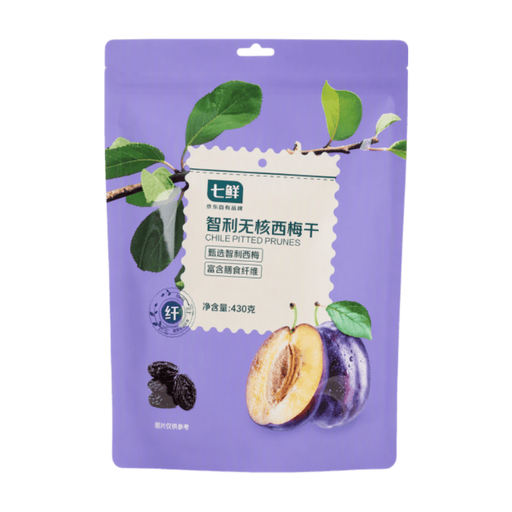
Why this suits the profile: The large pack is ideal for anyone who regularly uses dried fruit in yoghurt, porridge, baking or as a snack at home.
The product information lists just one ingredient: dried prunes. There are also no stones and no salt listed.
430g, pitted, ready to eat and, according to the label, also suitable as a topping for yoghurt, porridge and baking recipes.
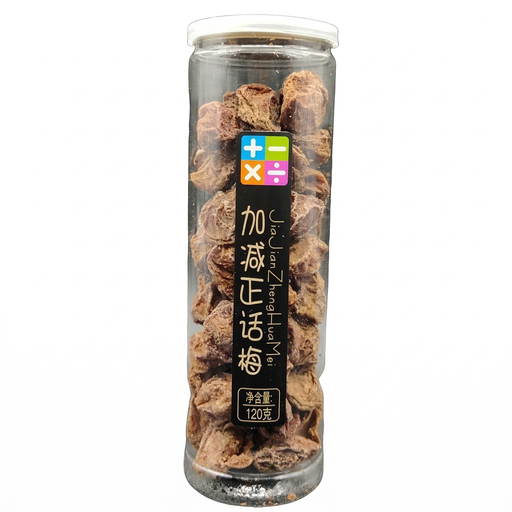
Why this suits the profile: This traditional Chinese prune snack is for anyone who wants a distinct sweet-sour-salty profile and is deliberately looking for a variant with no listed sugar.
The ingredients list states green plum, salt and sweeteners. This makes it clear that "without sugar" here doesn't mean the same as without sweet additions.
120g, firm chewy texture and a nutritional profile with no sugar value listed. Contains aspartame and phenylalanine; read the warning before purchasing.
We've put together a full, up-to-date list of products that fully meet these strict selection criteria and comply with current European safety regulations.
Yes, individually wrapped prunes are especially practical for train journeys, the office, school or a walk. Choose a resealable pack or small portions if possible. Check that the prunes are pitted if you want to eat them straight away.
Store unopened products according to the date and storage conditions on the packaging, usually in a cool, dry place away from direct sunlight. Once opened, moisture can change the texture. Seal the bag well and follow any instructions to consume the product quickly after opening.
Dried prunes are usually soft and sweet, whereas pickled prunes often have a combination of sour, salty, sugary and sweetener flavours. A dried prune is therefore more suited to breakfast or baking; a traditional pickled prune is better for fans of a savoury Chinese prune snack or a prune drink. Always check the ingredients and nutritional values, as the composition varies from product to product.
