
You want fewer calories in your snack
If you fancy something sweet while watching TV, weighing your portion and checking the energy value on the exact product pack can help.


If you want to eat fewer calories while watching TV, first decide how much fruit you’ll have, then compare the energy per 100 g on the exact product pack. Across three products examined, the figures range from 182 kcal for AH Soaked Dried Apricots to 344 kcal for AH Raisins; a small portion doesn’t automatically make a product low in energy.
If you fancy something sweet while watching TV, weighing your portion and checking the energy value on the exact product pack can help.
Check both the ingredients and the nutrition table. No added sugar doesn’t mean a product contains no natural sugars or is low in calories.
Storage instructions vary by product. The soaked apricots examined need to be refrigerated after opening; the raisins and prunes examined have different instructions.
A good fit if: you want soft apricots and, from these three products examined, are looking for a lower energy value per 100 g. AH lists 182 kcal per 100 g.
Bear in mind: the apricots contain sulphites and should be refrigerated after opening at a maximum of 7 °C, according to Albert Heijn.
A good fit if: you choose prunes and weigh your portion beforehand. The PLUS pack examined lists 282 kcal per 100 g and 0 g of added sugars.
Bear in mind: the ingredients list on this PLUS pack also includes sunflower oil and preservative E200.
A good fit if: you want small pieces that are easy to weigh. AH lists 344 kcal per 100 g for the raisins examined.
Bear in mind: according to Albert Heijn, the raisins contain 59 g of total sugars per 100 g, even though they contain no added sugars.
First decide on your portion, then read the ingredients and nutrition information, and finally check that the storage instructions suit the way you’ll use the product. The examples below relate to choosing a TV snack in the Netherlands.
| What to consider | What should you look for? | Who is this important for? |
|---|---|---|
| Energy per portion | Compare kcal per 100 g on the exact product pack and calculate it for the amount you eat. The Netherlands Nutrition Centre gives around 20 g as an example of a handful of dried fruit. | If I want to keep the energy from my snack in check while watching TV, I weigh out my bowlful. Around 36% of consumers prioritise keeping track of the calories in their portion when making this choice. |
| Added sugar | Read the ingredients list alongside the total sugars and energy values; they provide different information. | If I want to avoid added sugar, I also check the total sugars and portion size. Around 29% of consumers put this ingredient choice first. |
| Taste and storage | Check whether the fruit has been soaked, what the storage instructions are after opening and, if it matters to you, the allergen information. | If taste and storage determine whether a snack works for my cupboard, I check the label for that particular variety. Around 21% of consumers prioritise this kind of practical suitability. |
| Pack size | Check the net weight and consider whether you can store the pack according to the instructions once it’s open. | If I want a pack size that suits how much I actually eat, I check the quantity and the storage instructions for after opening. Around 14% of consumers prioritise this practical fit. |
A 20 g portion may contain fewer calories than a larger portion, but that doesn’t change the energy value per 100 g. For solid foods, the European Commission sets a maximum of 40 kcal (170 kJ) per 100 g for the ‘low energy’ claim. The AH apricots, PLUS prunes and AH raisins examined are all above that limit.
Calculate the energy for the amount you actually eat, and keep that calculation separate from a claim about the product per 100 g.
The AH Raisins examined list 0 g of added sugars, but also 59 g of total sugars per 100 g.
Read the ingredients list, total sugars and energy together, and take your portion size into account.
Albert Heijn lists a 50 g portion for the raisins and soaked apricots examined. The Netherlands Nutrition Centre gives around 20 g as an example of a handful of dried fruit. A larger amount provides proportionally more calories.
Weigh out how much you want to eat beforehand and use that amount in your calculation.
For AH Soaked Dried Apricots, Albert Heijn says to refrigerate the product after opening at a maximum of 7 °C and notes that it has a limited shelf life.
Follow the storage instructions on the pack of the exact variety you buy.
The AH Raisins and AH Soaked Dried Apricots examined provide label information you can use to compare portions, ingredients and energy values.
The Dutch category page shows different types of dried fruit and pack sizes.
Lidl presents Alesto as its own brand, which includes dried fruit, and lists apricots in the range.
ALDI Netherlands lists Trader Joe’s Sun-Dried Apricots in a 250 g pack.
The PLUS Dried Prunes examined provide a specific label example for anyone considering prunes as a portioned TV snack.
Dirk lists 1 de Beste Apricots in a 375 g pack; the product page describes 1 de Beste as its own brand.
These product options include raisins and dried prunes for anyone who wants to take the amount or nutrition information of a TV snack into account. Check the ingredients, nutrition values and storage instructions on the exact pack.
 No image available
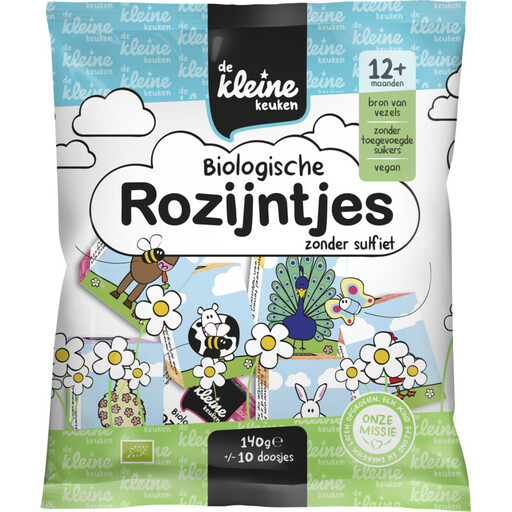
The individual 14 g boxes give you a set amount to calculate with. The product information states that they contain no added sugars or sulphites.
The product information states: only suitable for children over 12 months; supervise children while they eat. Not suitable for children with swallowing difficulties.
 No image available
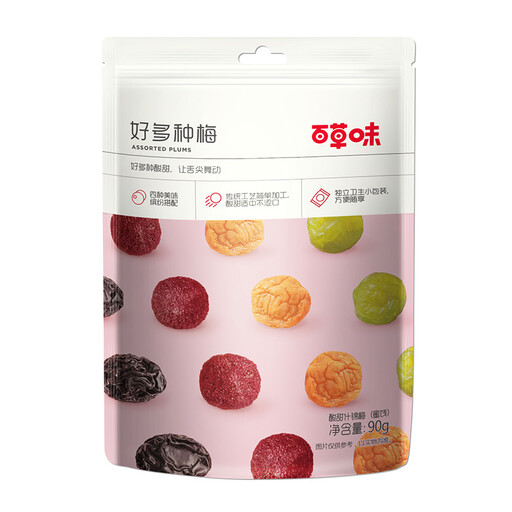
If you want to calculate the energy in your portion, the product information lists 68 kcal per 100 g.
The ingredients list includes white sugar and salt. According to the European Commission, the stated energy value is above the 40 kcal per 100 g limit for the ‘low energy’ claim on solid foods.
 No image available
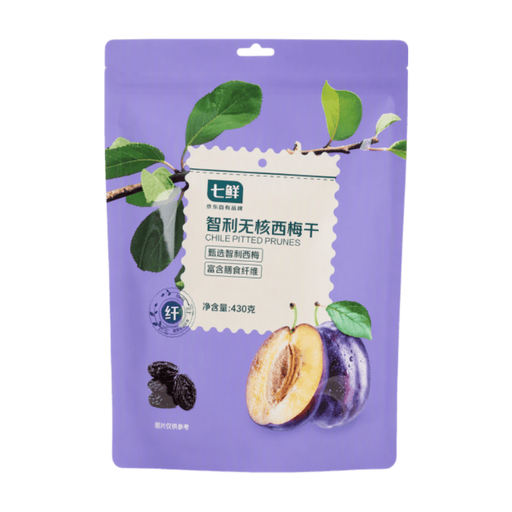
The ingredients list contains only dried prunes. The nutrition table lists 283 kcal per 100 g.
The product information recommends consuming the contents straight after opening and storing the prunes in a cool, dry place.
 No image available
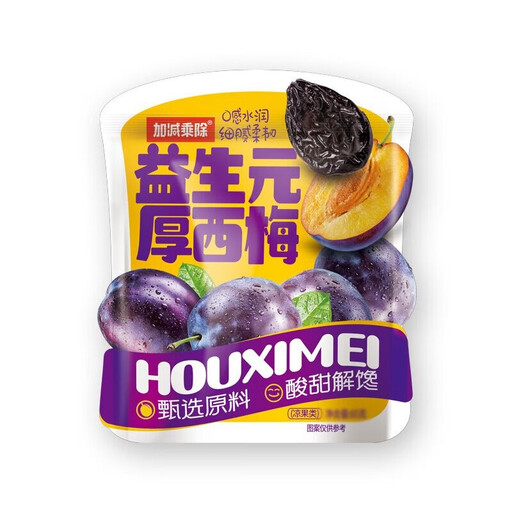
If you want to calculate the energy in your portion, the nutrition table lists 214 kcal per 100 g.
The ingredients list includes fructose syrup and oligofructose, so this isn’t an option without added sweetening ingredients.
 No image available
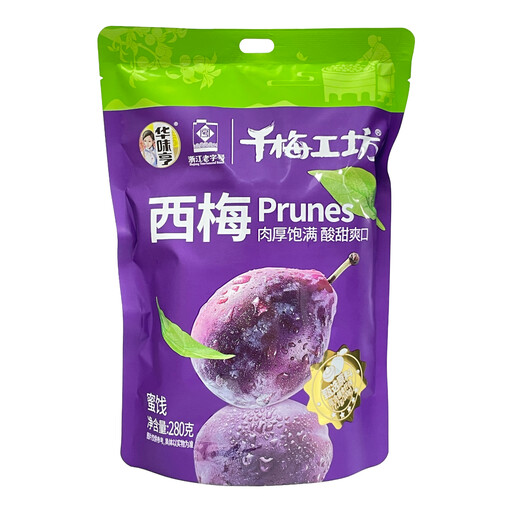
The nutrition table lists 285 kcal per 100 g, so you can calculate the energy in your portion based on how much you eat.
The ingredients list includes white sugar and crystalline fructose. The product information recommends storing it in a cool, dry place.
Not always. The Netherlands Nutrition Centre gives around 20 g as an example of a handful of dried fruit. Albert Heijn lists a 50 g portion for the raisins and soaked apricots examined. Calculate the energy using the amount you actually eat.
Yes. The AH Raisins examined list 0 g of added sugars and 59 g of total sugars per 100 g. So the ingredients information and the overall nutrition values answer different questions.
Follow the instructions on the exact pack. For AH Soaked Dried Apricots, Albert Heijn says to refrigerate them after opening at a maximum of 7 °C and notes that they have a limited shelf life. Don’t automatically apply those instructions to other types or brands.
Check the current ingredients and allergen information on the pack. The AH Soaked Dried Apricots examined list sulphites. According to the Netherlands Food and Consumer Product Safety Authority, allergen information must appear on the label of prepacked products.
Not on the basis of a small portion alone. For solid foods, the European Commission sets a maximum of 40 kcal (170 kJ) per 100 g for the ‘low energy’ claim. The three AH and PLUS packs examined are above that limit; calculating the value for a smaller portion is different from making a claim about the product per 100 g.