Start with an appropriate amount and prepare it safely, then compare the energy and ingredients on the exact pack. A lower energy value than another product does not automatically make dried fruit low in calories: for solid foods, the European Commission sets a limit of no more than 40 kcal per 100 g for this claim. The Netherlands Nutrition Centre stresses that every child’s energy needs are different; if you have concerns about your child’s eating or growth, speak to your child and youth healthcare service (JGZ), GP or paediatric dietitian.
Who is this choice relevant to?
Parents who want to portion carefully
You’re looking for a fruity snack and want to know how much energy a weighed portion provides, without setting a general weight-loss goal for your toddler. The Netherlands Nutrition Centre recommends dried fruit with no added sugar and points out that it contains a lot of sugar.
Parents who put safe serving first
You want to know how to serve fruit in suitable pieces and why it’s important for your child to sit calmly, for you to supervise them and to check for any remaining stones. The Netherlands Nutrition Centre recommends staying close to your child while they eat.
Parents who want to check ingredients
You’re looking for an option with no added sugar and want to be able to check the ingredients, allergens and any sulphites. The Netherlands Food and Consumer Product Safety Authority (NVWA) explains the rules on declaring allergens; if your child has a known sensitivity, follow their individual dietary advice.
What should you look for when buying?
| What to consider |
What to check when buying |
Who is this important for? |
| Energy and portion |
Compare kcal per 100 g for the product as sold. Calculate a portion only as a way to compare products, not as advice for toddlers. |
If I want to compare energy values, I look at the same weight basis and weigh out an amount rather than relying on a general portion size. Around 31% of consumers put energy and a suitable portion first. |
| Serving safely |
Check the pieces and look for any remaining stones. Make sure your child sits calmly, offer suitable pieces and stay with them. |
When preparing the fruit, I want to check its shape and make sure no stone has been left behind. Around 31% of consumers say safe preparation and serving is their main concern when buying. |
| Ingredients and sensitivities |
Read the ingredients list, total sugars and any allergen or cross-contamination warnings. If your child has a known sensitivity, follow their individual advice. |
If I want to avoid added sugar or need to check ingredients because of a known sensitivity, I look beyond the front of the pack. Around 25% of consumers say checking ingredients is the deciding factor. |
| Packaging and storage |
Check the net weight and storage instructions, including what to do after opening. The pack size does not tell you how much to serve at each eating occasion. |
At home, I want to choose a pack that suits how we use and store its contents. Around 13% of consumers put practical stock management first. |
Common buying mistakes
-
Equating a low-calorie snack with a weight-loss goal
A lower energy value on its own doesn’t tell you what’s suitable for your child’s growth or overall diet. Every child’s energy needs are different.
Use the nutrition information to compare products and weighed portions. If you have concerns about your child’s eating or growth, ask your child and youth healthcare service (JGZ), GP or paediatric dietitian for individual advice.
-
Taking the reference intake on a pack as advice for toddlers
The reference intake shown on a product may be based on an average adult. It isn’t a personal guideline for a toddler.
Don’t use the percentage of the reference intake to decide how much your child should eat.
-
Confusing ‘no added sugar’ with ‘sugar-free’
Dried fruit can contain naturally occurring sugars, even when no sugar has been added.
Read both the ingredients list and the nutrition table, and check the total amount of sugars.
-
Assuming general nutrition information applies to every pack
A value for a product category isn’t automatically the value shown on the label of a specific product.
Compare the nutrition information for the exact products on the same basis, and check whether the figures apply to the product as sold or as prepared.
Brands to compare
Albert Heijn
The AH pack checked is 250 g of soaked dried apricots.
- Albert Heijn states that no sugar has been added to this pack.
- The pack also lists sulphites; this applies to this product, not necessarily to the whole range.
Jumbo
Jumbo Pitted Dried Plums 500 g is a plum product with published ingredient and nutrition information.
- The product information gives you details to assess the exact pack.
- The product page warns that it may contain nuts and peanuts; check the pack if this is important for your child.
Lidl
Lidl sells dried fruit, including apricots, under the Alesto brand.
- Alesto is a relevant product range to look at if you’re searching for dried fruit.
- General brand claims about nutrients don’t, on their own, tell you the calorie content or whether a specific pack is suitable for a toddler.
ALDI
ALDI lists Trader Joe’s Raisins in a 500 g pack.
- The product name and pack size are listed.
- Base your choice of energy value or portion on the nutrition information for the exact pack.
PLUS
PLUS Dried Plums is sold in a 375 g bag, with published ingredient and nutrition information.
- PLUS states that no sugar has been added to this product.
- The plums contain naturally occurring sugars and the preservative E200.
Dirk
Dirk stocks 1 de Beste Pitted Plums in a 375 g pack.
- Dirk’s product description describes the plums as soft.
- This description isn’t an independent texture test and doesn’t mean you can serve the plums without preparing them first.
Products at Joybuy
These Joybuy products are options to compare within the dried fruit category. Check the nutrition information and ingredients on the exact pack, and prepare the product in a way that’s suitable for your child.
 No image available
Medjoul dates 908 g
An option to compare if you’re specifically looking for Medjoul dates; check the energy and ingredients on the pack.
Joybuy
 No image available
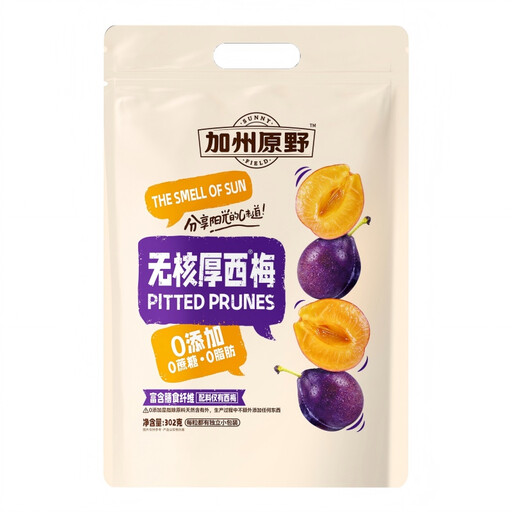
Jiazhouyuanye Thick Pitted Prunes 302 g
A plum product to compare if you’re looking for dried plums; check the nutrition information for this exact pack.
Joybuy
 No image available
Haoxiangni Pitted Jujubes 500 g
These pitted jujubes are an option to compare if you’re specifically looking for jujubes; check the ingredients and nutrition information on the pack.
Joybuy
 No image available
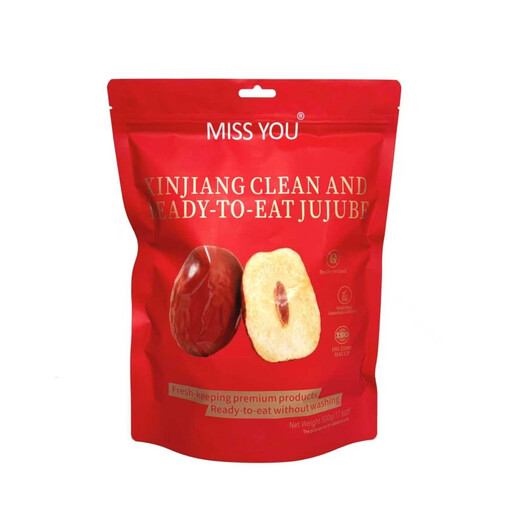
Haoxiangni Grade A Wash-Free Jujubes 500 g
An option to compare if you’re looking for jujubes that don’t need washing; check the product information and follow the instructions on the pack.
Joybuy
 No image available
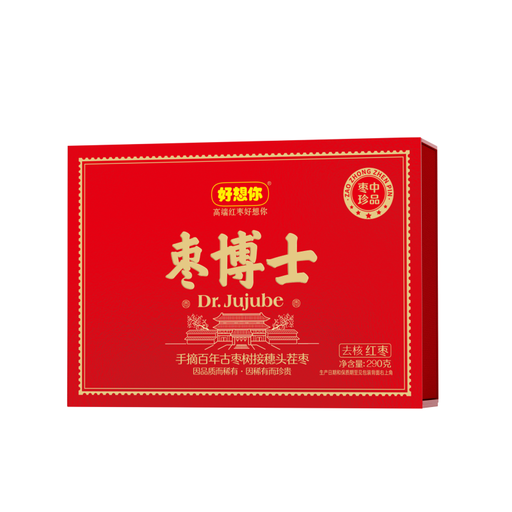
Haoxiangni Dr.Jujube Premium Grade Pitted Jujubes 290 g
Compare this option if you’re looking for pitted jujubes; check the nutrition information for the exact pack before weighing out a portion.
Joybuy
Frequently asked questions
Can dried fruit be called low in calories if it contains less than 40 kcal per portion?
Not based on the portion alone. For solid foods, the European Commission sets a limit of no more than 40 kcal per 100 g for the ‘low calorie’ claim; a small portion doesn’t change the energy value per 100 g.
Is 20 g automatically the right amount for every toddler?
No, 20 g is used here for calculation and comparison, not as individual portion advice. Every child’s energy needs are different; if you’re unsure about your child’s eating or growth, speak to your child and youth healthcare service (JGZ), GP or paediatric dietitian.
Can I give my child a pitted fruit without checking it first?
Check the fruit and offer it in suitable pieces. Make sure your child sits calmly and stay with them; ‘pitted’ doesn’t rule out a stone being left behind. The Netherlands Nutrition Centre recommends staying close while your child eats.
Do soaked apricots need to be kept in the fridge after opening?
Follow the instructions on the pack. For the AH product checked, Albert Heijn says to keep it chilled at a maximum of 7 °C after opening; it won’t keep for long once opened.
What allergen information should I check on a Dutch pack?
Read the ingredients list and any warnings about possible cross-contamination. The NVWA explains that the required allergen information must appear on the label; according to the Dutch Food Allergy Foundation, sulphites can cause intolerance reactions. If your child has a known sensitivity, follow their individual dietary advice.
What should I do if the pack I receive has different information from the online shop?
Check the information on the pack you receive before use. If the ingredients or nutrition information differ or are unclear, contact the seller or customer service.


