For a toddler’s snack, dried fruit is best thought of as a small fruit portion, rather than a main source of extra protein: the raisin and apricot labels cited list 2.8 to 3.4 g of protein per 100 g (Albert Heijn, Jumbo and PLUS). If extra protein is your main goal, consider a regular protein source such as yoghurt, if your child tolerates it, and choose the fruit separately based on portion size, ingredients and format. The Netherlands Nutrition Centre recommends a small portion of dried fruit for children; advice about nutrition around sport does not prove that dried fruit has any special recovery benefits for toddlers.
Who is this choice relevant to?
Protein-conscious snack planners
You want to know how much protein a small amount of fruit really provides, without treating a sports claim as nutritional advice. The Netherlands Nutrition Centre lists sources of protein such as milk and dairy products alongside other foods.
Cautious snack planners
You pay attention to suitable-sized pieces, ingredients and supervision while your child is eating. The Netherlands Nutrition Centre advises children to sit calmly and says pieces should not be too large.
Portion planners
You’re looking for a practical, small amount and want to take the packaging and total sugars into account. The Netherlands Nutrition Centre recommends a small portion of dried fruit.
What should you look for when choosing?
When choosing dried fruit for toddlers, the main things to weigh up are its protein content, how you serve it, its sugar content and how easy it is to portion.
| What to consider |
What should you look for? |
Who is this most relevant to? |
| Actual protein content |
Compare the protein per 100 g with the amount you’re serving. The Netherlands Nutrition Centre’s general table lists 0.6 g of protein per 20 g of raisins; this is a reference amount for calculation, not a recommended toddler portion. |
I want to know how much protein a small portion actually provides, not just the figure per 100 g. Around 31% of consumers give the actual protein content top priority. |
| Pieces and ingredients |
Check the size of the pieces, whether there may be any fragments of stones, and the allergens listed on the label. The Netherlands Nutrition Centre advises children to sit calmly and says pieces should not be too large. |
When choosing a snack for my toddler, I look for suitable-sized pieces and check ingredients such as sulphites. Around 31% of consumers prioritise the format and ingredients. |
| Sugars and portion size |
Check both the ingredients and the ‘of which sugars’ figure. PLUS Sultana raisins list 0 g of added sugars and 68.2 g of total sugars per 100 g. |
I want to be able to assess the total sugars and the amount served, even when no sugar has been added. Around 25% of consumers put sugar and portion size at the top of their list of priorities. |
| Packaging and portioning |
Check the net weight, whether there are individual packs and how the product should be stored. AH Hamsterchef Raisins and Apricot Pieces come in 10 boxes of 14 g each. |
If I want to make snack time easier to prepare, I compare individual boxes with a bag that I can portion myself. Around 13% of consumers consider convenient packaging their top priority. |
Common pitfalls
-
Choosing a toddler snack because of a sports or recovery claim
A sports-focused description doesn’t prove that the fruit provides extra protein or offers any special recovery benefits for toddlers. The Netherlands Nutrition Centre gives general advice about eating around sport, but no specific evidence that dried fruit helps toddlers recover.
Compare the nutritional information for the specific product and consider whether extra protein is really the goal of the snack.
-
Assuming ‘no added sugar’ means ‘low in sugar’
Added sugars and total sugars are listed separately. PLUS Sultana raisins list 0 g of added sugars, but 68.2 g of total sugars per 100 g.
Check the ‘of which sugars’ figure too, and keep the amount served small, as the Netherlands Nutrition Centre recommends for dried fruit.
-
Assuming ‘stoneless’ or a children’s snack box guarantees safety
The labels on the Jumbo apricots and AH Hamsterchef mix checked warn that stone fragments may be present. Individual packaging doesn’t remove the need to serve food in a suitable way.
Check the product warnings, serve suitably sized pieces and make sure your child is sitting calmly and supervised.
Brands and relevant product ranges
These examples relate to the specific products and varieties mentioned; a brand name alone tells you nothing about protein content or whether a product is suitable for a toddler.
Albert Heijn
AH Raisins and AH Hamsterchef Raisins and Apricot Pieces are options if you want to portion the fruit yourself or choose a pack of individual boxes.
- The labels list 3 g and 3.4 g of protein per 100 g respectively. The Hamsterchef pack contains 10 boxes of 14 g each.
- The Hamsterchef mix lists sulphites and carries a warning about stones. Check the information on the packaging.
Jumbo
Sun-Dried Sultana Raisins and Pitted Dried Apricots are two different fruit options to compare using the specific product labels.
- The labels for these varieties list 3.1 g and 3.2 g of protein per 100 g respectively.
- The apricots mentioned list sulphites and warn that stone fragments may be present; ‘pitted’ doesn’t guarantee that no fragments remain.
Lidl
Belbake Raisins are a specific raisin range to compare with the label of the variety you’re considering.
- The product range includes a raisin option in the selection reviewed.
- Use the label on the specific product to compare protein, sugars and ingredients, rather than relying on the brand name.
Aldi
The product mentioned is Trader Joe’s Raisins 500 g; Aldi is the supermarket, not the brand name on the packaging.
- A 500 g bag lets you measure out the amount you need.
- The pack size is not a recommended portion. Compare the nutritional information and ingredients on the specific pack.
PLUS
PLUS Sultana raisins and PLUS Dried Apricots are two varieties sold in 375 g bags.
- The labels list 2.8 g and 3.4 g of protein per 100 g respectively, and 0 g of added sugars for both varieties.
- 0 g of added sugars doesn’t mean the product is low in total sugars. The apricots list sulphites.
Dirk
The Dirk product mentioned is Raisins 750 g.
- The pack size can be useful if you want to measure out small amounts yourself.
- A larger bag is not a recommended portion or proof of any special protein content; check the label and the amount you serve.
Dried fruit at Joybuy
These Joybuy products are raisins and dried apricots to compare as a fruit component in a toddler’s snack; pay attention to the ingredients, sugar information and portion packaging.
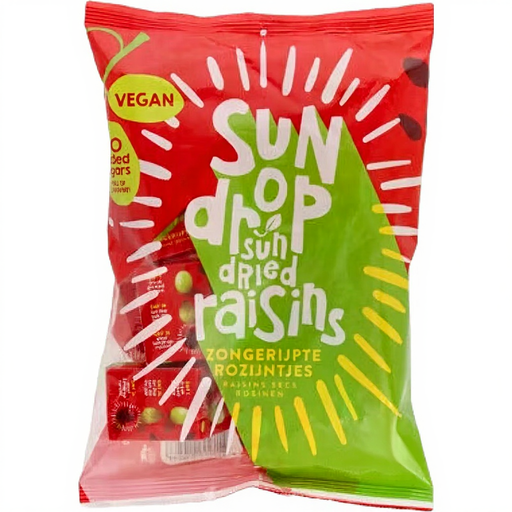 Image unavailable
Sundrop Mini Raisin Handouts, 252 g
A raisin option to compare if you’re looking at the ingredients in a dried fruit snack.
The ingredients list 99.5% raisins and sunflower oil.
View at Joybuy
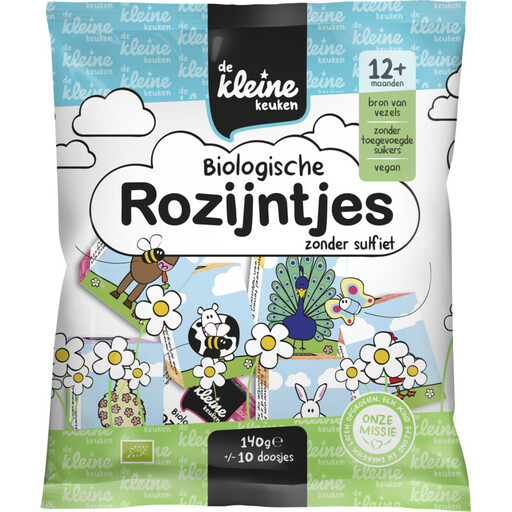 Image unavailable
De Kleine Keuken Organic raisins 12M+ 140 g
These boxes are an option if you want to serve individual portions of raisins.
The product information lists organic raisins, 14 g boxes and suitability from 12 months. According to the product information, no sugar or sulphites have been added.
Supervise your child while they eat. Not suitable for children with swallowing difficulties.
View at Joybuy
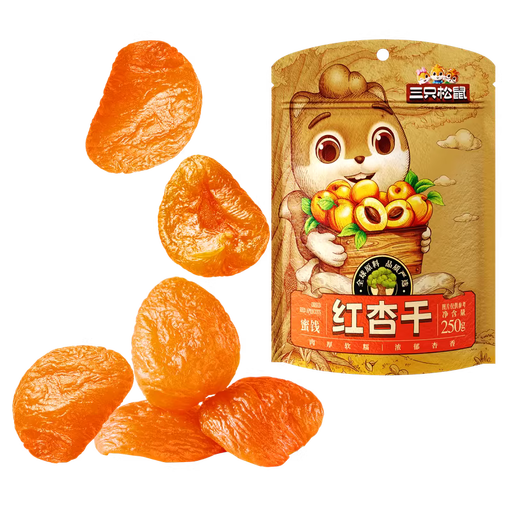 Image unavailable
Three Squirrels Red Apricot Dried, 250 g
An option for comparing dried apricots with raisins, rather than choosing based on protein alone.
The product information lists 1.1 g of protein and 62.0 g of sugars per 100 g. The ingredients include added sugar, maltose syrup and sulphites. The pack is resealable.
View at Joybuy
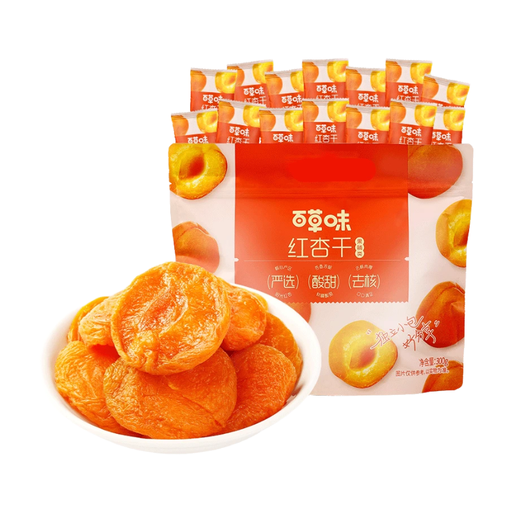 Image unavailable
Be&Cheery Dried Red Apricots, 300 g
A dried apricot option to compare with other types of fruit for ingredients and nutritional information.
The product information lists 0.9 g of protein and 64.5 g of sugars per 100 g. The ingredients include sugar, maltose syrup and sulphites.
View at Joybuy
Frequently asked questions
Does dried fruit provide much protein in a toddler’s snack?
Dried fruit is best thought of as a fruit component, rather than a main source of extra protein. Labels for the raisin and apricot products mentioned from Albert Heijn, Jumbo and PLUS list 2.8 to 3.4 g of protein per 100 g; compare this with the amount you actually serve.
Should I follow the portion size on the pack for my toddler?
Not automatically: a pack size or portion suggestion isn’t necessarily a recommended portion for a toddler. The Netherlands Nutrition Centre recommends a small amount of dried fruit; portion sizes also vary between products.
How should I serve dried fruit to a toddler?
Make sure your child is sitting calmly, stay with them and ensure the pieces aren’t too large. Also check the warnings on the specific pack, including any mention of stone fragments.
Should I look out for sulphites in dried apricots?
Yes, check the ingredients and allergen information for the variety: the Jumbo and PLUS apricots mentioned list sulphites. If your child has a relevant sensitivity, always follow the label on the specific product; the fruit name alone won’t tell you whether it’s suitable.
Is taking part in sport a reason to choose a special recovery snack with dried fruit?
The Netherlands Nutrition Centre’s general advice about eating around sport doesn’t prove that dried fruit has any special recovery benefits for toddlers. Choose a snack based on your child’s usual nutritional needs and the product information, not just a sports or recovery claim.


