
A small study snack
You fancy something sweet while studying and want to know how many calories are in your weighed portion. Compare equal weights and measure out the amount you want in advance.


Compare dried fruit based on the amount you actually eat and the nutritional information on the pack, not the supermarket name. General nutrition values for prunes, apricots and raisins are a useful starting point, but the label on the exact product you choose should guide your decision. For the EU ‘low energy’ claim, solid foods must contain no more than 40 kcal per 100 g. So, a small, low-calorie portion doesn’t automatically mean the product qualifies for that claim, according to the European Commission.
You fancy something sweet while studying and want to know how many calories are in your weighed portion. Compare equal weights and measure out the amount you want in advance.
You pay attention to the ingredients and don’t want to confuse ‘no added sugars’ with sugar-free. If you have an allergy or intolerance, the allergen information on your pack matters too; the NVWA explains what information must appear on pre-packed products.
You’re looking for a pack that suits how much you use and how you can store it. A larger bag means portioning it yourself and storing it in a suitably sealed container; follow the storage advice on the pack.
First weigh your snack portion, then compare the nutritional information per 100 g and the ingredients list on the exact pack.
| What to consider | What should you check? | Who is this important for? |
|---|---|---|
| Calories per snack portion | Check the kcal per 100 g, weigh your portion and calculate the value for that amount. | If I want to weigh my portion carefully while studying, I need to be able to work out the calories in that amount. Around 42% of consumers prioritise calories per portion. |
| Ingredients and sugar claims | Check the ingredients, the ‘of which sugars’ figure and the kcal per 100 g separately; check the allergen information if it’s relevant to you. | I want to know what ingredients and sugars are in my snack, especially if I’m avoiding certain ingredients. Around 25% of consumers prioritise ingredients. |
| Portioning and storage | Check the net weight and the storage advice for after opening. | During a study session, I want to be able to get my snack ready quickly and store the rest appropriately. Around 17% of consumers consider convenience the most important factor. |
| Pack size | Compare the net weight with how much you expect to use and check how the pack should be stored after opening. | For several study days, I want to choose an amount that suits how much I use, without having more stock than I can get through. Around 16% of consumers prioritise a suitable pack size. |
A small portion may contain few calories without the product itself qualifying for the EU ‘low energy’ claim. The European Commission sets a limit of no more than 40 kcal per 100 g for solid foods.
Compare the nutritional information per 100 g, then calculate the calories in the amount you actually eat.
‘No added sugars’ refers to what has been added during production; naturally occurring sugars may still be present. The Voedingscentrum treats this as a different claim from ‘sugar-free’.
Check the ingredients list and nutritional information, including total sugars, separately.
Packs and handfuls don’t all weigh the same. The Voedingscentrum advises storing dried mixed fruit in a cool, dry, dark place in a tightly sealed container; this advice doesn’t necessarily apply to every variety.
Weigh the amount you want to eat in advance, put the rest away and follow the advice on the pack.
A larger bag may leave you with more stock than you’ll use during your study sessions.
General nutrition tables describe a type of fruit; they aren’t measurements of a specific supermarket pack.
Use general values as a starting point only, and check the current nutritional information on the pack you choose.
Albert Heijn’s product page describes soaked dried apricots.
Jumbo offers sultanas, golden raisins and dark raisins in a range of pack sizes.
Lidl’s Alesto range includes dried fruit, such as apricots.
ALDI Nederland describes TRADER JOE’S Sun-Dried Apricots in a 250 g pack.
PLUS describes dried prunes in a 375 g bag.
Dirk describes 1 de Beste Pitted Prunes in a 375 g pack.
This selection of Joybuy products includes dried prunes and red jujubes. Compare the nutritional information per 100 g and calculate the value for the portion you actually weigh out.
 No image available
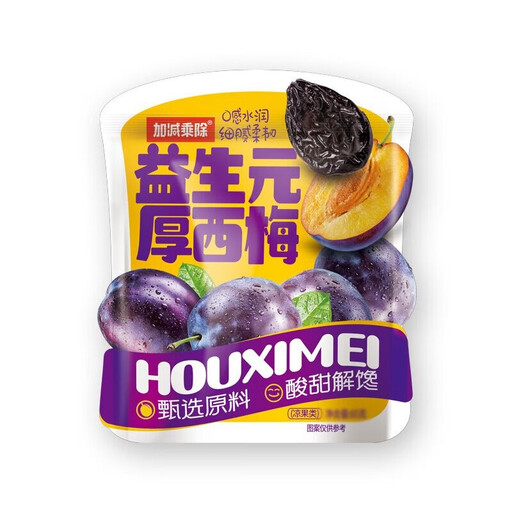
A good choice if you want to calculate the calories in a weighed portion and are looking for an individually packed product.
The nutritional information lists 214 kcal per 100 g. The ingredients include fructose syrup and oligofructose. Each individual pack is 65 g, so it won’t necessarily be the portion you want to eat.
 No image available
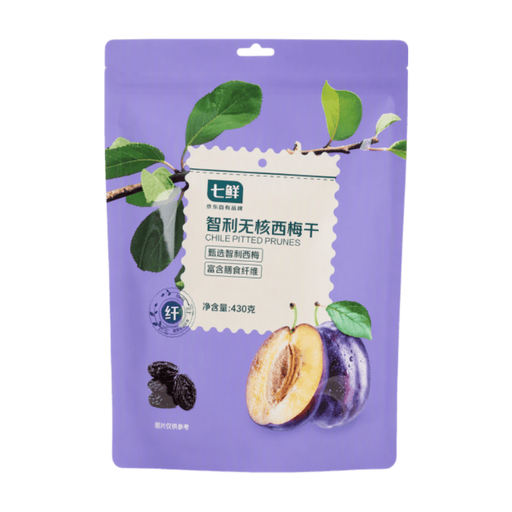
A good choice if you want to weigh out pitted prunes and calculate the energy in the amount you choose.
The ingredients list states dried prunes. The nutritional information lists 283 kcal per 100 g.
 No image available
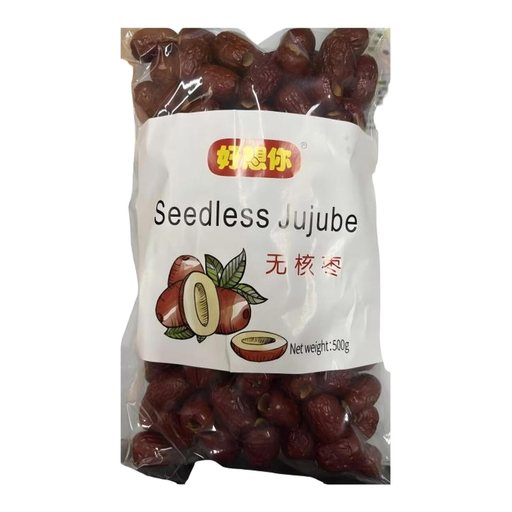
A good choice if you want to weigh out red jujubes as a snack and calculate the nutritional value per portion.
The product information lists red jujubes as the only ingredient and 300 kcal per 100 g.
 No image available
A good choice if you want to weigh out red jujubes with stones as a snack.
The product information lists red jujubes as the only ingredient and 331 kcal per 100 g. This variety contains stones.
 No image available
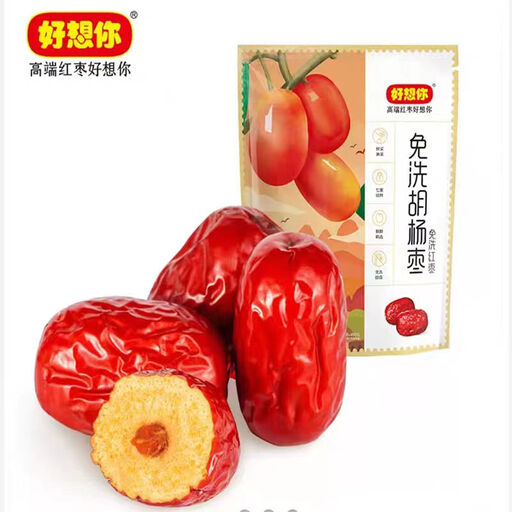
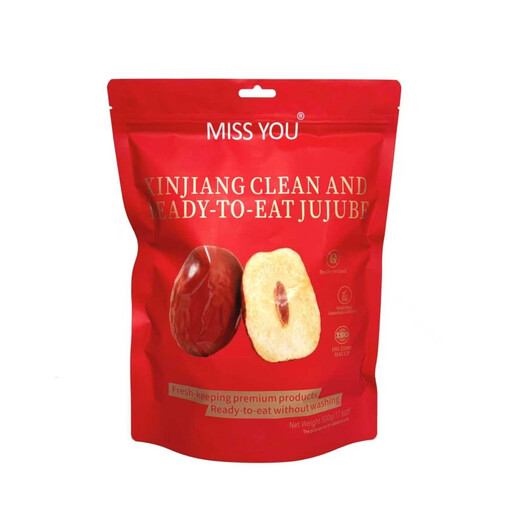
A good choice if you want to weigh out red jujubes without washing them and calculate the calories per portion.
The product information lists jujube as the only ingredient and 304 kcal per 100 g.
A small portion with few calories isn’t enough, in itself, to justify that product claim. According to the European Commission, solid foods must contain no more than 40 kcal per 100 g to qualify for the ‘low energy’ claim.
No. ‘No added sugars’ refers to sugars or other sweetening ingredients that haven’t been added to the product; naturally occurring sugars may still be present. The Voedingscentrum treats ‘sugar-free’ as a separate claim.
Weigh the amount you want to eat and use the label on your product to calculate the calories. The World Cancer Research Fund advises eating no more than 20 g of dried fruit a day; this is general dietary guidance, not a legal portion limit.
Follow the storage advice on the pack of your product. For dried mixed fruit, the Voedingscentrum recommends storage in a cool, dry, dark place in a tightly sealed container; this advice doesn’t necessarily apply to all types of dried fruit.
Check the allergen information on the exact pack before eating the product. The NVWA lists sulphites among the allergens consumers must be informed about and requires allergen information to appear on the labels of pre-packed products.