
Sports enthusiasts keeping an eye on protein
You’re looking for dried fruit for your sports snacks and want to know how much it adds to your protein intake. Assess the fruit portion separately from the protein source in the whole meal.


Dried fruit works best as a fruity addition; don’t automatically treat it as your main source of protein. According to the Netherlands Nutrition Centre’s general nutrition table, a 20-gram portion of raisins contains 0.6 grams of protein. If you want to add protein around your workout, look at the whole portion and, if needed, pair the fruit with a suitable source of protein. Also check the ingredients, sugars and allergens in the products you choose.
You’re looking for dried fruit for your sports snacks and want to know how much it adds to your protein intake. Assess the fruit portion separately from the protein source in the whole meal.
You want to pair fruit with a plant-based source of protein, such as a suitable soya-based product or unsalted nuts. Check the ingredients and allergens in the full combination.
You add dried fruit to breakfast or enjoy it as a snack, and want a pack and ingredients that suit regular use. Look out for added sugar, pack weight and storage advice.
Suitable if: you mainly want to add fruit to breakfast or a snack and get your protein from other ingredients.
Bear in mind: the general raisins table lists little protein per portion; this value won’t necessarily apply to every variety.
Suitable if: you want to add a source of protein to your snack around your workout.
Bear in mind: the nutritional values and allergens depend on both products, so assess the full portion.
Suitable if: you’d rather use one pack and the ingredients suit you.
Bear in mind: the proportions are fixed, and a mix on its own doesn’t guarantee a specific amount of protein.
| What to consider | What should you check? | Who is this important to? |
|---|---|---|
| Protein per portion | Compare protein per 100 grams and per the portion you actually eat. If you’re combining ingredients, add together the protein from each one. | When I eat dried fruit around my workout, I want to know how much protein my whole snack provides. Around 42% of consumers put protein contribution first. |
| Sugars and portion size | Read the ingredients list alongside the ‘of which sugars’ figure, and consider the portion you serve yourself. The Netherlands Nutrition Centre’s general raisins table lists 13.8 grams of sugars per 20 grams. | If I want to assess my portion and sugar intake, I look beyond claims on the front of the pack. Around 25% of consumers prioritise sugar and portion size. |
| Packaging and use | Compare pack size, closure and storage instructions. Only compare prices per kilogram for products with the same type of fruit and ingredients. | If I use fruit regularly, I want to choose a pack that suits my storage space and how I use it. Around 17% of consumers prioritise everyday use and cost. |
| Ingredients and allergens | Check the full ingredients list and allergen information for both the fruit and the additional source of protein. | If I need to avoid certain ingredients, I check each variety separately. Around 16% of consumers put ingredients and allergens first. |
The Netherlands Nutrition Centre’s general table lists 0.6 grams of protein per 20-gram portion of raisins. This isn’t a product specification for every supermarket variety.
Compare the protein in the portion you actually eat and assess the whole snack, not just the fruit or the front of the pack.
The ratio of fruit to nuts varies from one mix to another. Nuts and other ingredients may also be relevant if you have allergies.
Check the exact variety, nutrition table and allergen information before choosing a mix.
A product with no added sugar can still contain sugars. The Netherlands Nutrition Centre’s general raisins table lists 13.8 grams of sugars per 20 grams.
Read both the ingredients list and nutrition table, and weigh the portion you’re going to eat.
A larger pack or a different type of fruit doesn’t automatically mean more protein. With a ready-made mix, the proportions of the ingredients are fixed too.
Start by comparing products with the same type of fruit and ingredients. Then choose a pack size and storage method that suit how you’ll use it.
The range includes loose dried apricots and fruit and nut mixes.
The product list includes raisins in a range of pack sizes.
The Dutch product information lists dried stone fruit as a product type.
The official product information lists raisins and a range of fruit and nut mixes.
The product information describes dried apricots in a 375-gram stand-up pouch.
The Dutch product information lists raisins among its grocery products.
These Joybuy products are suitable as dried-fruit snacks or toppings, or as ready-made fruit and nut combinations. Check the nutritional values, ingredients and allergens listed for each product. A protein figure per 100 grams doesn’t tell you how much protein the whole snack or portion provides.
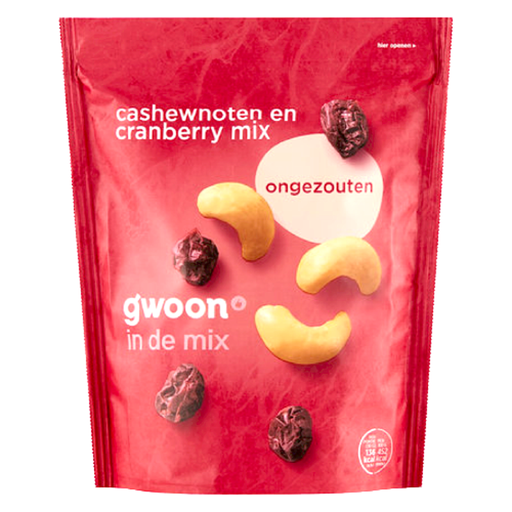 No image available
A ready-made combination if you want to enjoy fruit and nuts together.
The ingredients are listed as 50% cashew nuts and 50% sweetened cranberries. The product lists 10.9 g of protein per 100 g.
The cranberries are sweetened. The product contains cashew nuts and may contain traces of peanuts and other nuts.
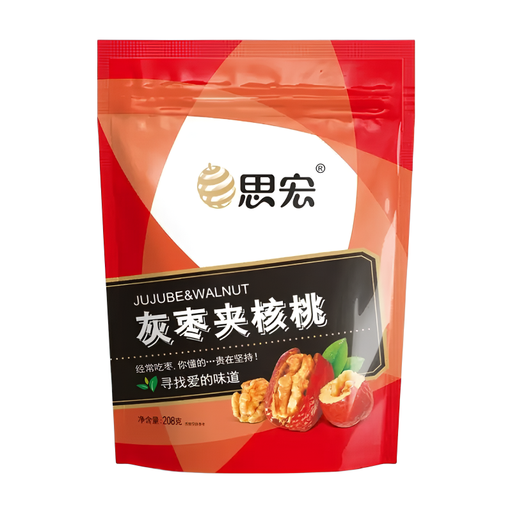 No image available
A combination of dried dates and walnuts if you’d like to snack on both together.
The ingredients list grey dates and walnut kernels. The product lists 3.4 g of protein and 12.1 g of sugars per 100 g.
Contains walnuts. The amount of protein per portion depends on how much you eat.
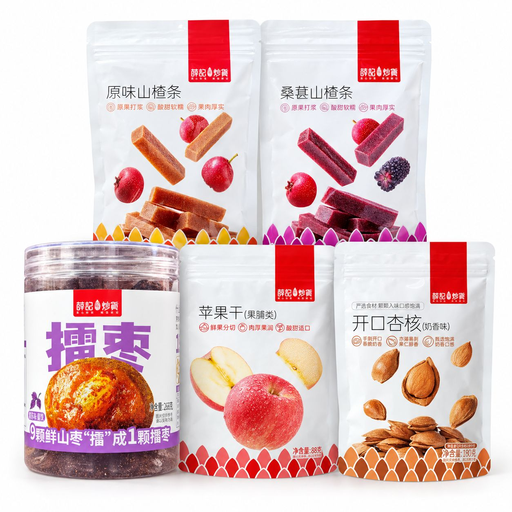 No image available
A box containing several individually described snacks, if you’d like to combine different fruity options.
The cracked apricot kernels are listed as containing 22.2 g of protein per 100 g; this isn’t the protein value for the whole box. Nutritional values vary between items.
The dried apple contains sulphites. The milk-flavoured apricot kernels contain sweeteners; check the ingredients and allergen information for each item.
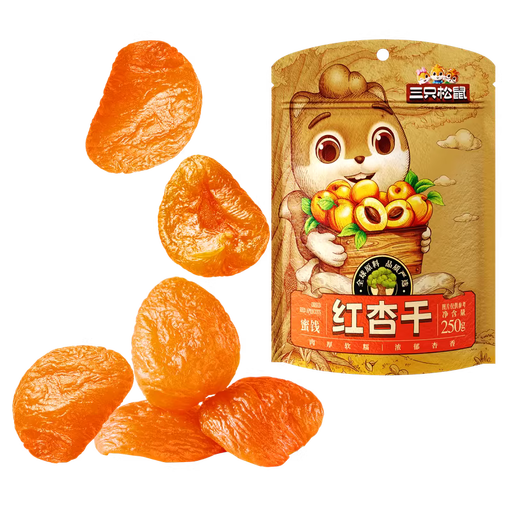 No image available
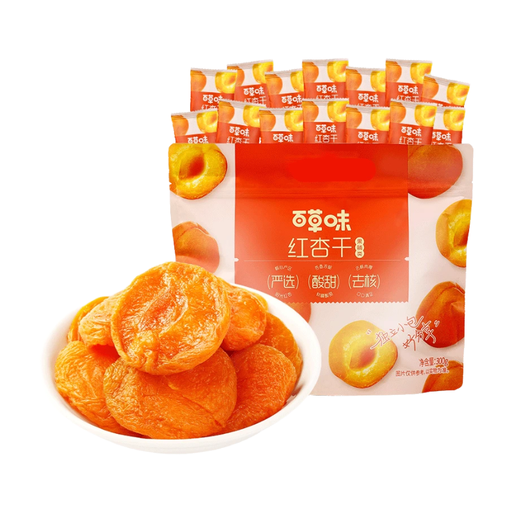
Dried red apricots to add a fruity touch to a snack or meal.
The product lists 1.1 g of protein and 62.0 g of sugars per 100 g. The ingredients list includes sugar and maltose syrup.
Contains added sugar and sulphites. Check the portion size and product information that matter to you.
 No image available
Dried red apricots to add a fruity touch to a snack or use in baking.
The product lists 0.9 g of protein and 64.5 g of sugars per 100 g. The ingredients list includes sugar and maltose syrup.
Contains added sugar and sulphites. Compare the nutritional information with the portion you plan to use.
Not as your main source of protein. The Netherlands Nutrition Centre’s general table lists 0.6 grams of protein per 20-gram portion of raisins. Look at the whole snack and add a suitable source of protein if needed. This general figure isn’t a product specification for every brand.
The Dutch Association of Sports Nutrition Experts links specific timing advice to intense exercise and the importance of performing well again soon afterwards. This isn’t a general buying requirement for everyone who buys dried fruit.
No. According to the Netherlands Nutrition Centre’s general table, raisins contain 13.8 grams of sugars per 20 grams. So check both the ingredients list and the nutrition table for the variety you choose.
Follow the storage advice on the pack. For opened dried mixed fruit, the Netherlands Nutrition Centre gives a storage period of 6–9 months in a kitchen cupboard. This doesn’t necessarily apply to every type of dried, soft or rehydrated fruit.
Check the label for the variety you choose and for any additional ingredients. According to the Netherlands Food and Consumer Product Safety Authority, allergen information for prepacked products must appear on the label. Depending on the ingredients, nuts, peanuts, soya, milk and sulphites may be relevant.