For a low-fat school snack, you can compare the plain raisins from Albert Heijn, PLUS and Jumbo included in this review: their stated fat content is 0.5, 0.8 and 1.0 g per 100 g respectively, below the European threshold of 3 g per 100 g for the ‘low fat’ claim. That doesn’t automatically mean a product is ‘reduced fat’ or that it makes a lighter snack. Compare energy and sugars too, and decide for yourself how much to pack.
Who is this guide for?
Parents keeping an eye on fat and portion size
You’re looking for a low-fat school snack, but you also want to take sugars and energy into account. Product information from Albert Heijn, Jumbo and PLUS shows why you should assess these nutritional values separately.
Parents who want easy-to-pack snacks
You want to portion out dried fruit easily and reseal the pack afterwards. Pack size and resealability are practical considerations, but on their own they tell you nothing about fat content.
Shoppers with an allergy requirement
Choose based on the ingredients and warnings for the exact variant, not just the type of fruit. The Netherlands Food and Consumer Product Safety Authority points out that allergen information for prepacked products must appear on the label.
What should you look for when buying?
First compare the nutritional values for the exact variant, then decide which portion size and packaging work best for school.
| What to consider |
What should you check? |
Who is this important for? |
| Fat content |
Compare fat per 100 g for the exact variant and check whether it’s plain raisins or a product with a coating. |
If low fat is your main priority, you’ll want to compare the nutritional values of each product. Around 31% of shoppers prioritise fat content. |
| Portion size, energy and sugars |
Compare energy and sugars on the same basis, then decide for yourself how much to pack. |
If you want to weigh out a portion for a school day, look beyond fat alone. Around 31% of shoppers prioritise portion size and knowing the energy and sugar content. |
| Portioning and storage |
Check the pack size and whether the packaging is resealable; follow the storage advice for the exact variant. |
If you’re packing fruit for several school days, easy portioning and resealing matter. Around 25% of shoppers prioritise convenience. |
| Allergens |
Read the ingredients and warnings about possible cross-contamination on the current packaging. |
If there’s an existing allergy requirement, check the information for your chosen variant before packing it. Around 13% of shoppers make allergen suitability their top priority. |
The Netherlands Nutrition Centre states that dried fruit contains sugar and advises having no more than a handful. For raisins, it gives 65 kcal for a 20 g handful; this is general nutritional information, not a product-specific value.
Common buying mistakes
-
Confusing low fat with low energy
Albert Heijn’s product page lists 0.5 g of fat and 344 kcal per 100 g for AH Raisins. So looking at fat alone doesn’t give you the full nutritional picture.
Compare nutritional values per 100 g, then decide how much you want to pack for a school day.
-
Treating a chocolate-coated variety as plain raisins
PLUS lists 15.2 g of fat per 100 g for the milk chocolate raisins included in this review, compared with 0.8 g per 100 g for PLUS Sultana raisins.
Check the exact product and its ingredients; the name of the fruit alone won’t tell you whether it’s suitable as a low-fat option.
-
Skipping the allergen check because it’s fruit
Jumbo Blue Raisins list sulphites and possible traces of nuts, peanuts, sesame and soya. Warnings can vary from product to product.
If you have an allergy requirement, always check the label on the exact pack.
-
Assuming a large pack automatically gives you portion-sized servings
A larger bag or resealable pack doesn’t determine how much you serve. Lidl describes its 200 g dried fruit mix included in this review as resealable.
Portion out the amount you want in advance and reseal the rest according to the storage advice.
Brands to compare
Albert Heijn
AH Raisins 250 g is a plain raisin variety whose product page lists nutritional values.
- Albert Heijn lists 0.5 g of fat and 0 g of added sugars per 100 g.
- The product page lists 344 kcal per 100 g, so low fat doesn’t automatically mean low energy.
Jumbo
Jumbo Blue Raisins 250 g is a product-specific alternative in the plain dried grape category.
- The product page lists 1.0 g of fat per 100 g.
- The packaging lists sulphites and possible traces of nuts, peanuts, sesame and soya; check whether this information is suitable for the person who’ll be eating them.
Lidl
The Lidl products included in this review are Belbake Raisins 750 g and a 200 g dried fruit mix.
- Lidl describes the fruit mix as resealable and lists cranberry and cranberry-raisin varieties.
- These packaging features don’t tell you the fat content; check the nutritional information for the variant you choose.
Aldi
The Aldi product page included in this review is for Trader Joe’s Raisins 500 g.
- The product page confirms the product identity and pack size.
- The pack size and product description alone don’t show whether this variety meets your nutritional preferences; check the label.
PLUS
PLUS Sultana Raisins 375 g and PLUS Milk Chocolate Raisins are different varieties with different nutritional values.
- For its Sultana raisins, PLUS lists 0.8 g of fat and 0 g of added sugars per 100 g.
- According to PLUS, the milk chocolate raisins included in this review contain 15.2 g of fat per 100 g; don’t draw general conclusions about all raisin products.
Dirk
Dirk lists Raisins 750 g as a product in its range.
- The product page confirms the product type and pack size.
- The bag size tells you nothing about the nutritional values; check the packaging if fat content determines your choice.
Joybuy products
This Joybuy selection includes dried jujubes, soursop, raisins and dragon fruit. For a school snack, compare the nutritional values, ingredients and packaging for each variety.
 No image available
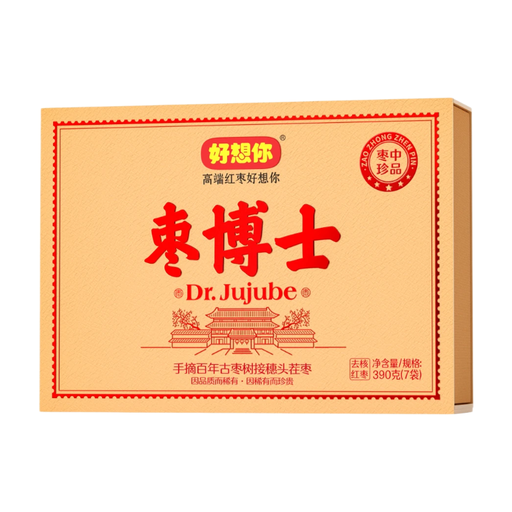
Haoxiangni Dr.Jujube (Premium Gold-Grade Pitted) 390g
The product title specifies pitted jujubes; check the nutritional values per 100 g and decide for yourself how much to pack.
Pack size: 390 g. The product information advises sealing the pack tightly after opening and storing below 15°C.
View at Joybuy
 No image available
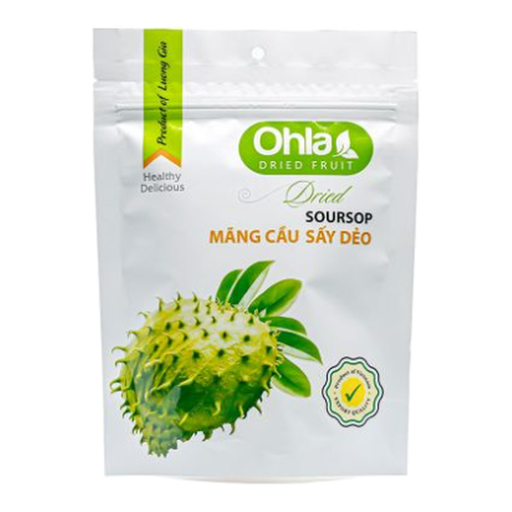
OHLA Dried Soursop 180g
This is a different type of fruit from raisins; if fat content determines your choice, check the ingredients and nutritional values for this variety.
Pack size: 180 g.
View at Joybuy
 No image available
Haoxiangni Pitted Jujubes 500g
The title describes pitted jujubes; compare the nutritional values for this variety with what you’re looking for in a school snack.
Pack size: 500 g. The product information says to consume the contents immediately after opening.
View at Joybuy
 No image available
De Kleine Keuken Organic raisins 12M+ 140g
The product information lists ten 14 g snack boxes; check the nutritional values and ingredients on the current packaging.
The product description gives an age recommendation of 12 months and over. Supervise children while they eat, and don’t give this product to children with swallowing difficulties.
View at Joybuy
 No image available
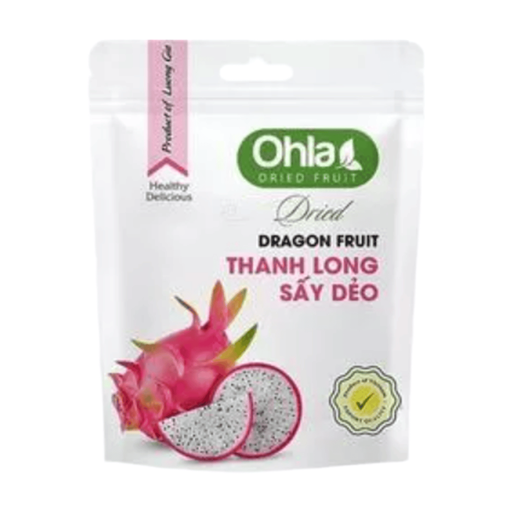
OHLA Dried Dragon Fruit 180g
The product description lists 3.75 g of fat per 100 g. This is above the 3 g per 100 g threshold the European Commission gives for the ‘low fat’ claim.
Pack size: 180 g. If low fat is your main requirement, the stated fat content doesn’t meet that preference.
View at Joybuy
Frequently asked questions
When can a dried fruit product be called low fat?
According to the European Commission, solid foods can carry the ‘low fat’ claim if they contain no more than 3 g of fat per 100 g. Check the nutritional value for the exact variety; it doesn’t apply to every product from a brand.
Does ‘low fat’ mean the same as ‘reduced fat’?
No, the terms don’t mean the same thing: ‘low fat’ refers to an absolute threshold, while ‘reduced fat’ is a comparative claim. Don’t use the latter to describe a product unless you can support it for the specific variety and comparison.
Does ‘no added sugars’ mean it contains no sugar?
No. Albert Heijn lists 0 g of added sugars for AH Raisins, but 59 g of total sugars per 100 g. Check total sugars and ingredients separately.
Is the portion size on the pack automatically suitable for my child’s school snack?
Don’t assume it is. The Netherlands Nutrition Centre advises having no more than a handful of dried fruit. For children aged 4 to 12, it also recommends no more than four eating or drinking occasions between meals.
What should I look for when it comes to allergens in dried fruit?
Check the ingredients and warnings on the packaging for the exact variety. The Netherlands Food and Consumer Product Safety Authority states that allergen information for prepacked products must appear on the label; for example, Jumbo Blue Raisins list sulphites and possible traces of other allergens.


