
Label-conscious lunch packers
Compare sugars, energy and ingredients as well as fat. Nutritional values apply to the specific product variant; the fat figure alone won’t tell you how much sugar is in a portion.


When choosing dried fruit for a school lunch, look at the fat per 100 g as well as the sugars, portion size and ingredients. A low absolute fat content alone does not prove that a product is reduced fat. Small boxes give you a set portion; with a larger bag, you can weigh out your own, but remember to check the nutritional information and allergen details for the exact product.
Compare sugars, energy and ingredients as well as fat. Nutritional values apply to the specific product variant; the fat figure alone won’t tell you how much sugar is in a portion.
Pre-portioned boxes can save you the weighing. Albert Heijn lists 10 portions of 14 g for AH Hamsterchef Raisins; Jumbo lists 14 portions of 14 g for its raisin boxes.
Check the ingredients and allergen information on the exact pack. Jumbo apricots contain sulphites and may contain nuts, peanuts and sesame; this information does not automatically apply to other dried fruit.
Start with the fat content per 100 g, then check the sugars, portion size and ingredients. This helps you assess both the nutritional value and how convenient the product is for a lunchbox.
| What to consider | What to look for | Who is this important for? |
|---|---|---|
| Fat content and claims | Compare the fat per 100 g for the exact variant. An absolute fat figure alone does not prove that the product has reduced fat. | If I’m choosing based on fat, I also want to know whether a claim is based on a comparison; around 28% of consumers prioritise fat content. |
| Sugars and portion size | Check the sugars per 100 g, the ingredients and how much you’re packing. | If you’re mainly weighing up sugars and portion size, look for an amount that suits the lunch; around 22% of consumers prioritise this balance. |
| Quick to pack | Check the weight per box and the number of portions. | If I’m short on time in the morning, a set portion is handy; around 22% of consumers prioritise quick packing. |
| Allergens and warnings | Read the information about allergens present or that may be present, and check for warnings about possible stone fragments. | If relevant allergens or product warnings are a concern, I check the specific pack; around 17% of consumers make suitability based on these requirements their main priority. |
| Pack size | Compare the total weight with the number of portions, and follow the usage and storage instructions. | If I’m looking for a pack that suits how we use it, I consider the quantity and storage; around 11% of consumers prioritise pack size. |
Jumbo Sun-Dried Sultana Raisins contain 0.5 g of fat per 100 g, but also 75.5 g of sugars and 326 kcal. So a low fat figure alone won’t tell you how much sugar or energy you’re packing.
Compare the nutritional values per 100 g and decide how much to put in the lunchbox.
The nutritional information for one product doesn’t show how its fat content compares with a similar product. The European Commission sets an absolute condition for the low-fat claim; that is not the same as a comparison demonstrating reduced fat.
Don’t describe a product as reduced fat based only on its fat content per 100 g. The Netherlands Food and Consumer Product Safety Authority refers to European rules for nutrition claims.
The Netherlands Nutrition Centre’s school lunch list includes dried fruit with no added sugar. Dried fruit coated in yoghurt or chocolate is not included in its choice of plain fruit.
Check the ingredients and, for this purpose, choose plain dried fruit with no added sugar if you want to follow that list for lunch.
Jumbo warns that its pitted dried apricots may contain stone fragments.
Check the fruit before packing it, and bear the warning on the pack in mind.
AH Hamsterchef Raisins are an option with pre-portioned servings.
The range includes raisin boxes, a larger bag of sultanas and dried apricots.
Lidl describes mango strips in its Alesto range as a fruit option for uses including school lunches.
ALDI describes its sun-dried apricots in a 250 g pack as soft.
PLUS Blue Raisins are sold in a 250 g stand-up pouch.
Dirk lists 1 de Beste Sultana Raisins in a 375 g pack.
These Joybuy products are dried apricots for a school lunch. Always compare the fat per 100 g with the sugars and ingredients.
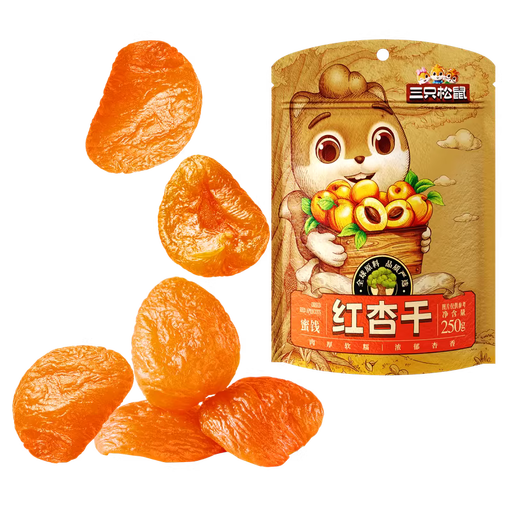 No image available
The product description says they’re ready to eat and suitable for lunchboxes; check the ingredients too if you’re packing the apricots.
The product information lists 0 g of fat and 62.0 g of sugars per 100 g. The ingredients include sugar and maltose syrup, so the product does contain added sugars. The ingredients and allergen information lists sulphites. The pack contains 250 g; the description says to consume the contents immediately after opening.
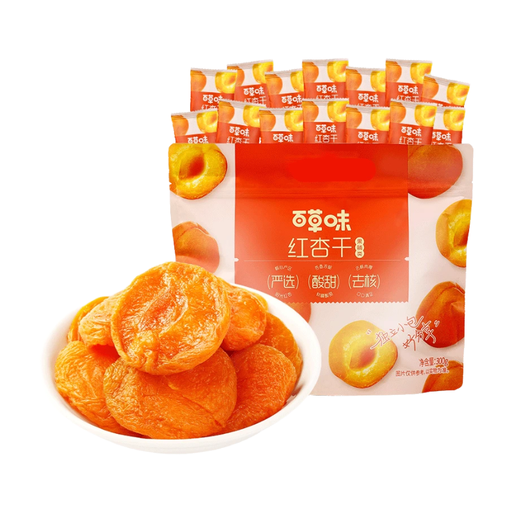 No image available
These dried apricots may suit you if you’re looking for a different type of fruit for the lunchbox; check that the ingredients are suitable for your needs first.
The product information lists 1.0 g of fat and 64.5 g of sugars per 100 g. The ingredients include sugar and maltose syrup, and the ingredients and allergen information lists sulphites. The pack contains 300 g.
For solid foods, the European Commission sets a maximum of 3 g of fat per 100 g as a condition for using the low-fat claim. This is an absolute condition for the product’s composition, not proof that it has reduced fat compared with a similar product.
The fat values shown only give the absolute fat content of the relevant variants. Without a substantiated comparison with a similar reference product, those figures do not prove that a product is reduced fat.
The Netherlands Nutrition Centre’s school lunch list recommends dried fruit with no added sugar, with a maximum of one handful a day. This is nutritional guidance, not a legal maximum or personalised portion recommendation.
Read the allergen information on the pack for the exact variant. The Netherlands Food and Consumer Product Safety Authority states that allergen information for pre-packed products appears on the label; also check any warnings about the possible presence of allergens.
Follow the instructions for the exact variant. PLUS Blue Raisins says to wash before use and store in a cool, dry, dark place; AH Hamsterchef Raisins also says to store in a cool, dark, dry place.