Dried fruit can be a small addition to a secondary school lunch. Choose by checking the label, portion size and storage instructions, rather than looking at fat alone. The labels for AH Raisins and Jumbo Dried Apricots Without Stones each state 0.5 g of fat per 100 g; PLUS Sultana Raisins states 0.8 g per 100 g. These figures alone do not prove that a product has less fat than a comparable one. Check the sugar, ingredients and allergen information too.
Who might this choice be relevant to?
A small, sweet addition to lunch
For pupils and parents who want to add dried fruit to an existing lunch and are mindful of fat, added sugar and keeping the portion modest. The Netherlands Nutrition Centre advises eating no more than a handful of dried fruit.
Easy to take with you
For anyone who portions food in advance and wants to know how to store the exact product. Storage instructions vary by product and variant at Albert Heijn, Jumbo and PLUS.
Choosing with food sensitivities in mind
For shoppers who take ingredients and allergen information into account. The Jumbo apricots reviewed here list sulphites and may contain nuts, peanuts and sesame. Always check the packaging of the product you choose.
What should you look for when choosing?
First decide what matters most for your lunch: nutritional information, portion size, storage or a product warning.
| What to consider |
What to look for |
Who is this most relevant to? |
| Fat content and claims |
Compare the grams of fat per 100 g. According to the European Commission, a ‘low fat’ claim for solid foods means no more than 3 g of fat per 100 g; this does not prove that a product has less fat than a comparable one. |
If fat content is my first selection criterion, I want to be able to compare the nutritional information per 100 g. Around 26% of consumers give fat content the highest priority. |
| Sugar and portion size |
Check the ingredients, total sugars and how much you pack. The Netherlands Nutrition Centre advises eating no more than a handful of dried fruit. |
If I want to avoid added sugar, I also check the total sugars and portion size. Around 26% of consumers prioritise sugar and portion size. |
| Portioning and storage |
Read the instructions for the exact variant, especially after opening. According to Albert Heijn, AH Soaked Dried Apricots should be refrigerated at a maximum of 7 °C after opening. |
For a lunch to take to school, I want to be able to portion it in advance and follow the storage instructions. Around 21% of consumers prioritise taking food with them and storage. |
| Allergens and warnings |
Check the ingredients, allergen information and warnings about possible presence of allergens or stone fragments. The Jumbo apricots list sulphites and may contain nuts, peanuts and sesame. |
If a food sensitivity is a concern, I check the label before choosing based on fat content. Around 16% of consumers give food sensitivities the greatest consideration. |
| Pack size |
Check the pack weight and consider whether you can divide the contents into practical portions. Examples range from 250 g at AH and Jumbo to 375 g at PLUS. |
If I want to divide a pack into lunch portions, I look at the total weight and storage instructions. Around 11% of consumers prioritise pack size and portioning. |
Common pitfalls
-
Assuming low fat means less sugar or fewer calories
The labels reviewed show that a low fat content does not automatically mean a product is low in sugar. For example, AH Raisins list 59 g of sugar per 100 g and PLUS Sultana Raisins 68.2 g per 100 g, according to Albert Heijn and PLUS respectively.
Compare fat, sugar and energy separately on the label. Don’t assume that a fat figure means a product contains less sugar or energy.
-
Taking the pack’s serving size as lunch advice
A serving size on a label is the manufacturer’s reference amount, not automatically a personal recommendation for a pupil. AH lists a 50 g serving; Jumbo also shows values per 20 g.
Portion out a small amount in advance and treat it as an addition to the whole lunch. The Netherlands Nutrition Centre advises eating no more than a handful of dried fruit.
-
Storing all dried fruit in the same way
Storage instructions vary. The plain raisins and Jumbo apricots reviewed should be stored in a cool, dry, dark place; AH Soaked Dried Apricots should be refrigerated after opening.
Check the instructions for the exact variant, particularly what to do after opening.
For the soaked apricots, you’ll need space in the fridge after opening and should bear in mind their limited shelf life.
-
Assuming ‘without stones’ guarantees it’s suitable for you
The Jumbo apricots reviewed list sulphites, may contain nuts, peanuts and sesame, and carry a warning that stone fragments may occasionally be present.
Give relevant food sensitivities and warnings on the packaging priority over an appealing fat content.
Brands and product ranges for reference
Albert Heijn
The AH Raisins and AH Soaked Dried Apricots examples offer different options for adding to lunch.
- According to Albert Heijn, the AH Raisins label lists 0.5 g of fat and 0 g of added sugars per 100 g.
- According to Albert Heijn, AH Soaked Dried Apricots should be refrigerated at a maximum of 7 °C after opening. These product details are not an assessment of the full range.
Jumbo
Jumbo Dried Apricots Without Stones 250 g is a specific example for anyone looking for apricots to add to lunch.
- According to Jumbo, the label lists 0.5 g of fat and 7.0 g of fibre per 100 g.
- This product lists sulphites, may contain nuts, peanuts and sesame, and carries a warning about stone fragments. These details do not necessarily apply to other Jumbo variants.
Lidl
As part of its Alesto range, Lidl lists dried mango strips as an alternative to raisins and apricots.
- Lidl’s range page describes the mango strips as handy for school and on the go.
- This is Lidl’s description of how to use the product; the range page does not establish that every variant is low in fat or contains no added sugar.
Aldi
ALDI lists Trader Joe’s raisins in a 500 g pack and sun-dried apricots in a 250 g pack.
- ALDI’s product pages confirm these product names and pack weights.
- The description ‘soft’ for the apricots comes from ALDI and is not an independent assessment of taste or quality.
PLUS
PLUS Sultana Raisins Per Bag 375 g is an example for anyone who wants to portion out a pack at home.
- According to PLUS, the label lists 0.8 g of fat, 5.5 g of fibre and 0 g of added sugars per 100 g.
- The same label lists 68.2 g of total sugars per 100 g. These are details for this product, not an assessment of the full PLUS range.
Dirk
Dirk’s range includes, among other things, sultanas, apricots and stoned prunes.
- Dirk’s range page shows a variety of fruit types and product formats.
- The product listings do not establish a nutritional advantage for Dirk or its full own-brand range.
Joybuy products for a lunchbox addition
These products are suitable as dried fruit to add to lunch, with options that are individually portioned or ready to eat. Check the nutritional information, ingredients and storage instructions for each product.
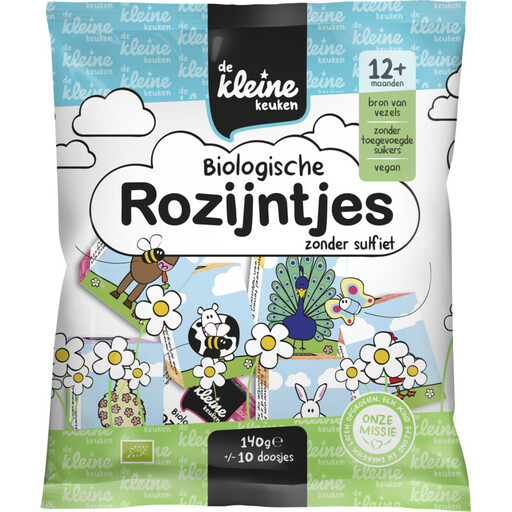 Image unavailable
De Kleine Keuken Organic raisins 12M+ 140g
The individual boxes make it easy to pack a portion in advance.
The product description lists 10 boxes of 14 g and no added sugars. Store in a cool, dry, dark place.
Joybuy
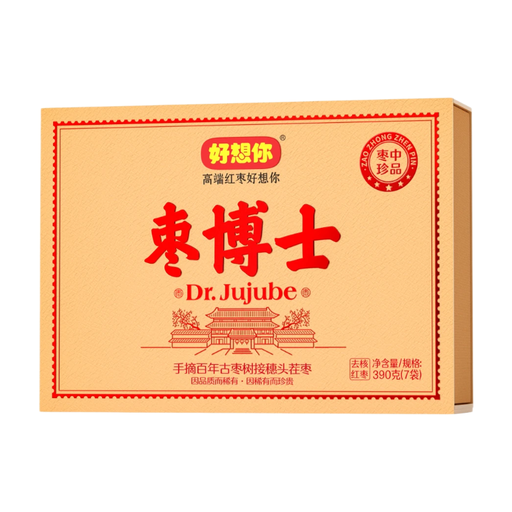 Image unavailable
Haoxiangni Dr.Jujube Premium Gold-Grade Pitted 390g
The product description says these pitted jujubes are dried fruit that’s ready to eat.
The description lists 0 g of fat and 50.0 g of sugars per 100 g. It says the product should be eaten immediately after opening.
Joybuy
 Image unavailable
Haoxiangni Pitted Jujubes 500g
The pitted red jujubes are described as ready to eat or suitable for use in recipes.
The product description lists red dates as the only ingredient, 0.5 g of fat and 60 g of sugar per 100 g. Store in a cool, dry place.
Joybuy
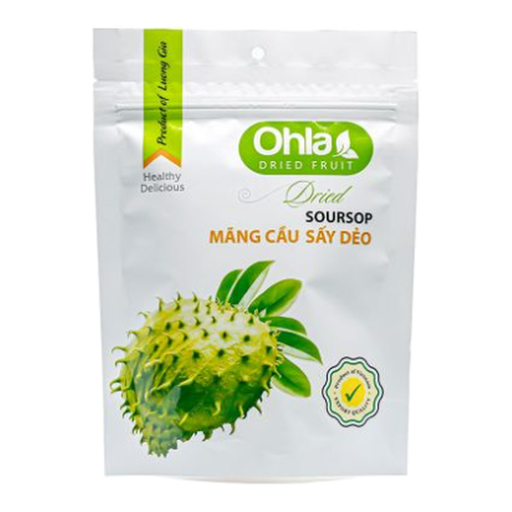 Image unavailable
OHLA Dried Soursop 180g
The product description names soursop as the main ingredient and says it can be eaten as a snack.
It lists 2.21 g of fat per 100 g. The ingredients description lists added white sugar, glucose and sodium metabisulphite.
Joybuy
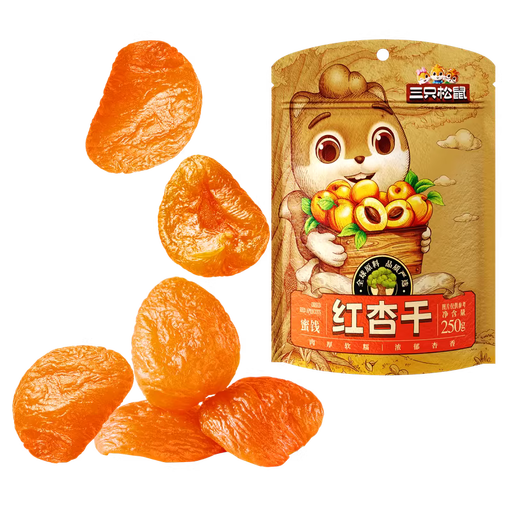 Image unavailable
Three Squirrels Red Apricot Dried 250g
The description says they can be eaten straight away and used in lunchboxes.
It lists 0 g of fat and 62.0 g of sugars per 100 g. The ingredients description lists sugar, maltose syrup and sulphites.
Joybuy
Frequently asked questions
When can dried fruit be labelled ‘low fat’?
According to the European Commission, the ‘low fat’ claim for solid foods requires no more than 3 g of fat per 100 g. This criterion alone says nothing about sugar or total energy.
Do low fat figures prove that a product has less fat?
No. A low absolute fat figure alone does not prove that a product has less fat than a comparable one. Use the figures per 100 g to compare products and check which claim actually appears on the exact pack.
Is the serving size on the pack the recommended lunch portion for a pupil?
No. Treat it as the manufacturer’s reference amount, not automatically as a recommendation for every pupil. The Netherlands Nutrition Centre advises eating no more than a handful of dried fruit; that general advice is not converted here into a fixed weight in grams.
Can you always store an opened pack outside the fridge?
Follow the instructions for the exact variant. Albert Heijn says that AH Soaked Dried Apricots should be refrigerated at a maximum of 7 °C after opening; don’t automatically apply this instruction to other products.
What should you look out for with sulphites and other allergens?
Check the ingredients and allergen information on the exact product’s packaging. The Jumbo apricots reviewed list sulphites and may contain nuts, peanuts and sesame. The Netherlands Food and Consumer Product Safety Authority states that allergen information must appear on the label of prepacked products.


