What should you look for when choosing?
First compare the nutritional values per 100 g, then calculate them for the amount your child will actually take to school. Next, check that the ingredients and storage instructions fit your school-day routine.
| What to consider |
What to look for |
Who this matters to |
| Energy per serving |
Compare kcal per 100 g and calculate the values for the same serving size. |
If you want to know how much energy the amount you pack contains, the serving size matters more than the pack size alone. Around 33% of consumers prioritise energy per serving. |
| Suitable for a child |
Consider how the snack fits into the rest of the day’s meals; don’t automatically treat a reference serving as advice for children. The Netherlands Nutrition Centre highlights the importance of growth and a varied diet for children aged 4 to 12. |
If you’re choosing a snack for a growing child, you don’t want to focus only on the lowest calorie count. This is the main priority for around 27% of consumers. |
| Storage and taking it with you |
Check the storage instructions for after opening and see whether refrigeration is needed. Albert Heijn states that its soaked apricots should be kept at a maximum of 7 °C after opening. |
If you prepare the portion in advance, storing it needs to be practical on an ordinary school day too. Around 20% of consumers prioritise taking snacks with them and storing them. |
| Ingredients and allergens |
Read the ingredients list and product-specific warnings; some of the apricots reviewed contain sulphites. |
If you need to check ingredients because of an allergy, sensitivity or preference, the exact product variant matters. Around 13% of consumers put this check first. |
| Pack size |
Choose a pack size that suits how much you use and the storage instructions for after opening. |
If you want to avoid buying a pack that doesn’t suit how you use it, choosing the right amount can help. This is the most important factor for around 7% of consumers. |
Dried fruit at Joybuy
These Joybuy products include raisins, apricots and plums for a snack you can take with you. Check the ingredients, nutritional information and any usage restrictions for each variant.
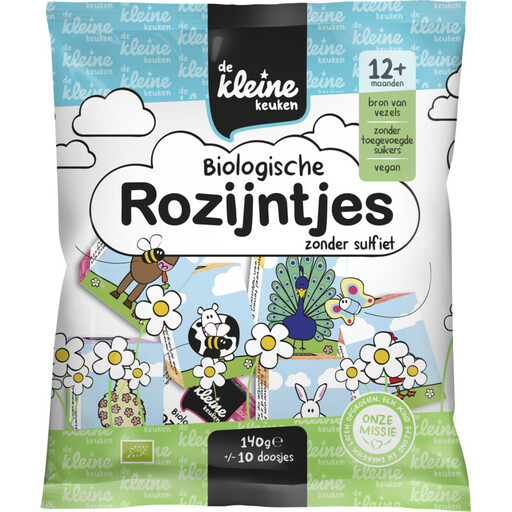 Image unavailable
De Kleine Keuken Organic Raisins 12M+ 140g
The individual boxes can make it easier to prepare an amount for school in advance.
The pack contains 10 portions of 14 g and states that it contains no added sugars. According to the product information, it’s suitable from 12 months; supervise children while they eat. Not suitable for children with swallowing difficulties.
View at Joybuy
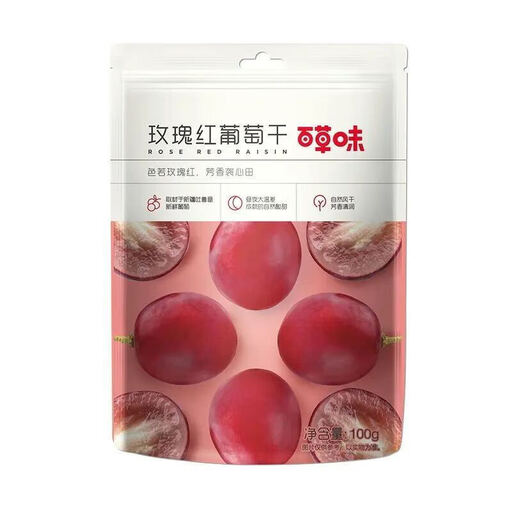 Image unavailable
Be&Cheery Rose Red Raisins 100g
A ready-to-eat raisin snack to take with you.
The product information lists 330 kcal per 100 g and says to store in a cool, dry place.
View at Joybuy
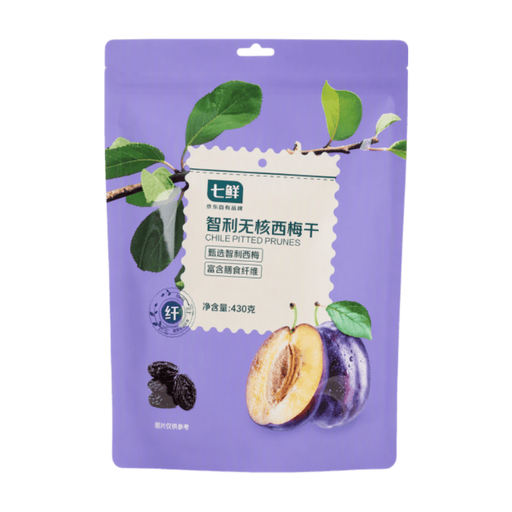 Image unavailable
7FRESH Pitted Prunes 430g
The product description presents these pitted plums as a ready-to-eat snack.
The product information lists 283 kcal per 100 g and says to store in a cool, dry place.
View at Joybuy
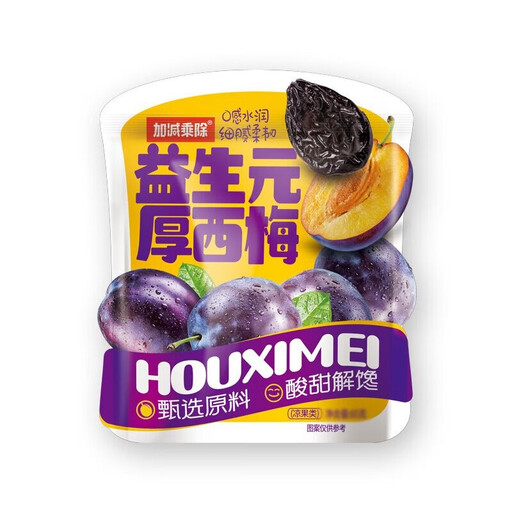 Image unavailable
Jia Jian Cheng Chu Prebiotic Thickened Prunes 65g
The individual 65 g pack is designed as a portion to take with you.
The product information lists 214 kcal per 100 g and ingredients including fructose syrup and oligofructose.
View at Joybuy
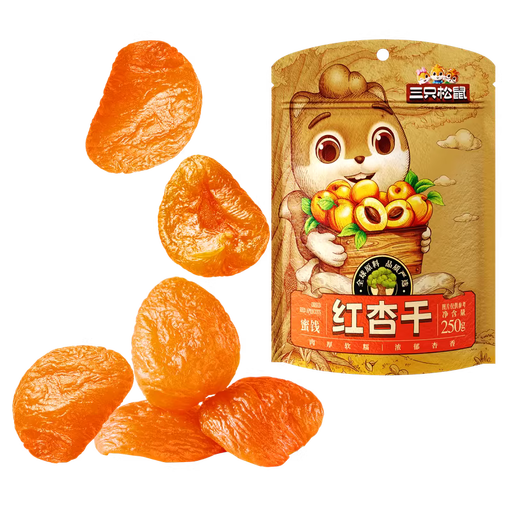 Image unavailable
Three Squirrels Red Apricot Dried 250g
The product description says these dried apricots can be eaten straight from the pack as a snack.
The product information lists 311 kcal per 100 g, as well as sugar, maltose syrup and sulphites.
View at Joybuy
Frequently asked questions
Does a small pot of dried fruit make the product low in calories?
No. A smaller serving doesn’t change the energy per 100 g; it only affects how much you actually eat. So compare the amount you pack as well.
Is the serving size on a pack automatically a recommendation for my school-age child?
No. Don’t automatically treat a stated reference serving as advice for children. Jumbo bases its reference intake on an average adult; the Netherlands Nutrition Centre highlights the importance of growth and a varied diet for children aged 4 to 12.
Can I keep Albert Heijn’s soaked apricots in a school bag after opening?
Follow the storage instructions on the product information: after opening, these apricots must be refrigerated at a maximum of 7 °C and have a limited shelf life. The product information doesn’t give a separate safe storage time outside the fridge.
Does ‘pitted plums’ mean I don’t need to check them?
No. Jumbo warns that, in rare cases, a piece of stone or stone fragment may be present in its pitted plums. Bear this warning in mind when portioning and eating them.
Does ‘no added sugars’ mean a product is sugar-free?
No. The PLUS apricots reviewed state that they contain no added sugars, but list 53.4 g of total sugars per 100 g. Read both statements separately.


