
Quick to pop in the school bag
If you want to pack a small portion without weighing it out, individual boxes of raisins are one option. Albert Heijn and Jumbo list 14 g portions for the boxes reviewed.


For school mornings when you want to pack something without weighing it out, individual boxes of raisins are a practical option. For more variety, you could choose a fruit mix, or portion out a larger pack yourself. The Netherlands Nutrition Centre advises that children aged 4 to 12 have no more than one handful of dried fruit with no added sugar a day, and recommends choosing fresh fruit where possible.
If you want to pack a small portion without weighing it out, individual boxes of raisins are one option. Albert Heijn and Jumbo list 14 g portions for the boxes reviewed.
If you’d rather prepare portions in advance and decide how much to pack, look for larger packs. PLUS, ALDI and Dirk describe raisins in larger bags; follow the storage instructions on the label.
An apricot mix or dried mango offers a different fruit option from raisins alone. Check the ingredients and packaging for each product: a range of dried fruit doesn’t necessarily mean the portions are individually packed.
First, decide whether you want something ready to grab or would rather portion it yourself. Then check the ingredients and label for the specific product.
| What to consider | What to look for | Who it may suit |
|---|---|---|
| Portion ready to go | Check the weight of each inner pack and the number of individual portions. | If I want to pack quickly in the morning, I choose a portion that doesn’t need weighing first. Around 31% of consumers say ready-to-go portions are their top priority. |
| Everyday snack choice | Check for added sugar and consider how much your child eats at other times. | If I’m watching the ingredients and portion size for my child, I also want to know what else is on the label. Around 25% of consumers put this nutritional choice first. |
| Type of fruit and flavour | Check which fruits are included and whether it’s a mix or a different type of fruit. | If my child prefers variety to eating raisins every time, I look at the type of fruit and the ingredients. Around 19% of consumers say that whether their child enjoys the taste is their top priority. |
| Portioning it yourself | Compare the net weight and think about how much preparation you’re happy to do. | If I prepare portions regularly, I want to decide how much to pack and store the rest according to the label. Around 13% of consumers prioritise this way of portioning. |
| Allergen information | Check the ingredients and warnings on the packaging of the exact product you’re considering. | If I need to take an allergy into account, I base my choice on the product information, not just the type of fruit. Around 12% of consumers put these checks first. |
Dried fruit also contains naturally occurring sugars. The Netherlands Nutrition Centre advises children aged 4 to 12 to have no more than one handful a day.
Choose a small amount and take into account any dried fruit your child eats at other times that day.
The AH apricot mix reviewed contains sulphites. The Jumbo boxes carry a warning that they may contain almonds, cashews, hazelnuts, milk, soya and walnuts.
If your child has a relevant allergy, check the ingredients and warnings on the packaging of the exact product you plan to pack.
A 375 or 500 g pack is a stock-up size, not a stated portion for one snack break. Portioning it yourself takes preparation and may leave some product over.
Prepare the portions yourself and follow the storage instructions on the label.
A small pack doesn’t rule out the possibility of stalks or stones. The Netherlands Nutrition Centre also warns about the risk of choking in young children.
Check the warnings on the packaging and supervise young children while they eat.
The Hamsterchef products reviewed include plain raisins and raisins with pieces of apricot in sharing boxes.
Jumbo Snoep Rozijntjes Doosjes is a multipack of individual portions of raisins.
Lidl’s Alesto range includes dried mango strips, which it suggests for school and when you’re out and about.
The Dutch product information describes Trader Joe’s raisins in a 500 g pack.
PLUS Sultana raisins are described as coming in a 375 g stand-up pouch.
Dirk’s range includes sultanas, golden raisins, prunes and apricots.
A Joybuy pick for anyone who wants to portion a larger pack of dried fruit into school-bag portions themselves.
 No image available
Suited to anyone who wants to prepare small portions for the school bag in advance.
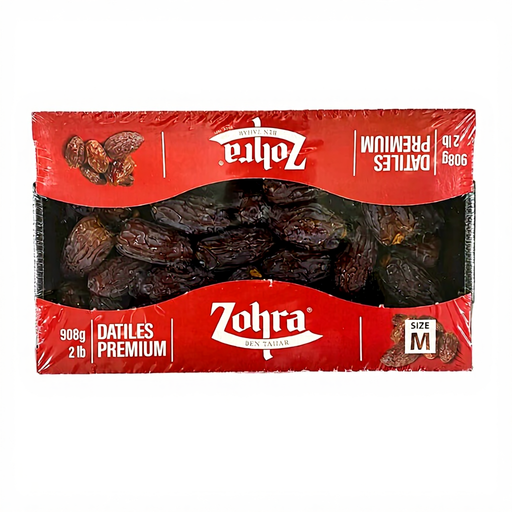
The product name specifies Medjool dates and a 908 g pack.
For children aged 4 to 12, the Netherlands Nutrition Centre advises no more than one handful of dried fruit with no added sugar a day. That’s the amount for the whole day, not for each break; a portion listed on a product isn’t a personal nutritional guideline.
No. Dried fruit can contain naturally occurring sugars. Lidl makes this distinction for its Alesto dried mango strips too.
Check the ingredients and allergen warning on the packaging of the exact product. The AH apricot mix reviewed contains sulphites, and the Jumbo boxes list various allergens that may be present. The NVWA explains that allergen information for pre-packed products should appear on the label.
Follow the instructions on the product label. For PLUS Sultana raisins, the storage advice is to keep them in a cool, dry, dark place; don’t automatically apply this instruction to every type of dried fruit.
Think of it as a way to add variety, rather than an automatic replacement. The Netherlands Nutrition Centre recommends fresh fruit because it contains more vitamin C, some of which is lost during drying.