What should you look for when choosing?
First, identify the substance you want to avoid and check the relevant product information. Then consider the portion size, packaging and storage.
| What to consider |
What should you check? |
Who is this most relevant to? |
| A specific allergen |
Read the ingredients and allergen information on the exact packaging, and look out for any warnings relevant to you. |
If you’re putting together a school lunch for someone with a specific food allergy, you’ll want to know whether the product information addresses that allergen. Around 28% of consumers prioritise suitability for a specific allergen. |
| Sulphites |
Check the ingredients and allergen information for sulphites, sulphur dioxide and E220–E228. |
If you need to avoid sulphites, look beyond the colour or type of fruit and check both sections of the label. Around 22% of consumers name avoiding sulphites as their first selection criterion. |
| Gluten or lactose |
Look for the relevant claim on the exact packaging and assess any other warnings separately. A milk allergy also involves milk proteins. |
If gluten or lactose is your deciding factor, an explicit claim can help you compare products. Around 22% of consumers give avoiding gluten or lactose their highest priority. |
| Sugars and portion size |
Compare added and total sugars per 100 grams separately. The Netherlands Nutrition Centre recommends a maximum of 20 grams of dried fruit a day. |
If you’re keeping an eye on added sugar and portion size at lunchtime, you’ll also want to know how much total sugar the product contains. Around 17% of consumers prioritise nutritional value and portion control. |
| Packaging and storage |
Compare the pack weight with how often you’ll use it, and follow the storage instructions for the exact product. |
If you’re mainly looking for packaging that suits portioning and keeping a stock at home, pack size and storage matter. Around 11% of consumers give these practical considerations the most weight. |
Dried fruit at Joybuy
These Joybuy products, made with dried strawberry and guava, are options if you’re looking for variety in a school lunch. Check the ingredients and allergen information for the exact product to see whether it’s suitable for the substance you want to avoid.
 No image available
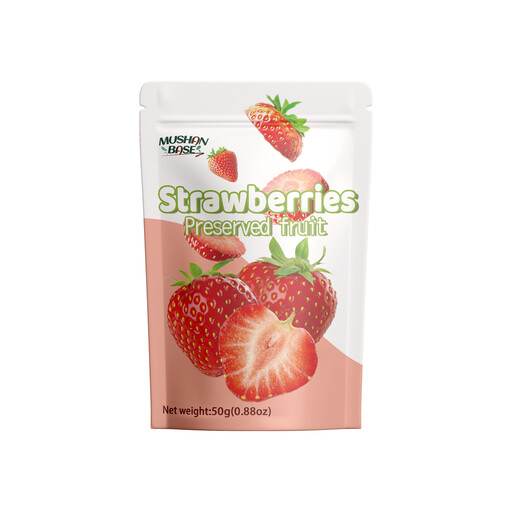
MUSHAN BASE Dried Strawberry Slices 50g
An option with dried strawberry slices if you’re looking for a fruit other than raisins for a school lunch.
The product description lists sugar as an ingredient, so this isn’t the right choice if you want to avoid added sugar. The packaging is described as resealable.
View at Joybuy
 No image available
OHLA Dried Guava 180g
An option with dried guava if you’re looking for dried fruit to take on the go or pack in a school lunch.
The product description lists guava, sugar and a preservative as ingredients. Check the product information to make sure it suits your specific dietary requirements.
View at Joybuy
Frequently asked questions
Does lactose-free mean suitable for someone with a milk allergy?
No. Lactose intolerance relates to milk sugar; a milk allergy is a reaction of the immune system to milk proteins. If you have a milk allergy, check the information about milk and any relevant warnings, not just the lactose-free claim.
What do the warnings ‘May contain X’ and ‘Not suitable for people with an X allergy’ mean?
The Netherlands Food and Consumer Product Safety Authority lists these phrases for precautionary allergen labelling. Since 1 January 2026, the NVWA has monitored how the new rules are applied. A warning must be based on a risk assessment; it cannot be used if reference values are not exceeded. The absence of a warning does not mean that every allergen is absolutely absent.
What rules apply to the ‘gluten-free’ claim?
The European Commission cites Implementing Regulation (EU) 828/2014 as the legislation governing gluten-free and low-gluten claims. The regulation has applied since 20 July 2016; Regulation (EC) 41/2009 was repealed at that time. The Association of European Coeliac Societies explains the gluten-free threshold as a maximum of 20 ppm, or 20 mg/kg. This threshold does not apply to other allergens.
How much dried fruit should you pack?
The Netherlands Nutrition Centre recommends a maximum of 20 grams of dried fruit a day. Use this as a guide for a small addition to lunch, not as a legal product limit or a meal replacement. The AH raisins checked list a 25-gram serving; this is the product’s stated serving size and differs from the dietary recommendation.
How should you store an opened bag of raisins?
The Albert Heijn, PLUS and Jumbo raisins checked say to store them in a cool, dry, dark place. Always follow the storage instructions on the packaging of the product you have.


