Who is this relevant to?

Travellers who need to avoid an allergen

Before you set off, you want to check that the ingredients and warnings about possible traces are suitable for your specific food allergy. Sulphites need to be checked separately; Stichting Voedselallergie describes sulphites, among other things, as preservatives.

People looking for gluten-free or lactose-free snacks

You’re looking for a specific claim that meets your dietary needs, not just a short ingredients list. For example, a lactose-free claim doesn’t automatically tell you whether a product is suitable if you have a milk allergy.

Travellers who want to plan portions and ingredients

When you’re on the road, you want to know what has been added to your snack, how much to take and how to store the packaging. Unsweetened doesn’t mean dried fruit contains no naturally occurring sugars.

What should you look for when choosing?

What to consider What to look for Who is this most important for?
Allergens and cross-contamination Check both the ingredients and any warnings about possible traces. Check sulphites separately if you need to avoid them. If you need to take a specific food allergy or sulphite sensitivity into account, check both parts of the packaging; around 36% of consumers put this first.
Gluten-free or lactose-free claim Look for the claim on the exact variant and check any other relevant allergens separately. If you need a specific gluten-free or lactose-free claim, you won’t want to rely on a short ingredients list alone; around 29% of consumers prioritise this dietary need.
Added sugar and portion size Check the ingredients and nutrition table separately. Unsweetened doesn’t mean sugar-free; weigh out a portion if you wish. If you want to avoid added sugar and measure how much you have, check both parts of the label; around 21% of consumers put this at the top of their list.
Portioning and storage Follow the storage and use-by instructions on the packaging. Don’t assume it will keep for a certain length of time in a warm car. For a road trip, you may want to portion snacks in advance and store the packaging as directed on the label; this is the top priority for around 14% of consumers.

Common mistakes when choosing

  • Assuming a short ingredients list means a product is allergen-free

    A product may contain just one fruit ingredient and still carry a warning about possible traces of peanuts or nuts. The ingredients list and information about possible cross-contamination answer different questions.

    Read both parts of the current packaging and assess the information in relation to the allergen you need to avoid.

  • Treating free-from claims as interchangeable

    Lactose intolerance concerns milk sugar; a milk allergy concerns milk proteins. A gluten claim or information about sulphites won’t automatically answer questions about other allergens either.

    First work out which substance you need to avoid, then check the product information that relates specifically to it.

  • Taking unsweetened to mean you can snack without limits

    Unsweetened dried fruit can still contain naturally occurring sugars. The Voedingscentrum recommends a maximum of 20 grams of dried fruit a day; this is dietary advice, not a legal product requirement.

    Check the ingredients and nutrition table, and portion out an amount that suits your plans in advance if needed.

  • Assuming cupboard storage advice applies to a warm car

    For dried mixed fruit, the Voedingscentrum recommends storing it in a cool, dry, dark place in a tightly sealed container. This advice is no guarantee that it can be stored in a car.

    Follow the instructions on the packaging and plan a suitable place to store it during your journey.

Relevant brands to compare

Albert Heijn

AH Biologisch Mango gedroogd & ongezoet is a mango option with specific dietary claims on the 130 g pack we reviewed.

  • Albert Heijn describes it as gluten-free and lactose-free, and lists mango as an ingredient.
  • The product information warns of possible traces of peanuts and several types of nuts. This is not a general allergen-free guarantee.

Jumbo

Jumbo Gedroogde Mango 125 g is an option to consider if you’re looking for a simple mango recipe.

  • The ingredients list names dried mango.
  • Jumbo warns of possible traces of peanuts and various nuts. So, a one-ingredient recipe doesn’t mean the product is suitable for every allergy.

PLUS

PLUS Sultana raisins come in a 375 g resealable pouch that you can portion yourself.

  • PLUS lists raisins and sunflower oil as ingredients and describes the product as gluten-free and lactose-free. The product page also states that no sugars have been added.
  • These dietary claims are not a general guarantee for other allergens.

Lidl

Lidl lists Alesto Gedroogde mango 125 g as an in-store product.

  • The product information confirms the product name, pack size and in-store availability.
  • Assess whether it’s suitable for your allergy by checking all the information on the packaging of the variant you buy.

ALDI

ALDI lists Trader Joe’s raisins in a 500 g pack, which you can portion yourself.

  • The product information confirms the raisin variety and pack size.
  • Check the product information on the packaging to see whether it meets your specific dietary or allergen needs.

Dirk

Dirk lists 1 de Beste Rozijnen sultana in a 375 g pack.

  • The product information confirms the product and pack size.
  • Check the ingredients and allergen information on the packaging of the variant you buy.

Joybuy products for on the go

These Joybuy products are freeze-dried jackfruit in packs that are handy for taking on the go. If you have an allergy, always check the latest product information and packaging.
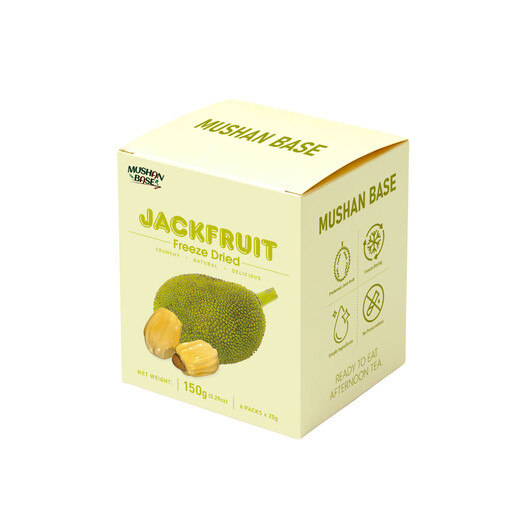
MUSHAN BASE freeze-dried jackfruit, 150 g (25 g × 6)

MUSHAN BASE Freeze-Dried Jackfruit, 150 g (25 g × 6)

The six individual sachets make it easy to take portions with you on the go. The product description lists 100% jackfruit as the ingredient and says no sugar has been added. The allergen information is not a general guarantee; check the current packaging for the specific allergens you need to avoid.

Pack: six 25 g sachets. Storage: keep in a cool, dry place out of direct sunlight; consume an opened sachet straight away.

View at Joybuy
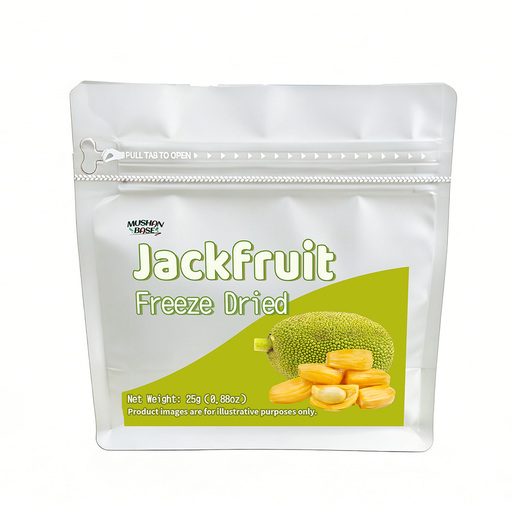
MUSHAN BASE freeze-dried jackfruit, 25 g

MUSHAN BASE Freeze-Dried Jackfruit, 25 g

The 25 g sachet is a ready-to-eat portion for when you’re on the go. The product description lists jackfruit as the only ingredient and says no sugar has been added. The allergen information is not a general guarantee; check the current packaging for the specific allergens you need to avoid.

Pack: one 25 g sachet. Storage: keep in a cool, dry place out of direct sunlight.

View at Joybuy

Frequently asked questions

Does lactose-free mean suitable for someone with a milk allergy?

No. Lactose intolerance concerns milk sugar; a milk allergy concerns milk proteins. The Voedingscentrum makes this distinction. If you have a milk allergy, check the relevant ingredients and allergen information rather than relying on the lactose-free claim alone.

What do warnings about possible cross-contamination mean?

They indicate that an allergen may be present and are a separate point to consider alongside the ingredients list. Since 1 January 2026, the NVWA has overseen the Dutch policy on precautionary allergen labelling; under this policy, warnings must be supported by a risk assessment. A warning or claim of this kind is not a general guarantee that a product is suitable for every individual allergy.

Can unsweetened dried fruit still contain sugar?

Yes. No added sugar doesn’t mean there are no naturally occurring sugars. PLUS says that no sugars have been added to its Sultana raisins, while the nutrition table also lists total sugars. The Voedingscentrum recommends a maximum of 20 grams of dried fruit a day; this is dietary advice, not a legal limit.

How should you store dried fruit on a road trip?

Follow the storage instructions on the packaging and keep it tightly sealed. For dried mixed fruit, the Voedingscentrum recommends storing it in a cool, dry, dark place. This advice doesn’t cover storage in a warm car, so don’t assume a car is a suitable place to keep it.

Are there conditions for making a gluten-free claim?

Yes. Implementing Regulation (EU) No 828/2014 sets out conditions for gluten claims and has applied since 20 July 2016. The European Commission states that Regulation (EC) No 41/2009 was repealed on that date. A gluten-free claim answers the question about gluten, not automatically questions about other allergens.

What should you do if you see a product safety warning?

Check the NVWA warning and compare it with the exact product variant and any batch details. A warning about one product or batch does not, on its own, apply to all products from the same supermarket or brand.
