Who is this advice for?

Checking specific dietary needs

For anyone who needs to check for gluten, lactose, sulphites or another specific ingredient before taking dried fruit with them. Start with your own dietary restriction and the label on the exact variant, rather than a general claim such as free from.

For when you’re in a hurry

For anyone who wants to grab a small pack in the morning without weighing it out. Small boxes can make this easier, but the ingredients and allergen information still matter.

No extra sweetness

For anyone who wants to avoid added sugar and take a limited amount with them. A ‘no added sugar’ claim doesn’t mean the product contains no sugars, and says nothing about allergens.

What should you look for in dried fruit to take with you?

What to consider What should you check? Who is this important for?
Your specific dietary needs Check the ingredients, dietary claims and any warnings on the packaging for the exact variant. If I need to avoid gluten, lactose or another specific ingredient, I want to be able to check all the information; around 28% of consumers put dietary suitability first.
Sulphites Look for sulphites, sulphur dioxide or E220–E228 in the ingredients and allergen information. Anyone who needs to avoid sulphites shouldn’t rely on a different free-from claim; around 17% of consumers prioritise avoiding sulphites.
Convenience on the go Check the contents of each box and the number of portions; also check the ingredients in the full fruit mix. If I want to take something with me in the morning without weighing it out, small portions are handy; around 22% of consumers put convenience on the go first.
Added and total sugars Compare the amount of added sugars with the total sugars per 100 g and the amount you plan to take with you. Both figures are useful if you want to avoid extra sweetness and limit how much you eat; around 22% of consumers see this as their main consideration.
Packaging and storage Choose a pack size that suits how you use the product and follow the storage instructions for the exact variant. If I choose a larger pack, I want to be able to use and store its contents as directed; around 11% of consumers focus mainly on managing their supplies and spending.

Common mistakes when buying dried fruit

  • Assuming one free-from claim makes a product suitable for every diet

    Albert Heijn’s Hamsterchef mix is labelled gluten-free and lactose-free, but Albert Heijn also lists sulphites in the product. Those claims don’t automatically answer questions about other allergens or dietary restrictions.

    Check for the substance you personally need to avoid, and read the full ingredients and allergen information for the exact variant.

  • Confusing unsweetened with sugar-free

    Albert Heijn lists 0 g of added sugars for AH Raisins, but also 59 g of total sugars per 100 g. The Netherlands Nutrition Centre advises eating no more than a handful of dried fruit.

    Use the ingredients list to check for added sweeteners and the nutrition table to check total sugars. Then take an amount that suits how you plan to use it.

  • Relying on an old product page when choosing what to buy now

    Albert Heijn’s page for AH Unsulphured Apricots states that the product is no longer in its range. So an existing page doesn’t necessarily mean a product is currently available to buy.

    Check whether the exact variant is still being sold, and assess any alternative using its own label.

  • Treating the stated portion as dietary advice

    Albert Heijn lists a portion size of 50 g for AH Raisins. The Netherlands Nutrition Centre advises eating no more than a handful of dried fruit; a portion shown on a product page isn’t automatically general dietary advice.

    Distinguish between the portion information provided by the retailer and dietary advice, and only take as much as you plan to use.

Brands to consider

Albert Heijn

The range reviewed includes raisins to portion yourself and Hamsterchef boxes that are ready to take with you.

  • Albert Heijn lists gluten-free and lactose-free attributes for AH Raisins; the Hamsterchef variant comes in ten 14 g boxes.
  • Albert Heijn lists sulphites in the Hamsterchef mix. The page for AH Unsulphured Apricots states that the product is no longer in its range.

Jumbo

Jumbo Sultana raisins are an option if you want to prepare small breakfast portions yourself.

  • Jumbo lists raisins and cottonseed oil as ingredients in its 250 g Sultana variant.
  • That ingredients list isn’t an analytical declaration that the product is sulphite-free, nor does it automatically make it suitable for every diet.

Lidl

Alesto includes dried fruit and nuts, so you’ll need to check the specific product variant and packaging.

  • Lidl describes Alesto products as snacks or toppings.
  • The range also includes nuts; being positioned as a snack doesn’t confirm that a product is suitable for someone with an allergy.

ALDI

ALDI lists Trader Joe’s sun-dried apricots in a 250 g pack.

  • ALDI’s product description says the dried apricots are soft.
  • This description doesn’t clarify whether they contain sulphites or gluten, or whether they’re suitable for other dietary restrictions.

PLUS

PLUS Dried Apricots are worth considering if you choose apricots and check the ingredients information.

  • PLUS lists 0 g of added sugars per 100 g.
  • PLUS also lists E220 and sulphur dioxide and sulphites, so no added sugar doesn’t mean sulphite-free.

Dirk

Dirk lists 1 de Beste White Raisins in a 375 g pack.

  • Dirk lists the product name and pack size.
  • The product description doesn’t prove that the product is suitable for a specific allergy or dietary restriction; check the information for the variant you choose.

Dried fruit at Joybuy

These product picks focus on freeze-dried jackfruit, ready to add to yoghurt or breakfast cereal, or to take with you.
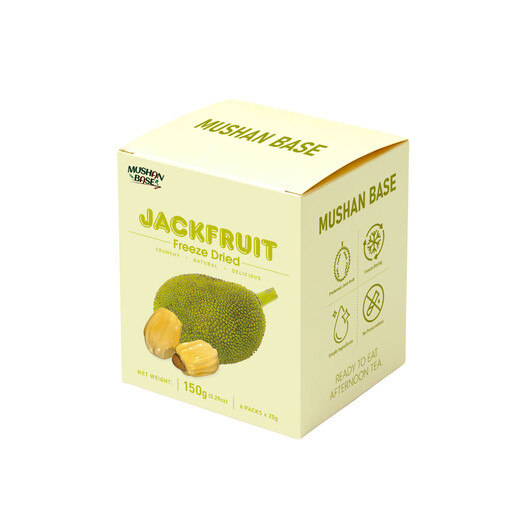
MUSHAN BASE freeze-dried jackfruit 150g, six 25g portions

MUSHAN BASE freeze-dried jackfruit 150g (25g x 6)

The product information says the jackfruit is ready to eat and suitable for yoghurt or breakfast cereal.

Ingredients: 100% jackfruit, according to the product information.

Pack size: 150 g, divided into six 25 g portions.

The product information states that there is no added sugar and lists 65,0 g of sugars per 100 g. No added sugar doesn’t mean sugar-free.

View at Joybuy
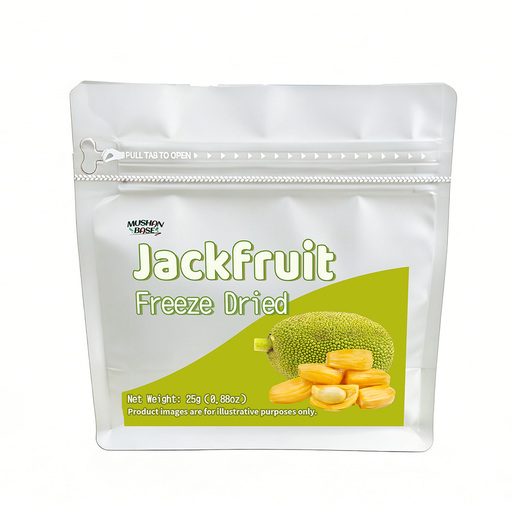
MUSHAN BASE freeze-dried jackfruit 25g

MUSHAN BASE freeze-dried jackfruit 25g

The product information says the pouch is ready to eat and suitable for yoghurt or breakfast cereal.

Ingredients: 100% jackfruit, according to the product information.

Pack size: one 25 g pouch.

The product information states that there is no added sugar and lists 35,0 g of sugars per 100 g. No added sugar doesn’t mean sugar-free.

View at Joybuy

Frequently asked questions

Does lactose-free mean a product is suitable for someone with a milk allergy?

No, you can’t tell that from a lactose-free claim. According to the Netherlands Nutrition Centre, lactose intolerance relates to milk sugar, whereas a milk allergy is a reaction to milk proteins. So check the information relevant to your specific dietary restriction.

What do cross-contamination warnings mean?

They indicate a possible risk and aren’t the same as an ingredient that has been deliberately added. For the Netherlands, the NVWA describes warnings such as ‘May contain X’ and ‘Not suitable for people with an X allergy’; the rules described apply from 1 January 2026. Also read the rest of the allergen information on the exact packaging.

What is the threshold for a ‘gluten-free’ claim?

Under harmonised EU rules, ‘gluten-free’ may be used when a food, as sold to consumers, contains no more than 20 mg of gluten per kg. The European Commission identifies Regulation (EU) No 828/2014 as the applicable framework; the Food Safety Authority of Ireland explains the same EU threshold. A gluten claim doesn’t automatically answer questions about other allergens.

When must sulphites be listed on the packaging?

According to the Food Safety Authority of Ireland’s explanation of EU labelling rules, sulphur dioxide or sulphites must be listed using their full name when present above 10 mg/kg or 10 mg/l, expressed as SO₂. This labelling threshold isn’t a personal safe-consumption limit; check the information and, if necessary, follow advice that applies to your circumstances.

Are organic AH Raisins lower in sugar than the regular variant?

Not according to the product information for the two Albert Heijn variants reviewed: both list 59 g of sugars and 0 g of added sugars per 100 g. Based on these figures, the organic label isn’t a reason to assume a lower sugar content.

How should you store a larger pack to use over several mornings?

Follow the instructions for the exact variant. Albert Heijn advises storing AH Raisins in a cool, dark and dry place; Jumbo gives similar storage instructions for Sultana raisins, as does PLUS for dried apricots. Don’t automatically apply those instructions to a different type of product or one with a higher moisture content.

What should you do if product information differs between sources?

Before using the product, check the packaging for the variant you have. If the ingredients or allergen information is contradictory, ask the retailer for clarification. Albert Heijn and PLUS state that product information may change.
