Who is this relevant to?

Movie night after a workout

You want a snack that also provides some protein after your training. Check how much protein is in the portion you’ll actually eat, and treat the fruit as an addition rather than assuming it will support your recovery. The Vereniging Sportvoedingsexperts Nederland provides information about nutrition and recovery.

A fruity snack with no added sugar

You’re looking for dried fruit with no added sugar, but also want to keep an eye on your portion and total sugar intake. The ingredients list and nutrition table answer different questions. Information about the AH and PLUS varieties examined comes from Albert Heijn and PLUS.

A sharing platter for movie night

You want to choose a suitable pack for movie night and check allergens and storage instructions for after opening. Check the information on the exact pack, particularly for sulphites, possible stone fragments and storage instructions. The NVWA explains allergen labelling on prepacked products.

What should you look for when choosing?

Plain dried fruit

A good fit if: you mainly want a fruity snack and get your protein from other parts of your diet.

Bear in mind: a small portion of the apricots examined provides little protein. No added sugar doesn’t mean low in total sugars.

Fruit with a separate source of protein

A good fit if: after exercise, you’re mainly focused on the protein in your whole snack.

Bear in mind: the protein won’t necessarily come from the fruit. Check the ingredients, allergens and storage advice for both parts of the snack.

What to consider What should you look for? Who is this important for?
Protein per portion Compare protein per 100 g and per the amount you plan to eat. Assess any combination as a whole. If you want your snack to work after exercise, you’ll want to know what your planned portion actually provides. Around 40% of consumers put protein content first.
Sugars and portion size Check both the ingredients and total sugars in the nutrition table. If you want to eat a set amount, portion it out in advance. If you want to take the total sugars and amount of your fruity snack into account, both details matter. Around 30% of consumers give sugar and portion size top priority.
Ingredients and allergens Check the exact pack for allergens and warnings about possible cross-contamination. If you or a guest needs to consider ingredients or allergens, you’ll want to check the product information before serving. Around 20% of consumers put ingredient safety first.
Packaging and storage Choose a pack size to suit how much you expect to use, and follow the storage instructions after opening. If you mainly want a pack that suits your movie night and any leftovers, pack size and storage advice are practical considerations. Around 10% of consumers consider packaging and storage the most important factors.

Common mistakes

  • Confusing protein per 100 g with what your snack provides

    A 20 g portion of the apricot varieties examined provides less than 1 g of protein.

    Work out the amount you actually plan to eat, and consider any additional source of protein separately.

  • Assuming no added sugar means low in total sugars

    The AH and PLUS varieties examined state 0 g of added sugars, but contain 37 g and 53.4 g of total sugars per 100 g respectively. These figures apply to those specific products.

    Check both the ingredients and nutrition table, and portion out the fruit in advance if you want a set amount.

  • Storing soaked and regular dried apricots in the same way

    After opening, the AH soaked apricots examined must be refrigerated at a maximum of 7 °C. The Jumbo and PLUS products examined state that they should be stored in a cool, dry, dark place.

    Follow the storage instructions on the exact pack rather than applying one general rule to every variety.

  • Assuming pitted means there can’t be any stone fragments

    For the variety examined, AH warns that a stone may have been left in by accident; Jumbo mentions possible stone pieces or fragments.

    Bear the warning on the pack in mind when serving.

Supermarket brands as a guide

Albert Heijn

The range includes soaked dried apricots and fruit and nut mixes.

  • According to Albert Heijn, the product information for the soaked apricots examined states that they contain 4 g of protein per 100 g and gives specific storage instructions for after opening.
  • That protein figure applies to this variety and not automatically to other products from the brand. A fruit and nut mix is not necessarily a high-protein choice either.

Jumbo

According to Jumbo, the pitted dried apricots examined are available in a 250 g pack.

  • The product information gives nutritional values per 100 g and per 20 g, as well as allergen details and a warning about possible stone fragments.
  • The rounded figures in the table show 0.6 g of protein per 20 g, which is a limited amount if you’re mainly looking for protein.

Lidl

According to Lidl Netherlands, the Alesto range includes dried fruit such as mango strips.

  • The range page makes it easy to spot dried fruit in the selection.
  • The range information alone doesn’t provide a protein figure or evidence to support a protein claim for a specific product.

Aldi

ALDI describes TRADER JOE'S Sun-Dried Apricots as soft dried apricots in a 250 g pack.

  • The product description gives the name, pack size and description for this variety.
  • The description is not an independent taste assessment and doesn’t support a protein claim.

PLUS

The PLUS Dried Apricots pouch examined contains 375 g.

  • For this variety, PLUS lists the ingredients, sulphites and nutritional values. The table states 3.4 g of protein per 100 g and 0 g of added sugars.
  • The larger pack is a choice of pack size, not proof of a better nutritional profile.

Dirk

Dirk’s category overview shows different types of dried fruit and nuts, including pitted apricots, dates and figs.

  • The overview gives examples of categories and pack sizes to explore when choosing.
  • General range information is not a nutritional comparison of individual products.

Dried fruit at Joybuy

These product picks focus on plain dried fruit as a fruity snack for movie night. Check the protein content, ingredients and portion size for each variety.
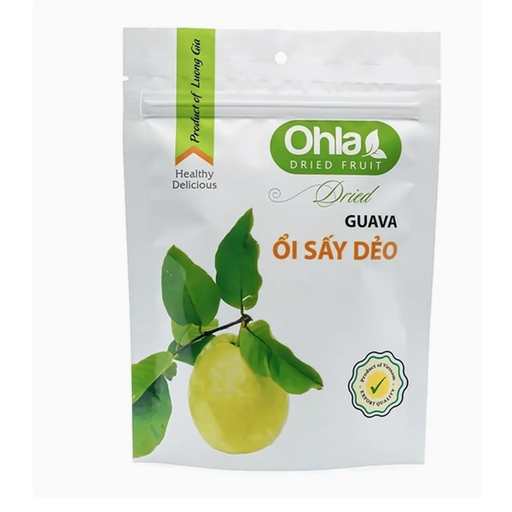
OHLA Dried Guava 180g

OHLA Dried Guava 180g

The product description presents dried guava as a ready-to-eat snack. Check the ingredients if you’re keeping an eye on added sugar.

The stated nutritional value is 1.27 g of protein per 100 g.

View at Joybuy
PHILIPPINE BRAND Dried Mango 100 g

PHILIPPINE BRAND Dried Mango 100 g

The product description presents the individually wrapped mango as a ready-to-eat snack. Check the pack for ingredient information.

The stated nutritional value is 2 g of protein per 100 g. The product information states that it contains 56 g of sugar per 100 g.

View at Joybuy
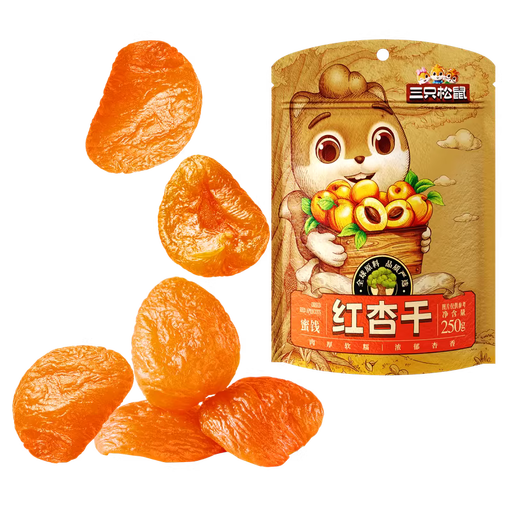
Three Squirrels Red Apricot Dried 250 g

Three Squirrels Red Apricot Dried 250 g

The product description presents the dried apricots as ready to eat and suitable for sharing.

The stated nutritional value is 1.1 g of protein per 100 g. The product information states that it contains 62.0 g of sugars per 100 g, as well as added sugar and sulphites.

View at Joybuy
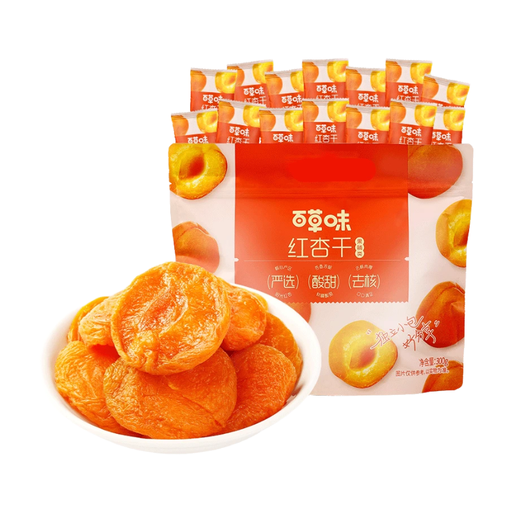
Be&Cheery Dried Red Apricots 300 g

Be&Cheery Dried Red Apricots 300 g

The product description presents the dried apricots as ready to eat. Follow the storage instructions provided.

The stated nutritional value is 0.9 g of protein per 100 g. The ingredients list includes sugar, maltose syrup and sulphites.

View at Joybuy
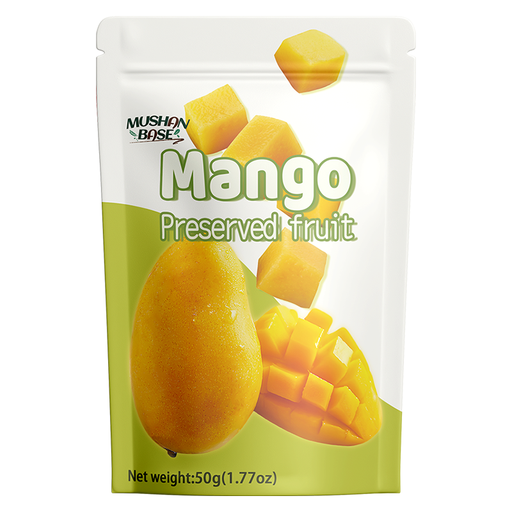
MUSHAN BASE Dried Mango 50 g

MUSHAN BASE Dried Mango 50 g

The product description presents the individually packed dried mango as a ready-to-eat snack.

The stated nutritional value is 1.0 g of protein per 100 g. The product information states that it contains 36.3 g of sugars per 100 g, as well as added sugar.

View at Joybuy

Frequently asked questions

How much protein is there in 20 g of the apricots examined?

For the varieties examined, a calculated 20 g portion of AH Soaked Dried Apricots provides 0.8 g of protein, while PLUS Dried Apricots provides a calculated 0.68 g. The rounded Jumbo portion table states 0.6 g. These figures apply only to the varieties named and come from Albert Heijn, PLUS and Jumbo.

Is eating more dried fruit a good way to increase my protein intake?

Not if you’re looking for a substantial amount of protein: the apricot varieties examined provide less than 1 g per 20 g. Consider adding a separate source of protein and assess the whole snack. Voedingscentrum advises eating a maximum of 20 g of dried fruit a day. This is dietary guidance, not a legal consumption limit.

Do I need to refrigerate all dried apricots after opening?

Follow the instructions on the exact pack. For the soaked apricots examined, Albert Heijn advises refrigerating at a maximum of 7 °C. The Jumbo and PLUS products examined state that they should be stored in a cool, dry, dark place.

Does ‘no added sugar’ also mean that apricots are low in sugar?

No. Both the AH and PLUS varieties examined state 0 g of added sugars, but contain 37 g and 53.4 g of total sugars per 100 g respectively. Check both figures for those products.

What allergen information should I check before serving?

Check the ingredients and any cross-contamination warnings on the exact pack. According to the NVWA, allergen information for prepacked products must appear on the label; sulphites are among the allergens that must be listed. The apricot varieties examined state that they contain sulphites.

How do I choose a pack that suits my movie night?

Choose a pack size to suit how much you expect to use, and bear the storage advice for after opening in mind. The AH and Jumbo packs examined contain 250 g; the PLUS pouch contains 375 g.
