Dried fruit isn’t necessarily a main source of protein for a sports-focused snack: check the nutritional information for the exact variety and calculate how much your portion provides. Your overall diet matters for recovery, as do the ingredients, allergens and whether you can safely keep any chilled additions refrigerated.
Who is dried fruit for the road relevant to?
Sports enthusiasts planning a stop
You’re combining a drive with an intense sporting activity and want to know how much protein your snack actually provides. Assess your portion and your overall diet, not just the name on the packaging. The Netherlands Nutrition Centre discusses the role of protein in sportspeople’s everyday diets.
Travellers without refrigeration
You’re looking for a snack that suits the packaging and storage conditions during your journey. Dried fruit and chilled additions need to be handled differently, so follow the storage instructions on the packaging for the specific variety.
Label-conscious snack planners
You want to plan portions in advance and check the ingredients, nutritional values and any relevant allergens. Compare the exact variety: the Netherlands Food and Consumer Product Safety Authority notes that allergen information for prepacked products appears on the label.
What should you look for when buying?
Start with the protein per 100 g and calculate what that means for your portion. Then check that the ingredients, packaging and storage advice suit your journey.
Dried fruit as a snack on its own
A good choice when: you’re mainly looking for a fruit snack and get your protein from other meals and snacks.
Bear in mind: the protein per 100 g doesn’t tell you how much your portion contributes. Nutritional information for another variety isn’t a specification for this product.
Fruit with unsalted nuts
A good choice when: you want to pair fruit with a plant-based protein source; the Netherlands Nutrition Centre lists unsalted nuts as an example of one.
Bear in mind: check the proportions, the nutritional information for the complete mix and the allergen information. The presence of nuts alone doesn’t prove that the product can be described as a source of protein.
Fruit with quark or yoghurt
A good choice when: you can take a chilled addition with you and keep it refrigerated during a stop.
Bear in mind: the Netherlands Nutrition Centre recommends keeping highly perishable food at 4 °C and throwing it away if it has been out of the fridge for more than 2 hours. This isn’t storage advice for dried fruit.
| What to consider |
What to look for |
Who is it most relevant to? |
| Protein in your portion |
Compare the exact variety per 100 g. PLUS lists 2.8 g of protein per 100 g for BIO+ Sultana raisins; a 30 g portion of your choosing provides a calculated 0.84 g. |
When I choose fruit for a sports-focused snack, I want to know what my portion contributes. Around 36% of consumers prioritise protein content. |
| Packaging and storage |
Read the storage advice for the exact variety. For opened dried tutti frutti, the Netherlands Nutrition Centre gives a storage period of 6–9 months in a kitchen cupboard; this doesn’t automatically apply to other fruit or a hot car. |
When I don’t have refrigeration on the go, I want to choose a snack whose packaging and storage advice suit my journey. Around 29% of consumers make transport and storage their top priority. |
| Ingredients and allergens |
Check the full ingredients list and allergen information on the packaging. The NVWA lists sulphites and nuts among the substances consumers must be given information about. |
When ingredients matter to me personally, I want to check the specific variety rather than rely on the type of fruit or the brand name. Around 21% of consumers prioritise ingredient suitability. |
| Portion, sugars and energy |
Calculate the nutritional values for the same planned portion. For the BIO+ Sultana raisins mentioned above, PLUS lists 68.2 g of sugars and 342 kcal per 100 g. |
When I portion out my snack in advance, I want to know how much I’ll actually take with me and eat. Around 14% of consumers give portion control top priority. |
Common buying mistakes
-
Confusing the value per 100 g with the amount in your portion
The amount of protein in a portion depends on how much you eat. What’s more, general nutritional information isn’t a specification for a particular supermarket product.
Calculate the value on the label for the portion you actually plan to eat, then assess it as part of your whole snack.
-
Assuming no added sugar means low total sugars
PLUS lists 68.2 g of total sugars per 100 g for BIO+ Sultana raisins, even though the product information says the sugars are naturally present.
Read both the ingredients list and the nutrition table, and compare the values for your planned portion.
-
Treating a chilled addition like a dry snack
Quark and yoghurt have different storage requirements from dried fruit. The Netherlands Nutrition Centre recommends keeping highly perishable food at 4 °C and throwing it away if it has been out of the fridge for more than 2 hours.
Only take a chilled addition with you if you can keep it refrigerated, or plan to eat it straight away.
-
Applying the nutritional values of one variety to another
A general table, a label for raisins and information about soaked apricots don’t describe the same product.
Check the exact product name and variety, as well as the ingredients and nutritional information basis on the packaging.
Brands to consider
Albert Heijn
The range includes products such as AH Soaked Dried Apricots and AH Raisins.
- The official product information confirms the range of soaked dried apricots.
- Assess dry and soaked varieties separately. Albert Heijn advises checking the current packaging, as product information can change.
Jumbo
The range information shows sultana raisins in a variety of pack sizes.
- Jumbo lists 250, 500 and 750 g packs.
- Pack size and variety can help you plan portions, but they don’t provide a basis for describing one variety as higher in protein.
Lidl
Alesto offers dried fruit and nuts, including mango strips.
- Lidl describes its mango strips as suitable for eating on the go.
- That’s Lidl’s description, not an independent product test. The fact that the range includes fruit and nuts doesn’t prove a protein claim for a specific mix.
Aldi
The product information lists raisins and several varieties with cranberries or a cranberry and raisin mix.
- ALDI describes a 200 g pack as resealable.
- The product page lists alternative varieties; don’t assume that every variety contains cashews. Check the pack you choose.
Plus
PLUS Dried Apricots are a fruit option worth considering. The separate BIO+ Sultana raisins provide a specific example of nutritional values for that particular variety.
- Ingredients and nutritional values are available for the 250 g pack of BIO+ Sultana raisins.
- The information for the raisins doesn’t apply to PLUS Dried Apricots or the entire range.
Dirk
The product information confirms dried figs in a 350 g pack.
- The official page lists the type of fruit and pack size.
- Dirk doesn’t list a delivery service; this says nothing about whether the figs are nutritionally suitable.
Joybuy products
These product picks are for dried fruit as a standalone snack on the go. Compare the nutritional information for the exact variety and calculate what it means for your portion.
 No image available
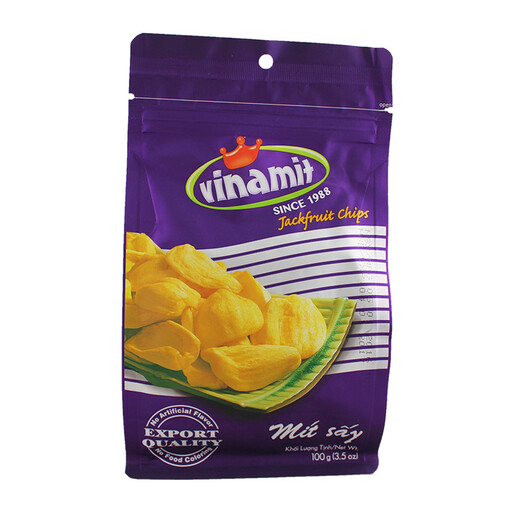
Vinamit Jackfruit Snack In Pieces, 100 g
The product description presents these pieces as a snack for eating on the go.
The listed ingredients are jackfruit and vegetable oil. The product description states 7.1 g of protein per portion; check the portion size in the product information before comparing this with values per 100 g.
Store in a cool, dry place and seal the pack securely after opening.
View at Joybuy
 No image available
OHLA Dried Guava, 180 g
The product description presents dried guava as a snack for eating on the go.
The listed ingredients include 95% guava, sugar and a preservative.
Store in a cool, dry place.
View at Joybuy
 No image available
Three Squirrels Red Apricot Dried, 250 g
These dried red apricots are described as ready to eat.
The product information lists 1.1 g of protein per 100 g. The ingredients include apricots, sugar, malt syrup and sulphites.
The product description advises eating them straight away after opening.
View at Joybuy
 No image available
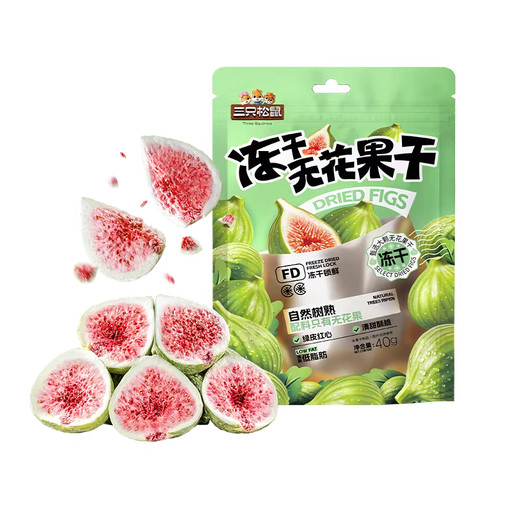
Three Squirrels Freeze-Dried Figs, 40 g
The product description presents the freeze-dried figs as a snack for eating on the go.
The listed ingredients are 100% figs. The product information states 4.8 g of protein per 100 g.
Store in a cool, dry place and eat straight after opening, as advised in the product description.
View at Joybuy
 No image available
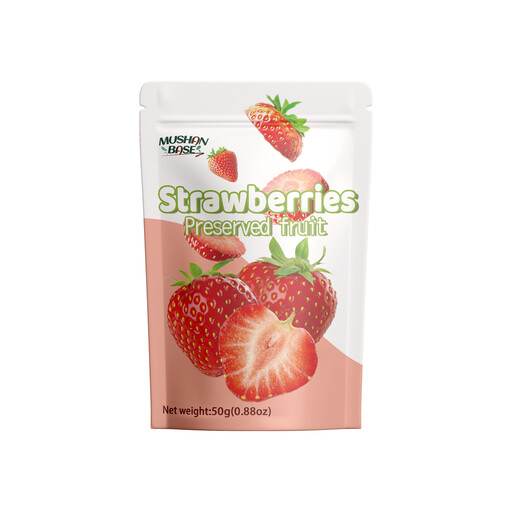
MUSHAN BASE Dried Strawberry Slices, 50 g
The product description presents the strawberry slices as a snack for eating on the go and mentions that the pack is resealable.
The product information states 1.2 g of protein per 100 g. The ingredients list dried strawberries and sugar.
Store in a cool, dry place and seal the pack securely after opening.
View at Joybuy
Frequently asked questions
How do you calculate the protein in your snack portion?
Multiply the protein per 100 g by the weight of your portion, then divide by 100. For PLUS BIO+ Sultana raisins, 2.8 g per 100 g means that a 30 g portion of your choosing provides: 2.8 × 30 / 100 = 0.84 g of protein. Don’t use this value for another variety.
Do you automatically need a special protein snack for a sports stop?
No, not necessarily. According to the Netherlands Nutrition Centre, most sportspeople don’t need special protein shakes or bars if their everyday diet provides enough protein. For intensive sport and individual recovery needs, your overall diet matters; for personalised advice, you can consult a sports dietitian.
Can you take dried fruit with quark on a journey without keeping it chilled?
Treat quark as a highly perishable addition, not like dried fruit. The Netherlands Nutrition Centre recommends keeping chilled food at 4 °C and throwing away highly perishable food if it has been out of the fridge for more than 2 hours. Make sure you have suitable refrigeration if you take quark with you.
How should you store an opened bag of dried fruit?
Follow the instructions for the exact variety. For opened dried tutti frutti, the Netherlands Nutrition Centre advises storing it in a kitchen cupboard for 6–9 months. This period doesn’t automatically apply to soaked fruit, homemade mixes or storage in a hot car.
What should you check if you’re sensitive to sulphites?
Check the ingredients list and allergen information on the specific packaging. Stichting Voedselallergie describes sulphites E220–E228 as preservatives that can be found in dried fruit and may cause intolerance reactions. The NVWA lists sulphites among the substances consumers must be given information about.


