What should you look for when choosing?
First, compare the nutritional value per 100 grams and work out what it is for the amount you actually plan to take with you. Then check the ingredients, storage instructions and allergen information on the packaging of your chosen variety.
| What to consider |
What should you check? |
Who is this important for? |
| Energy in your portion |
Compare the kcal per 100 grams and calculate the value for the number of grams you weigh out. Count your drink separately. |
If I want something small with my drink, I want to know what my weighed portion adds. Around 34% of consumers prioritise the energy in a portion. |
| Added sugar or oil |
Read the full ingredients list; a fruit name doesn’t tell you whether sugar or oil has been added. |
I want to know what else is in my snack besides fruit. Around 20% of consumers prioritise the ingredients list. |
| Storage while you’re out |
Pay particular attention to what the packaging says about storage after opening, and consider the conditions during your outing. |
I’d rather take something with storage instructions I can follow while I’m out. This is the top priority for around 20% of consumers. |
| Sulphites and other allergens |
Read the allergen information on the packaging and check for warnings about the possible presence of other allergens. |
If I need to avoid an allergen, I want to be able to check the information for the exact variety. Allergen information is decisive for around 13% of consumers. |
| Pack size |
Check how many grams are in the bag and weigh out the snack you plan to eat rather than treating the whole pack as one portion. |
I want to take enough to portion out my snack in advance, without treating the whole pack as one portion. This need comes first for around 13% of consumers. |
Joybuy products
These Joybuy products are dried fruit for a weighed snack; the type of fruit, ingredients and nutritional values vary by product.
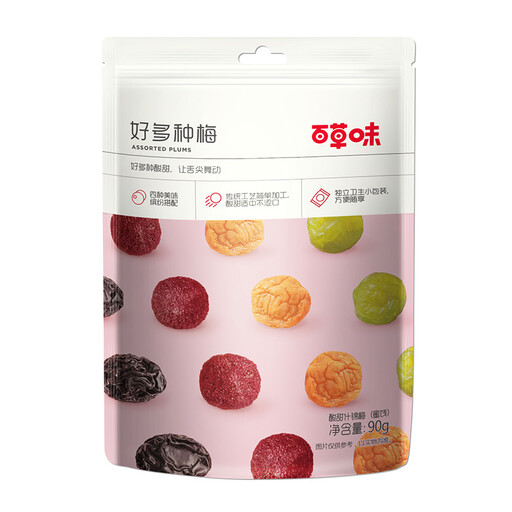 Image unavailable
Be&Cheery Various dried plums 90 g
The listed energy value lets you calculate the energy in a weighed portion: 20 grams works out at around 13.6 kcal.
The product information lists 68 kcal per 100 grams and a pack size of 90 grams. The ingredients include white sugar and sweeteners; the salt content is 3.0 grams per 100 grams.
Joybuy
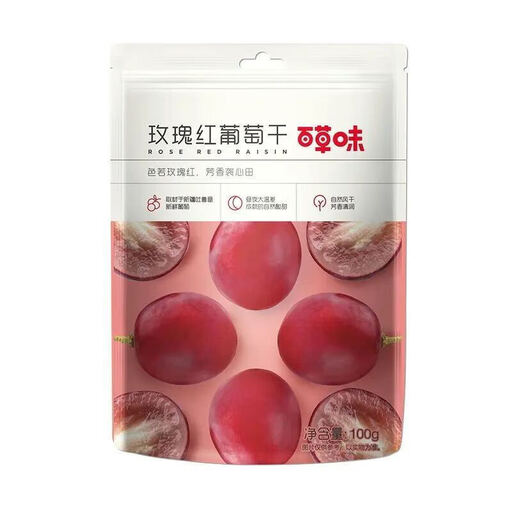 Image unavailable
Be&Cheery Rose Red Raisins 100 g
You can use the listed nutritional value to calculate the energy in a portion you weigh out yourself; 20 grams works out at around 66 kcal.
The product information lists 330 kcal per 100 grams and a pack size of 100 grams.
Joybuy
 Image unavailable
OHLA dried guava 180 g
The nutritional value per 100 grams lets you calculate the energy in a small weighed portion; 20 grams works out at around 61.6 kcal.
The product information lists 308 kcal per 100 grams and 95% guava. The ingredients include added sugar.
Joybuy
 Image unavailable
Three Squirrels dried red apricots 250 g
A weighed portion of 20 grams contains around 62.2 kcal, based on the listed energy value.
The product information lists 311 kcal per 100 grams and a pack size of 250 grams. The ingredients include white sugar, maltose syrup and sulphites.
Joybuy
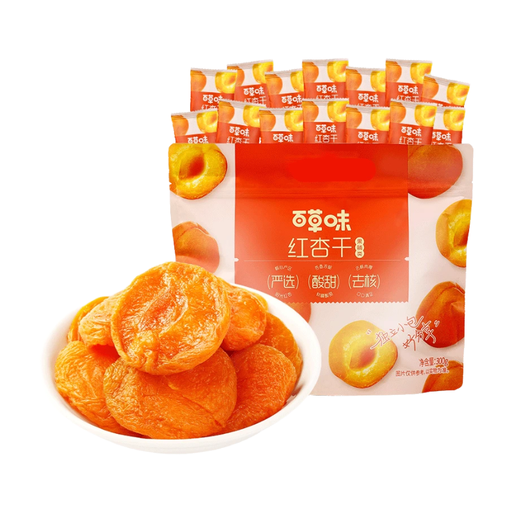 Image unavailable
Be&Cheery dried red apricots 300 g
For a 20-gram portion weighed out yourself, the product information gives an energy value of around 65.4 kcal.
The nutritional value is 327 kcal per 100 grams and the pack contains 300 grams. The ingredients include sugar, maltose syrup and sulphites.
Joybuy
Frequently asked questions
Can you call a small portion of dried fruit low in calories?
A small amount of energy per portion isn’t the same as a ‘low energy’ claim for a product. According to the European Commission, solid foods must contain no more than 40 kcal (170 kJ) per 100 grams to make this claim. The apricot varieties reviewed, at 182, 237 and 254 kcal per 100 grams, are above that limit. So describe the calculated portion without calling the product low in calories.
How do you calculate the energy in your own portion?
Multiply the kcal per 100 grams on the packaging by the number of grams you weigh out, then divide by 100. For example, 20 grams of a product containing 237 kcal per 100 grams works out at 47.4 kcal. Use the nutritional value for the exact variety you have.
Does dried fruit need to be refrigerated after opening?
Follow the storage instructions for the specific variety. AH Rehydrated Dried Apricots must be refrigerated after opening at a maximum of 7 °C. The Jumbo and PLUS apricots reviewed say to store them in a cool, dry, dark place; bear this in mind when taking them with you.
Where can you find allergen information for a snack on the terrace?
For an unpackaged snack, ask the food business for allergen information. According to the Netherlands Food and Consumer Product Safety Authority, this information must be provided to consumers in another way for unpackaged foods. For prepacked products, you’ll find allergen information on the label.
Which drink should you include when considering the energy in your snack?
According to the Netherlands Nutrition Centre, water contains no calories. Keep the nutritional value of your snack separate in your calculation too. The Netherlands Nutrition Centre advises against drinking alcohol; having a snack doesn’t change that advice.


