
Portion-conscious snackers
If you snack on dried fruit, weighing out how much you eat at a time and comparing values for equal weights can help. The Netherlands Nutrition Centre offers advice on portions of dried fruit.


If you want fewer calories per snack, weigh your portion first, then compare the kcal per 100 g; a small serving size on the label doesn’t make a product low in energy. The four products reviewed range from 182 to 326 kcal per 100 g, according to product information from Albert Heijn, Jumbo and PLUS. If you’re planning to stock up, also check the ingredients, allergens and storage instructions after opening.
If you snack on dried fruit, weighing out how much you eat at a time and comparing values for equal weights can help. The Netherlands Nutrition Centre offers advice on portions of dried fruit.
Choose a pack that suits how much you use and where you can store it. Product information from Albert Heijn, Jumbo and PLUS lists the packaging or storage conditions for the products in question.
If added sugar or a particular allergen matters to you, check the ingredients and allergen information on the specific pack. The Netherlands Food and Consumer Product Safety Authority explains allergen labelling.
Weigh your portion, then compare the nutritional values, ingredients and storage instructions on the pack you’re actually buying.
| What to consider | What to look for | Who is this important to? |
|---|---|---|
| Calories per portion | Compare kcal per 100 g, then weigh your portion. | If I weigh my snack, I want to know exactly how much energy that amount contains. Around 32% of consumers give calories per portion their highest priority. |
| Ingredients and allergens | Read the ingredients and any information about allergens and cross-contamination. | If an ingredient or allergen determines my choice, I check the packaging before buying. Around 25% of consumers prioritise ingredient suitability. |
| Packaging and storage | Check the pack size and the instructions for after opening. | If I’m planning snacks in advance, the pack needs to suit how much I use and the space I have to store it. Around 19% of consumers give convenience when stocking up their highest priority. |
| Taste and texture | Check the type of fruit and whether the product has been soaked, for example. | If I want to eat the fruit on its own or use it as a topping, the way I like to eat it matters. Around 12% of consumers choose taste and texture first. |
| How much to buy for your stash | Match the net weight to how much you expect to use and where you can store it. | If I want to keep the cost of my snack stash within a suitable budget, I want to avoid buying a pack that doesn’t suit how much I use. Around 12% of consumers prioritise keeping stock-up costs suitable. |
The official labels list 182 kcal per 100 g for AH Gewelde gedroogde abrikozen, 237 kcal for Jumbo Gedroogde Abrikozen Zonder Pit, 282 kcal for PLUS Gedroogde pruimen and 326 kcal for Jumbo Zongedroogde Sultana Rozijnen. These figures relate to these specific products; they are not a ranking of all dried fruit. According to the European Commission, a solid food can only carry the claim ‘low in energy’ if it contains no more than 40 kcal per 100 g; a small snack portion alone is not proof that the product meets this claim.
Sugars need a separate check: total sugars and added sugars are not the same thing. For the plums reviewed, PLUS lists 38.1 g of total sugars and 0 g of added sugars per 100 g. This distinction does not replace a comparison of calories.
Serving sizes on labels can vary, so calories per portion don’t provide a like-for-like comparison.
Compare the values per 100 g first, then work out the energy in the amount you weigh out for yourself.
A product can contain no added sugars and still list total sugars. For example, the PLUS plums list 38.1 g of total sugars per 100 g.
Check total and added sugars separately, and check the calories too.
Storage conditions can vary from product to product. The AH soaked apricots reviewed here need to be refrigerated after opening.
Follow the instructions on the pack, including after you’ve opened it.
A different brand, variety or pack size can mean a different composition and nutritional value. For example, blue raisins aren’t automatically the same variety as sultanas.
Check the full product name, ingredients and nutritional values before comparing products.
AH Gewelde gedroogde abrikozen are a specific option for a soft snack or topping.
The apricots without stones and sultanas reviewed here are different options for a portion-controlled snack.
Lidl presents Alesto as a range that includes dried fruit and mango strips.
ALDI presents Trader Joe’s pitted sun-dried plums in a 250 g pack.
PLUS Gedroogde pruimen are available in the 375 g variety described here.
Dirk presents 1 de Beste Abrikozen in a 375 g pack for snacking, breakfast and recipes.
The products below are prune snacks; compare the listed nutritional values, ingredients and pack size for each variety.
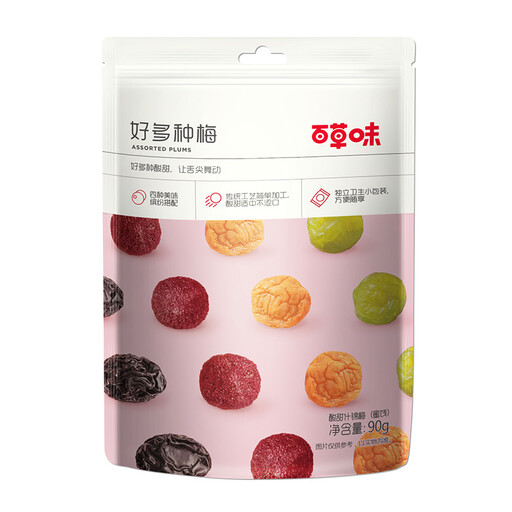 No image available
The product description lists 68 kcal per 100 g, making it easier to compare the energy in a weighed portion.
The description lists 16 g of sugars and 3 g of salt per 100 g. The pack contains 90 g; seal it well after opening.
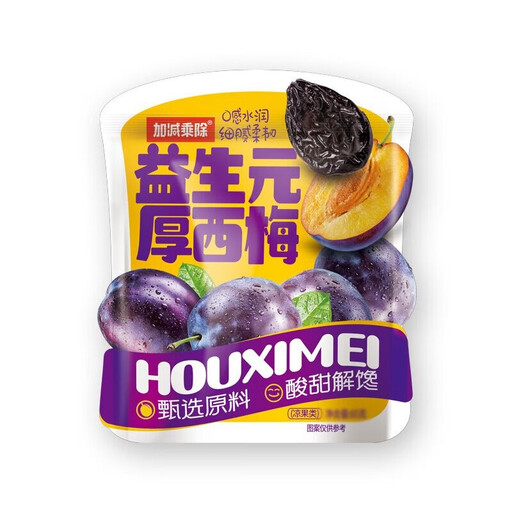 No image available
The product description lists an individual 65 g pack for a ready-to-eat snack.
The stated nutritional value is 214 kcal per 100 g. The ingredients list includes fructose syrup.
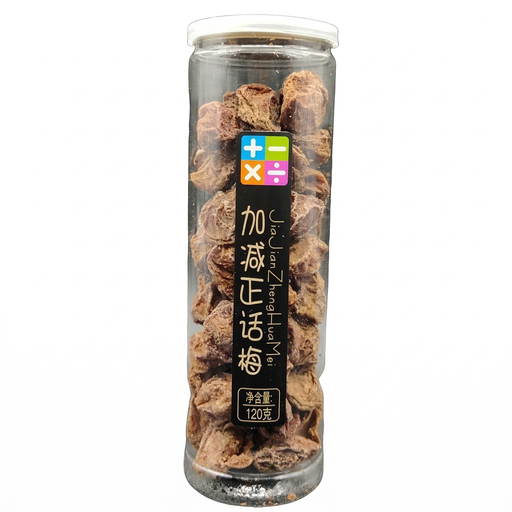 No image available
According to the product description, this 120 g pack is ready to eat.
The stated nutritional value is 230 kcal per 100 g. The description lists 5 g of salt per 100 g and warns that the product contains a source of phenylalanine.
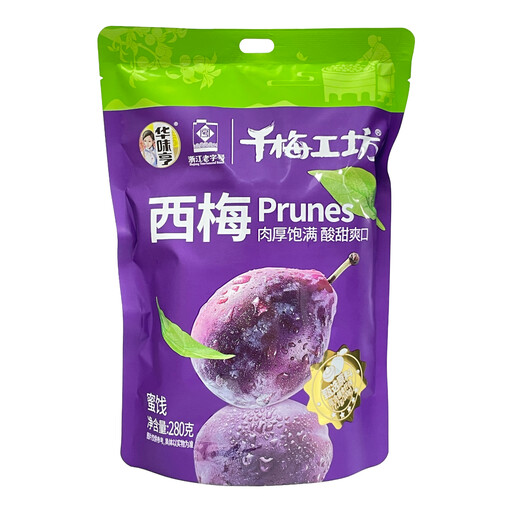 No image available
The product description lists a 280 g pack that’s ready to eat.
The stated nutritional value is 285 kcal per 100 g. The ingredients list includes sugar, fructose and salt; store in a cool, dry place.
 No image available
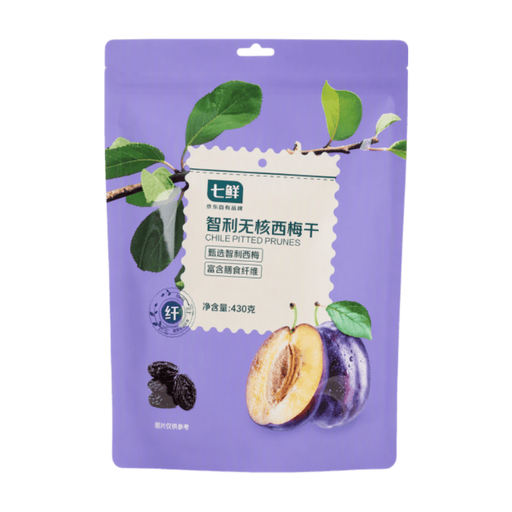
The product description lists a 430 g pack for anyone looking for a larger quantity of prunes.
The stated nutritional value is 283 kcal per 100 g. According to the description, the product is ready to eat and is best consumed soon after opening.
No, not simply because that portion contains few calories. According to the European Commission, the ‘low in energy’ claim for solid foods is subject to a limit of no more than 40 kcal (170 kJ) per 100 g. A figure per portion doesn’t replace this requirement.
The Netherlands Nutrition Centre recommends eating no more than 20 g of dried fruit a day. This is dietary advice, not a legal sales limit or proof that a 20 g pack is low in energy.
No, follow the instructions on the specific pack. The AH soaked apricots reviewed here need to be refrigerated after opening; that instruction doesn’t automatically apply to other dried fruit.
If an allergen is relevant to you, check both the ingredients list and any warnings about cross-contamination. The Netherlands Food and Consumer Product Safety Authority explains which allergens must be listed on the label. The Dutch policy on precautionary allergen labelling has been in force since 1 January 2026.
If you sell food to consumers several times a year, the NVWA’s step-by-step guide requires you to register and have a food safety plan or an appropriate hygiene code. Since 10 March 2026, food business registration has been handled through MijnNVWA. These requirements apply to commercial sales, not to your personal snack stash.